




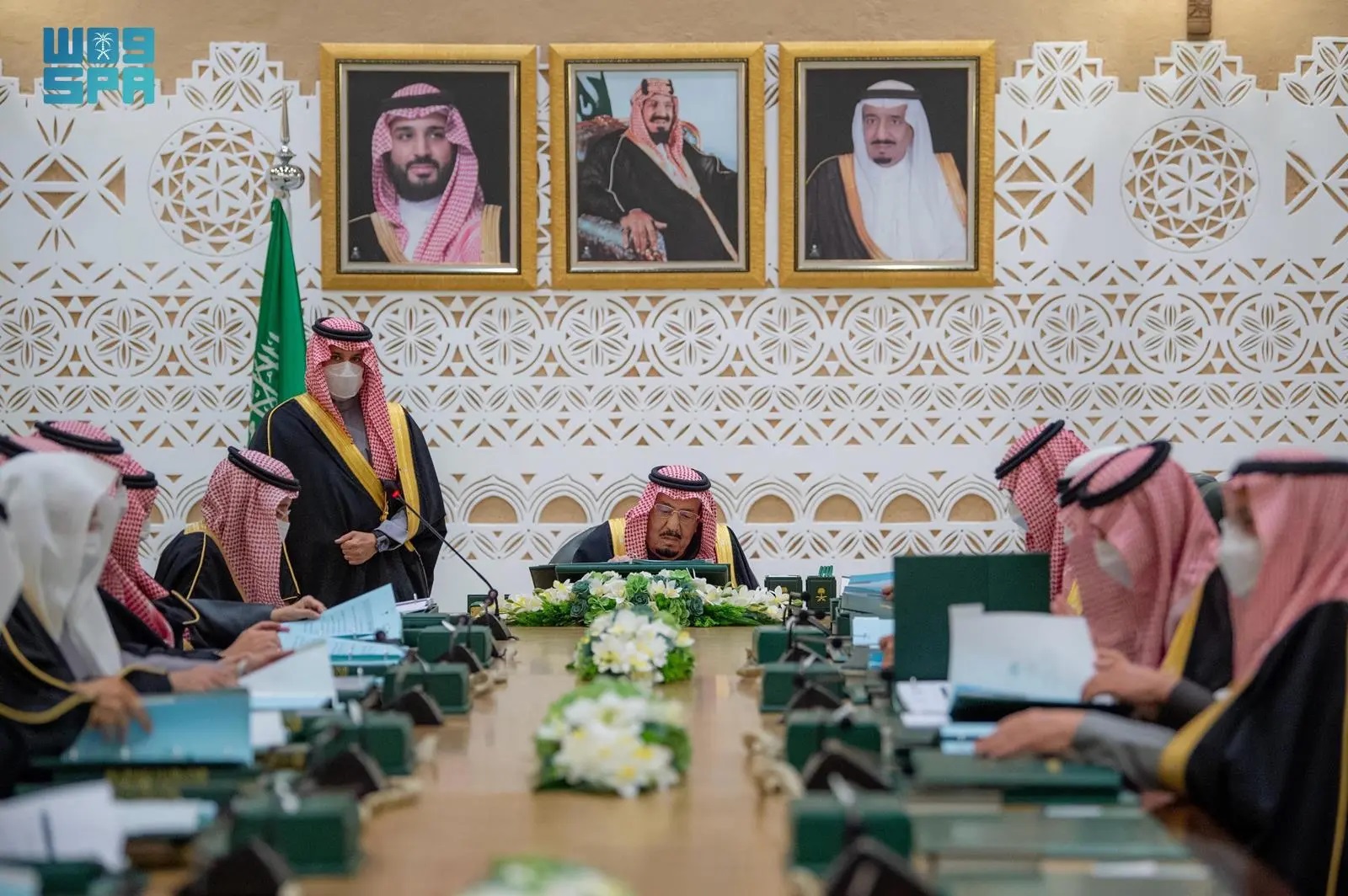
The Custodian of the Two Holy Mosques Chairs Cabinet Session in Riyadh
Custodian of the Two Holy Mosques King Salman bin Abdulaziz Al Saud chaired the Cabinet session held in Riyadh today.
The Cabinet began by reviewing a letter from Sultan Haitham bin Tarik of Oman, addressed to His Royal Highness Prince Mohammed bin Salman bin Abdulaziz Al Saud, Crown Prince and Prime Minister. It also discussed a telephone call received by HRH the Crown Prince from President of the Syrian Arab Republic Ahmed al-Sharaa.
While examining regional and international developments, the Cabinet welcomed the launch of the second phase of the comprehensive peace plan in Gaza, the initiation of the Palestinian National Committee for the Administration of the Gaza Strip, and US President Donald Trump’s announcement regarding the establishment of the peace council. The Cabinet expressed appreciation for international efforts in this regard.
The Cabinet emphasized the importance of stabilizing the ceasefire, halting violations in Gaza, ensuring the unrestricted entry of humanitarian aid, and enabling the Palestinian National Authority to resume its responsibilities. These measures aim to end the Israeli occupation and achieve an independent Palestinian state in accordance with United Nations resolutions, the Arab Peace Initiative, and the principle of the two-state solution.
In a statement to the Saudi Press Agency following the session, Minister of Media Salman Al-Dossary said the Cabinet commended the Kingdom’s welcome of the ceasefire agreement and the integration of the Syrian Democratic Forces into the Syrian state. The Cabinet reaffirmed its support for efforts to strengthen civil peace, preserve Syria’s sovereignty and territorial integrity, and uphold the aspirations of its people for development and prosperity.
The Cabinet reviewed ongoing efforts to end the Yemeni crisis and continue addressing the future of the southern issue through the Riyadh conference, aiming to reach a comprehensive vision for just and sustainable solutions. It emphasized that Saudi Arabia’s launch of a package of development projects and programs across various governorates of Yemen reflects its continued support for the brotherly Yemeni people, contributes to enhancing their security and stability, and helps improve living conditions at all levels.
The Cabinet also noted the Kingdom’s ranking as second globally and first in the Arab world among donor countries in providing humanitarian and relief aid, as well as its position as the largest supporter of Yemen in 2025, according to the United Nations Financial Tracking Service. It affirmed that this achievement underscores the Kingdom’s leadership, its longstanding humanitarian legacy, and its enduring commitment to extending assistance to those in need worldwide.
The minister stated that the Cabinet then discussed the latest developments in strengthening the Kingdom’s economic partnerships, commending the success of the fifth edition of the Future Minerals Forum held in Riyadh. The conference saw wide participation from 91 countries and resulted in the signing of 132 agreements and memoranda of understanding valued at more than SAR100 billion, spanning key areas such as exploration, mining, finance, research and development, and innovation.
The Cabinet further highlighted the tangible expansion of the Kingdom’s economic production base, noting that most non-oil activities have recorded annual growth rates of 5% to 10% over the past five years and continue to play a vital role in driving economic growth while promoting sustainability and inclusivity across the national economy.
The Cabinet addressed other items on its agenda and issued several decisions, including the following:
First:
Approving a memorandum of understanding between the Government of the Kingdom of Saudi Arabia and the Government of the Islamic Republic of Pakistan on cooperation in the field of electrical interconnection.
Second:
Approving a memorandum of understanding between the Ministry of Interior of the Kingdom of Saudi Arabia and the Ministry of Health of the Republic of Iraq on cooperation in combating the illicit trafficking and smuggling of narcotic drugs, psychotropic substances, and precursor chemicals.
Third:
Authorizing the minister of human resources and social development, or a deputy, to discuss and sign with the Government of the Republic of Singapore a draft memorandum of understanding on cooperation in social development.
Fourth:
Assigning the Saudi Geological Survey to discuss and sign with the US Society of Exploration Geophysicists a draft memorandum of understanding on cooperation in the field of geology.
Fifth:
Approving a draft memorandum of understanding on technical cooperation in civil aviation between the General Authority of Civil Aviation of the Kingdom of Saudi Arabia and the African Civil Aviation Commission.
Sixth:
Authorizing the minister of environment, water and agriculture and chairman of the board of directors of the Saudi Irrigation Organization, or a deputy, to discuss and sign a draft memorandum of understanding with the United Nations Human Settlements Programme (UN-Habitat) on the safe reuse of treated water for irrigation.
Seventh:
Approving a draft memorandum of understanding between the General Department of Financial Investigations at the Presidency of State Security of the Kingdom of Saudi Arabia and the State Financial Intelligence Service at the Ministry of Finance of the Kyrgyz Republic on cooperation in exchanging intelligence information related to money laundering, terrorist financing, and related crimes.
Eighth:
Authorizing the president of the General Court of Audit, or a deputy, to discuss and sign a draft memorandum of understanding with the National Audit Department of Malaysia on cooperation in the accounting, auditing, and related professional fields.
Ninth:
Approving the National Insurance Sector Strategy.
Tenth:
Establishing a permanent ministerial committee to coordinate services for individuals with autism spectrum disorder, tasked with studying the challenges faced by patients and their families and developing the necessary solutions to address them.


