




RCU, Smithsonian Break Ground on 'Saudi Arabia: Arabian Leopard' Exhibit in Washington
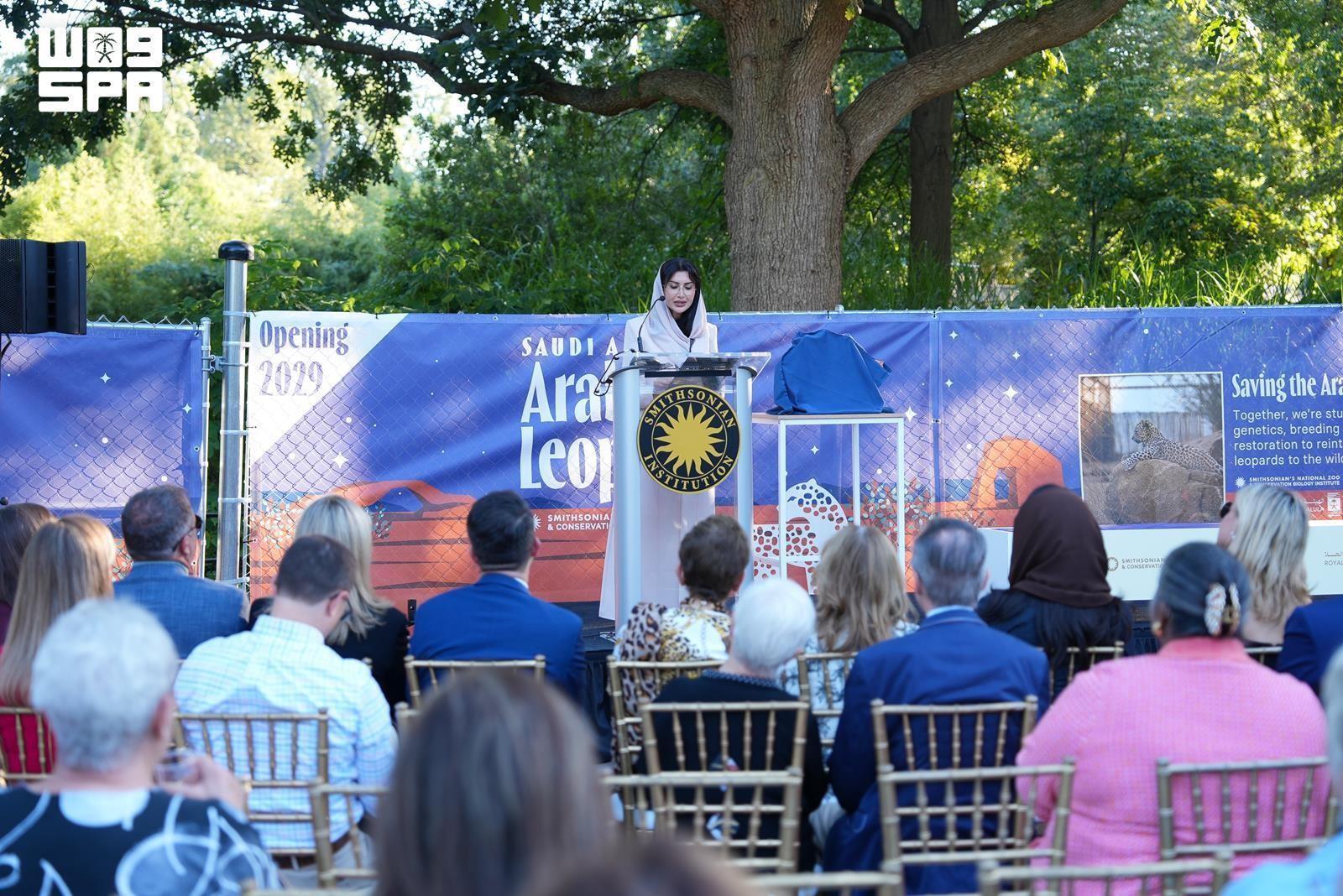
The Royal Commission for AlUla (RCU) and the Smithsonian's National Zoo and Conservation Biology Institute (NZCBI) laid the foundation stone today for the future Saudi Arabia: Arabian Leopard exhibit in Washington, D.C., marking a major milestone in their joint efforts to conserve the critically endangered species.
The groundbreaking ceremony was attended by Saudi Ambassador to the United States Princess Reema bint Bandar bin Sultan bin Abdulaziz, Smithsonian Institution Secretary Lonnie G. Bunch III, RCU CEO Abeer AlAkel, and NZCBI John and Adrienne Mars Director Dr. Brandie Smith.
Princess Reema stated that the exhibition represents a key advancement in Saudi-US wildlife conservation cooperation, stressing the importance of bilateral partnerships in exchanging expertise, protecting natural habitats, and raising environmental awareness among future generations.
AlAkel announced a new wildlife conservation professional exchange program designed to provide Saudi practitioners with practical, hands-on training alongside international specialists to reinforce long-term national capabilities. She noted that the Arabian leopard has inhabited AlUla for millennia and that conserving the species is integral to broader ecosystem restoration.
Dr. Smith stated that fewer than 120 Arabian leopards remain in the wild. Scheduled to open in 2029, the facility will feature an AlUla-inspired habitat housing a breeding pair of Arabian leopards to support population recovery and educate visitors about one of the world's rarest felids.
Bunch III noted that the RCU partnership spans wildlife preservation, scientific research, and cultural heritage. Commemorating the collaboration, the commission presented the Smithsonian with a permanent replica of an ancient Arabian leopard rock carving sculpted from authentic AlUla stone.


