




SFDA CEO Highlights Saudi Arabia's Regulatory Pathways to Accelerate Patient Access to Innovative Therapies
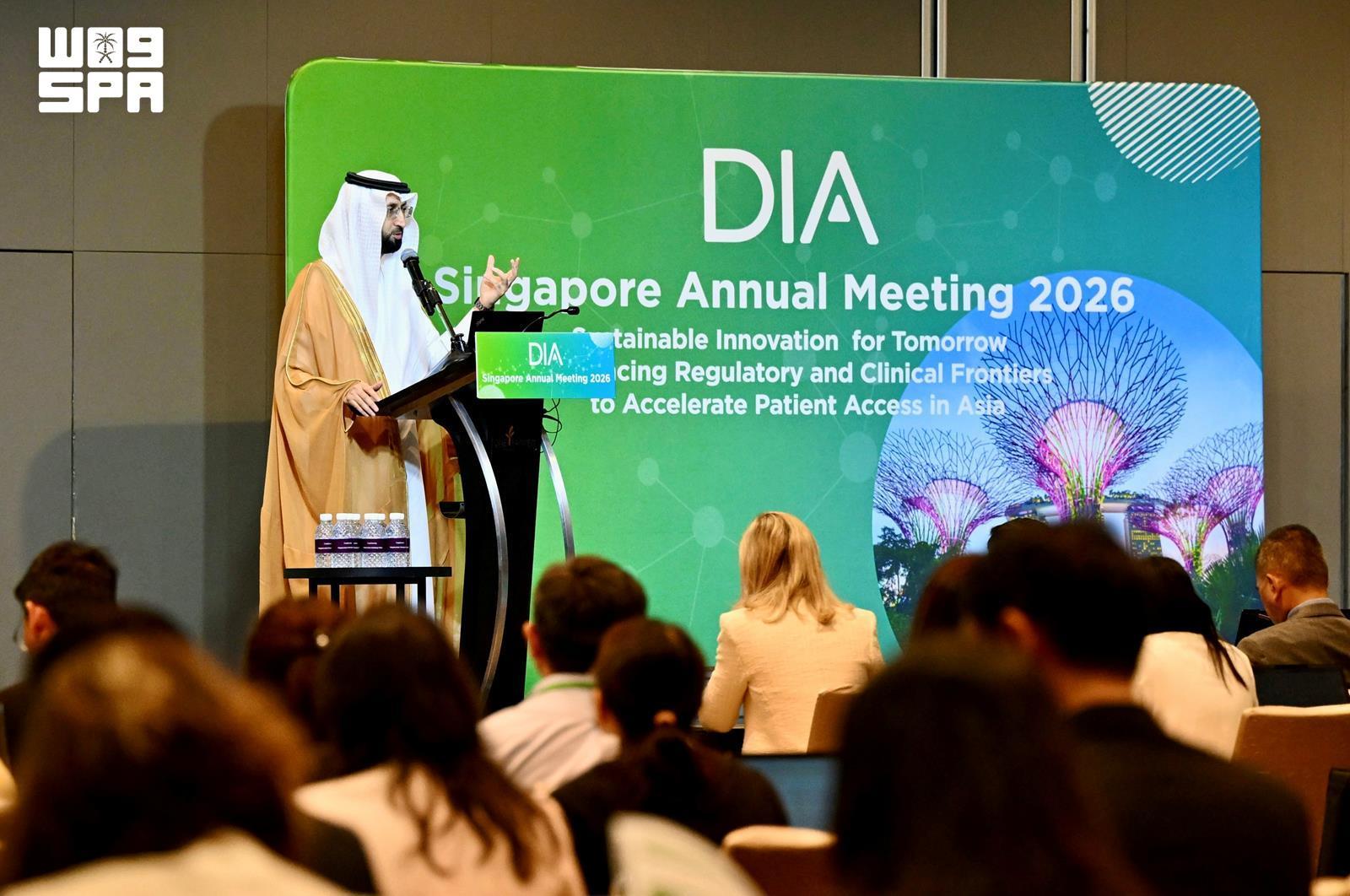
CEO of the Saudi Food and Drug Authority (SFDA) Dr. Hisham Aljadhey highlighted Saudi Arabia's experience in developing integrated regulatory pathways. These framework mechanisms align with various stages of innovative drug development, accelerating patient access to breakthrough therapies while upholding global scientific and regulatory standards during his participation in the Drug Information Association (DIA) Singapore Annual Meeting.
Speaking at a panel session titled "From Policy to Patient: Senior Regulators Roadmap for Advancing Clinical and Regulatory Frontiers – The SFDA Perspectives," Dr. Aljadhey emphasized that "the authority implements an integrated ecosystem of regulatory pathways. These include the Breakthrough Medicine Program, the New Accelerator Program for Drugs in Rare Diseases (NADR), and the Research and Investigational Drugs (RAID) pathway, each designed to address specific regulatory needs across different phases of drug development."
The SFDA CEO tackled the importance of achieving a balance between accelerating innovation and regulatory responsibility. He discussed the value of leveraging digital data and real-world evidence to support scientific decisions pre- and post-authorization. This fosters flexible, efficient evaluation models for innovative treatments while maintaining rigorous standards for safety, efficacy, and the quality of scientific evidence.
Furthermore, he explained that the SFDA operates through a proactive approach to keep pace with emerging technologies. This includes early engagement with developers, modernizing the evidence toolkit, and addressing unnecessary procedural obstacles to support the development of therapeutic innovations and their access to patients, without compromising evaluation standards.
He noted that the "NADR" pathway exemplifies this approach by streamlining rare drug classification within just 20 working days, significantly faster than standard international timelines, to accelerate life-saving treatments to patients.


