




Archaeological Inscriptions at King Salman Royal Reserve Preserve Legacy of Ancient Civilizations
Archaeological inscriptions are living historical records carved into rock, bearing witness to ancient civilizations and providing clear insights into the lives of people across different historical periods.
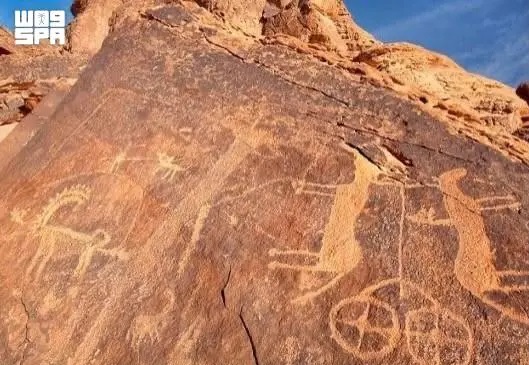
The King Salman bin Abdulaziz Royal Reserve is home to thousands of archaeological inscriptions and ancient rock carvings, including Thamudic and Nabataean inscriptions, as well as depictions of wildlife and hunting scenes scattered across the reserve. These carvings portray daily life in ancient times and feature animals such as ibexes, camels, and horses.
The reserve is considered one of the oldest sites of human settlement in the Arabian Peninsula, distinguished by its unique blend of pristine natural landscapes, clean air, geographical and cultural diversity, and rare archaeological remains, some dating back to 8,000 BC.
It also contains significant archaeological and historical sites, evidenced by ancient rock art, alongside settlements and relics that offer deep insights into the region's human history, making the reserve's cultural heritage an integral part of its value and conservation efforts.
The reserve is home to several archaeological and historical sites, most notably the UNESCO-listed Jubbah, which includes the Jabal Umm Sinman oasis and ancient rock inscriptions and carvings dating back thousands of years.
It also encompasses the Kilwa site, which preserves prehistoric archaeological remains and rock inscriptions. More than 400 archaeological and historical sites have been documented across the reserve, spanning Northern Borders, Hail, Al-Jouf, and Tabuk regions.
The reserve features 14 distinct geographical formations, ranging from towering mountains to vast plains and rolling plateaus. Its richness is further enhanced by valuable mineral resources, regarded as rare natural treasures, while its geographical diversity is matched by its administrative reach, spanning four regions: Northern Borders, Hail, Tabuk, and Al-Jouf.


