




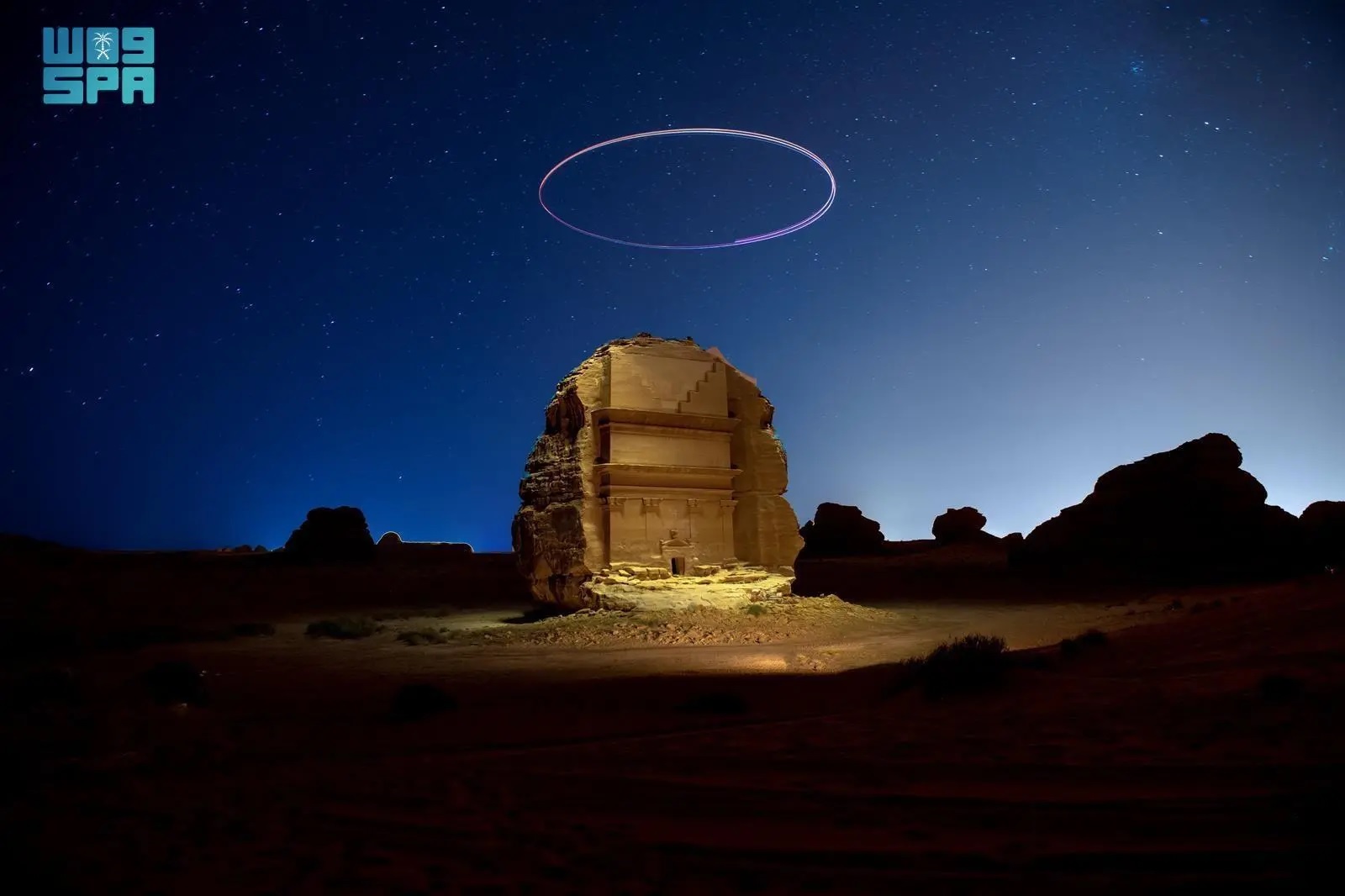
Between Mountains and Heritage Sites, Light Weaves an Unforgettable Experience in AlUla
AlUla is reimagining its nocturnal landscape through a visual ecosystem in which modern lighting interweaves with the region's natural and heritage features. Mountains, rock formations, and mud-brick structures are transformed into elements pulsing with visual presence.
The experience reflects the deliberate use of light as an integral part of the governorate's aesthetic identity. It serves as a tool that illuminates AlUla’s historical depth while keeping pace with its cultural and artistic evolution.
As evening falls, AlUla's visual landscape takes shape through a carefully planned architectural distribution in which lighting harmonizes with natural formations and architectural facades. The approach reflects the Royal Commission for AlUla's (RCU) efforts to curate the nocturnal streetscape and minimize light pollution.
These efforts preserve the governorate's visual identity and natural character while lending historical and natural sites a balanced visual presence that aligns with the area's distinctive character and unique topography.
The RCU has adopted technical standards that take into account AlUla's natural and urban characteristics. These include the use of warm lighting not exceeding 2,700 Kelvin, regulating illumination levels and intensity, and restricting upward-directed or spill lighting beyond its intended zone.
The measures ensure that light is directed only where needed while minimizing its impact on wildlife and preserving the clarity of the night sky.
The standards also encourage the use of high-efficiency technologies, including advanced LED units with precise color-rendering indices. These technologies contribute to reduced energy consumption and improved lighting quality within a vision that balances urban development with preservation of AlUla's exceptional natural landscape.
The regulations extend to events and experiences hosted in AlUla, including laser, drone, candle, and interactive light shows. These are presented through contemporary artistic approaches that give historical and natural sites new visual dimensions, enriching the visitor experience and showcasing the beauty of the area after dark.
International Day of Light, observed annually on May 16, commemorates the first successful operation of the laser. The occasion highlights the role of light science and technology in advancing energy, communications, and medical technology, as well as their contributions to scientific knowledge and sustainable development worldwide.
Through these initiatives and visual experiences, AlUla continues to strengthen its standing as a destination that celebrates art, science, and nature in equal measure. Light becomes a visual language that reimagines the place itself, offering visitors an experience rooted in history while looking toward the future.


