




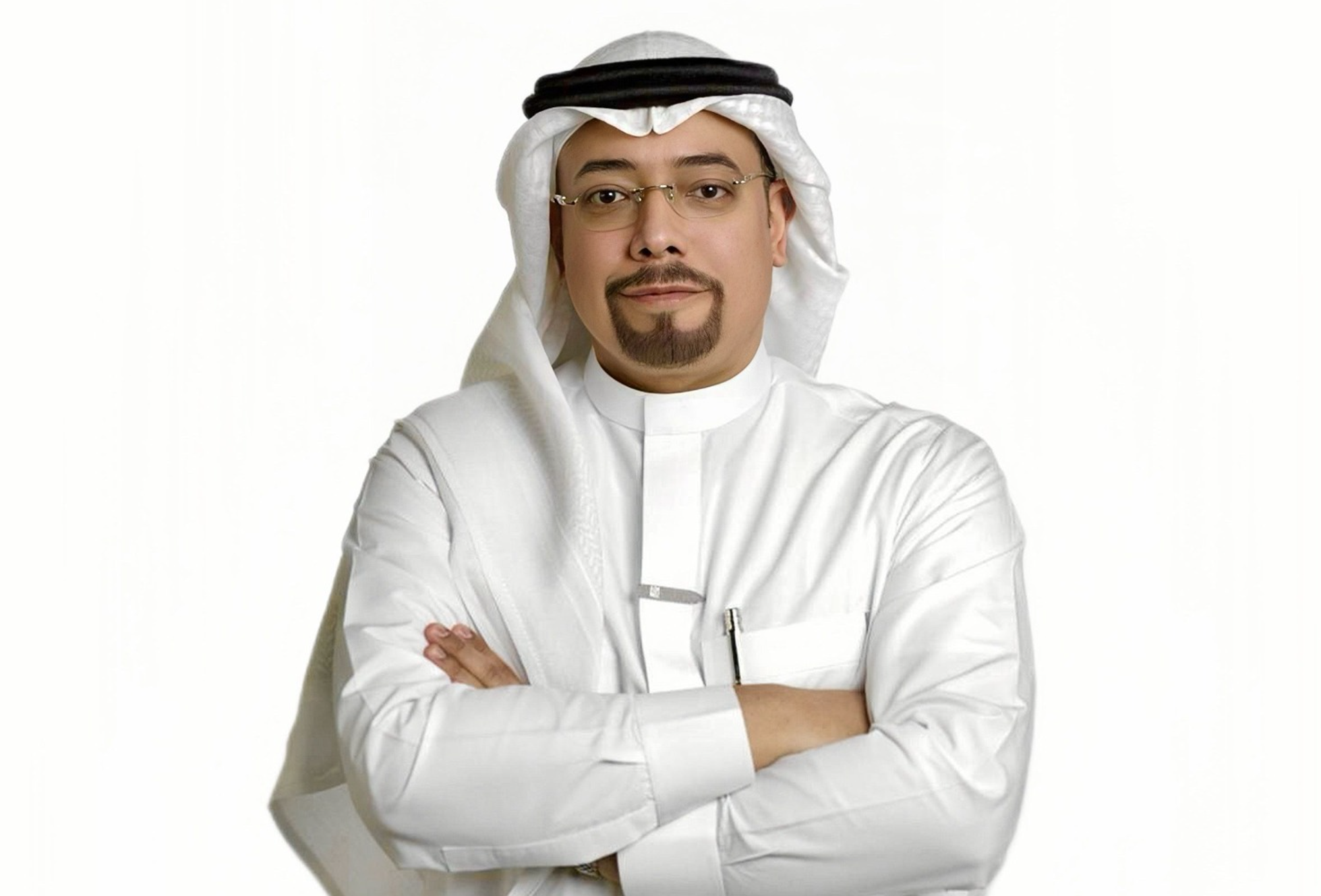
 Dr. Moataz BinAli, CEO of Magna AI
Building Saudi Arabia’s AI Backbone: Magna AI’s Vision for the Next Digital Economy
Backed by strategic partnerships, a growing portfolio of AI solutions, and agreements valued at approximately USD 1.5 billion over the past six months, Magna AI is emerging as one of Saudi Arabia’s key players in the AI sector. In this exclusive interview with Riyadh Daily, Dr. Moataz BinAli, CEO of Magna AI, discusses the company’s long-term vision, the importance of sovereign AI, the Kingdom’s growing role in the global AI economy, and how Magna AI is helping organizations move from AI ambition to real-world deployment.
Magna AI is the Title Sponsor of the Global AI Show this year. Why was this platform important for the company?
The Global AI Show is one of Saudi Arabia’s most significant specialist AI platforms. As a Saudi-headquartered company, it was important for Magna AI to play a leading role in an event that reflects the Kingdom’s growing influence in shaping the future of AI. We do not want to be merely present in that conversation; we want to help lead it. Our Title Sponsorship reflects a long-term commitment to the development of Saudi Arabia’s AI ecosystem, rather than simply a marketing decision.
The platform enabled us to introduce our latest capabilities. We launched MagnaVERSE™️, our unified AI software platform, which brings together models, agents, applications, infrastructure, and governance in a single operating environment. It serves as the intelligence layer where organizations can design, deploy, operate, and scale AI across the full lifecycle while maintaining operational control, visibility, compliance, and security.
We also signed four strategic partnerships, each addressing a different layer of sovereign AI value chain - with Emaar Executive Company to plan, build, and operate sovereign AI data centers and AI Factory infrastructure in the Kingdom; with Saudi Xerox, to extend AI Factory capabilities and secure AI platforms to government and enterprise customers through established in-Kingdom delivery and integration; with Naver Innovation, to advance trusted AI infrastructure and sovereign AI capabilities across government and enterprise digital transformation; and with Arabic.AI, to bring Arabic-native intelligence, including a sovereign Arabic large language model onto that infrastructure.
Alongside keynotes and panel sessions from our leadership, this gave us the opportunity to engage customers and partners directly, and to show how Magna AI is helping organizations move from AI ambition to practical, scalable deployment.
What does Magna AI’s recent performance indicate about the level of demand in the market, and what are your expectations for the year ahead?
Over the past six months, Magna AI has established agreements valued at approximately USD 1.5 billion across the AI ecosystem. This reflects both the strength of market demand and the breadth of opportunities emerging across infrastructure, platforms, applications and services.
We believe this figure could potentially double by the end of the year. However, our ambition extends beyond the value of individual agreements. Our focus is on building long-term capabilities, creating sustainable economic value and helping customers deploy AI securely and effectively at scale.
We see the current momentum as a stepping stone in a much larger journey. Saudi Arabia has long been a land of opportunity, and it is rapidly becoming a global hub for AI.
Governments and enterprises are placing significant trust in Magna AI. What is that trust built on?
Trust begins with the foundation on which Magna AI was established. The company was formed through a joint venture between Trend Micro and Wistron, supported by a strategic partnership with NVIDIA.
Trend Micro brings 40 years of global cybersecurity experience. Wistron contributes deep expertise in hardware, infrastructure and global manufacturing, while NVIDIA provides world-leading capabilities in accelerated computing and foundational AI software.
Magna AI brings these strengths together through an integrated model that covers the full AI value chain. This gives customers access to proven technology, global expertise and local execution through a single partner, creating a strong foundation for confidence and long-term collaboration.
How is Magna AI building its partner and customer ecosystem in Saudi Arabia?
Partnerships are central to our strategy because no single organisation can build the AI economy alone. During the Global AI Show and in the period leading up to it, we signed four strategic agreements with direct customers, system integrators and channel partners.
Each relationship plays a distinct role. Customers help us identify real operational requirements, system integrators strengthen implementation capacity, and channel partners expand access to our solutions. Together, they create an ecosystem through which AI capabilities can be developed, deployed and scaled more effectively.
The response has been extremely positive, and we believe these agreements provide a foundation for much broader engagement across the Kingdom.
What are the main challenges affecting AI adoption today, and how is Magna AI addressing them?
The challenges are not confined to one area. They range from evolving policies and governance frameworks to resource availability, market readiness and the pace of adoption. What determines the strength of an enterprise is not whether it encounters challenges, but how effectively it responds to them.
These challenges are natural for technology advancing at such speed. The solution is not to address each issue in isolation, but to provide an integrated approach that brings together infrastructure, software, security, governance and services.
The environment is improving through deeper engagement, accumulated experience and companies demonstrating that they can deliver on their commitments. My guidance to our team is to be consistent and stay close to the customer. By working closely with organisations throughout the AI lifecycle, we can understand their operational requirements, anticipate risks and develop solutions that deliver measurable outcomes. Trust is ultimately built through execution and the consistent delivery of what has been promised.
Why is Saudi Arabia such an important market for Magna AI?
Saudi Arabia is not simply adopting AI but investing in the capabilities required to shape its future. The scale of investment, clarity of national ambition and alignment between government and enterprise are rare in combination. Most markets have one of those. Very few have all three. That is what is making the Kingdom an increasingly influential force in the global AI economy, and it is why we are headquartered here rather than serving this market from a distance.
Our role within that is specific. AI will become a foundational utility in the way electricity and telecommunications are today. The countries that own the infrastructure, platforms, talent and intellectual property behind that utility will capture the economic value it creates, strengthen their technological independence and build new industries around it. The countries that do not will rent it from those that do.
So, our mission is to help establish that full value chain inside the Kingdom by supporting Vision 2030's objectives around data sovereignty and a diversified digital economy and to help Saudi Arabia become a producer of AI, not only a consumer of it.
Many people are concerned that AI will reduce employment opportunities. How do you view its impact on the workforce?
I do not believe AI will eliminate the opportunity to work but it will elevate the nature of work itself.
Satya Nadella has spoken about AI enabling individuals to become managers, with each person supervising a set of AI agents. My own experience supports the underlying point that AI has not reached a stage where it can operate autonomously without human involvement and oversight. Once organisations decide which agents to deploy and where to deploy them, they will still require capable people to operate, supervise and govern those systems.
The broader opportunity lies in the difference between consuming and producing technology. Consider the steel industry - buying finished steel from abroad is a single transaction. Owning the value chain involves extracting the ore, refining, moulding, packaging and using it to manufacture other products. Each stage creates capabilities, industries and employment opportunities.
The same principle applies to AI. The greatest employment opportunity will come from becoming an AI producer rather than simply a consumer. When a country develops the full value chain, it creates jobs not only in technology, but also across research, manufacturing, consulting, operations and services.


