




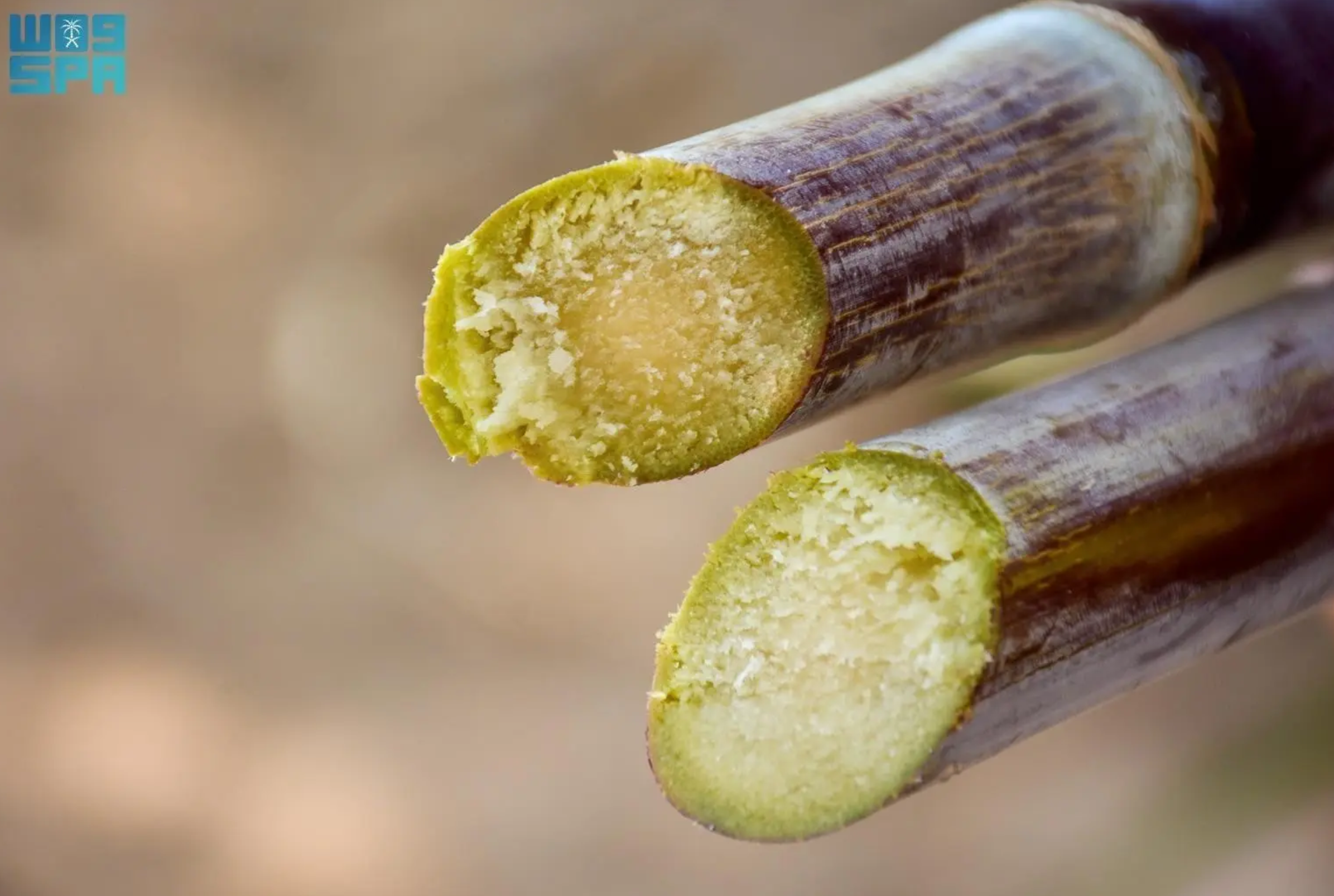
Najran Farmers Succeed in Sugarcane Cultivation, Boost Food Self-Sufficiency
Sugarcane cultivation in Najran Region is a successful and innovative experiment that leverages its temperate climate, diverse soils, and abundant water resources while enhancing food security and self-sufficiency, aligning with Vision 2030.
Farmer Ibrahim Shakwan confirmed the success of his 73,000-square-meter sugarcane farm and noted growing regional interest due to its high productivity and lucrative economic returns.
Effective cultivation methods include selecting disease-resistant varieties, proper soil preparation, and balanced irrigation and fertilization. Sugarcane is easily propagated via cuttings that yield a high number of plantable pieces. Planting occurs primarily in the summer, although seedlings can be planted year-round. The crop is harvested approximately eight months after planting, with fertilization ending three months before and irrigation ceasing 20 days prior to harvest to boost sugar concentration and improve juice quality, which is rich in natural sugars, vitamins, and minerals.


