




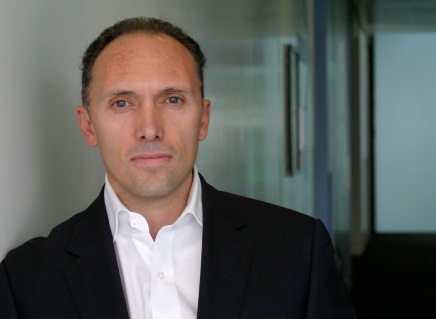
 Jean-Paul Zammitt, President, Bloomberg LP
Bloomberg President highlights structural reform, AI adoption and global capital trends shaping Saudi Arabia’s financial markets
Speaking to Jean-Paul Zammitt, President of Bloomberg LP, on the evolution of Saudi Arabia’s capital markets, Zammitt discusses the Kingdom’s ongoing regulatory reforms, the growing role of artificial intelligence in financial services, the importance of transparency and high-quality data, and the factors that will shape global investor confidence in the years ahead.
1- What are the most significant changes you are seeing in Saudi Arabia’s rapidly developing capital markets in recent years, and how are these contributing to the Kingdom’s Vision 2030 objectives?
Saudi Arabia’s capital markets are undergoing structural transformation aligned with the diversification and global integration objectives set out in Vision 2030.
A key development is the Capital Market Authority’s reform allowing all categories of foreign investors to access the Saudi equity market from 1 February 2026. The removal of the Qualified Foreign Investor regime lowers barriers to entry, broadens international participation, and reinforces Tadawul’s standing as a market of global relevance.
On the debt side, Saudi Arabia continues to expand its domestic corporate bond and sukuk markets as alternative financing channels. The Kingdom remains among the largest issuers in emerging markets, with debt issuance supporting infrastructure and diversification priorities. As these markets mature, further progress in liquidity, transparency, and accessibility will be critical.
More broadly, the Financial Sector Development Program is strengthening market infrastructure, encouraging fintech innovation, and expanding financial inclusion. Together, these reforms are positioning Saudi Arabia’s capital markets for long-term resilience and deeper global integration.
2- Saudi Arabia has placed artificial intelligence at the centre of Vision 2030. How do you assess the Kingdom’s progress on AI adoption, particularly in financial services, and what will matter most in the next phase?
Financial institutions in Saudi Arabia are already deploying AI in areas such as fraud prevention, risk monitoring, operational efficiency, and customer service. In a regulated sector, innovation must be balanced with trust and stability, and the Kingdom has taken a measured and responsible approach.
As adoption scales, infrastructure considerations become increasingly important. Expanding data-driven services requires resilient data centres, reliable energy systems, and network capacity to support growth without compromising stability.
The next phase will focus on scale and consistency. This includes improving data quality, building local expertise, and ensuring AI systems are transparent and accountable. AI adoption is not only about technology but about governance and confidence. If these elements continue to develop in parallel, AI can meaningfully strengthen the Kingdom’s financial competitiveness.
3- As Saudi capital markets deepen and become more sophisticated, how important are transparency, high-quality data, and analytics in attracting both domestic and international investors?
Transparency and high-quality data are foundational to market confidence. Strong disclosure standards and reliable reporting improve predictability and support liquidity, particularly from long-term institutional investors such as sovereign wealth funds, pension funds, and insurers.
As markets become more complex, the importance of analytics increases. Investors need clarity and consistency across instruments and issuers to understand how prices are formed and how risks are measured.
This is particularly relevant as Saudi markets expand access to equity ETFs, REITs, and sukuk. These products rely on dependable pricing, benchmarks, and risk metrics to integrate into global portfolios. In markets where information speed and reliability define advantage, transparency itself becomes a source of value.
4- What role do financial data providers like Bloomberg play in supporting regulators, financial institutions, and investors as Saudi Arabia continues to modernise its capital markets?
Bloomberg’s role is to support transparency, efficiency, and informed decision-making across the financial ecosystem.
For regulators, access to real-time market data and analytics supports oversight and systemic risk monitoring. For financial institutions, comprehensive data across asset classes enables pricing accuracy, portfolio management, and risk assessment. For investors, standardized and timely information strengthens confidence and supports capital allocation decisions.
Our approach to AI is built on transparency and accountability. Explainable systems that allow users to trace outputs back to underlying data can deliver meaningful productivity gains in research, compliance, and risk management.
Bloomberg has maintained a long-standing presence in the Kingdom and continues to invest in local capability. Our collaboration with the Saudi Financial Academy supports skills development through hands-on training and exposure to global best practices, helping ensure market participants are equipped for an increasingly data-driven environment.
5- How do you see global investor interest in Saudi Arabia evolving over the next few years, and what factors will be most critical in sustaining long-term capital inflows into the Kingdom?
Global investor interest is likely to continue strengthening as structural reforms deepen and market access broadens.
Sustaining capital inflows will depend on regulatory stability, strong governance, and alignment with international standards. Market liquidity and infrastructure will remain important, alongside a wider range of investable instruments and open access.
High-quality data and responsible technology adoption will increasingly influence global portfolio decisions. At the same time, macroeconomic fundamentals remain central. Fiscal discipline, policy credibility, and regional stability will shape risk-adjusted returns.
If these conditions are maintained and strengthened, Saudi Arabia is well positioned to solidify its role as a significant destination for diversified global capital.


