KSrelief Implements 78 Health and Rehabilitation Projects for Persons with Disabilities Worldwide Valued at More Than $64 Million
Care and empowerment of persons with disabilities form one of the pillars of humanitarian work and reflect a society’s awareness and its ability to include every individual. Providing fair opportunities and supporting their health, education, and social needs while strengthening their participation across different fields of life embody the values of compassion and solidarity. The more integration programs grow and their abilities are developed, the greater the contribution and prosperity of the community. Disability is not an obstacle to creativity but an invitation to open paths and create room for distinct talents that deserve support and protection. Their empowerment is not only a humanitarian duty but a civil approach grounded in compassion and solidarity that helps build a more inclusive and just future.
Since its establishment, the King Salman Humanitarian Aid and Relief Center (KSrelief) has carried out 78 projects in several countries, including Yemen, Syria, Sudan, Poland, Senegal, Jordan, Somalia, Tunisia, Lebanon, and Türkiye. Valued at more than $64.39 million, these projects aim to enhance health and rehabilitation services and provide assistive devices for persons with disabilities.
In Yemen, KSrelief has implemented numerous projects for individuals who have lost limbs. It established the Prosthetics Program, which has so far served 137,046 people. The program seeks to restore hope to those affected by landmines by providing high-quality prosthetic limbs, training local staff in manufacturing techniques, building the capacity of health institutions to ensure local delivery and sustainability of services, and supporting rehabilitation so beneficiaries can resume work and daily life.
In Sudan, KSrelief provided prosthetic limbs for the formerly conjoined twins Hiba and Samah, who were separated through the Saudi Conjoined Twins Program in 1992, as part of rehabilitation efforts to support their reintegration into normal life.
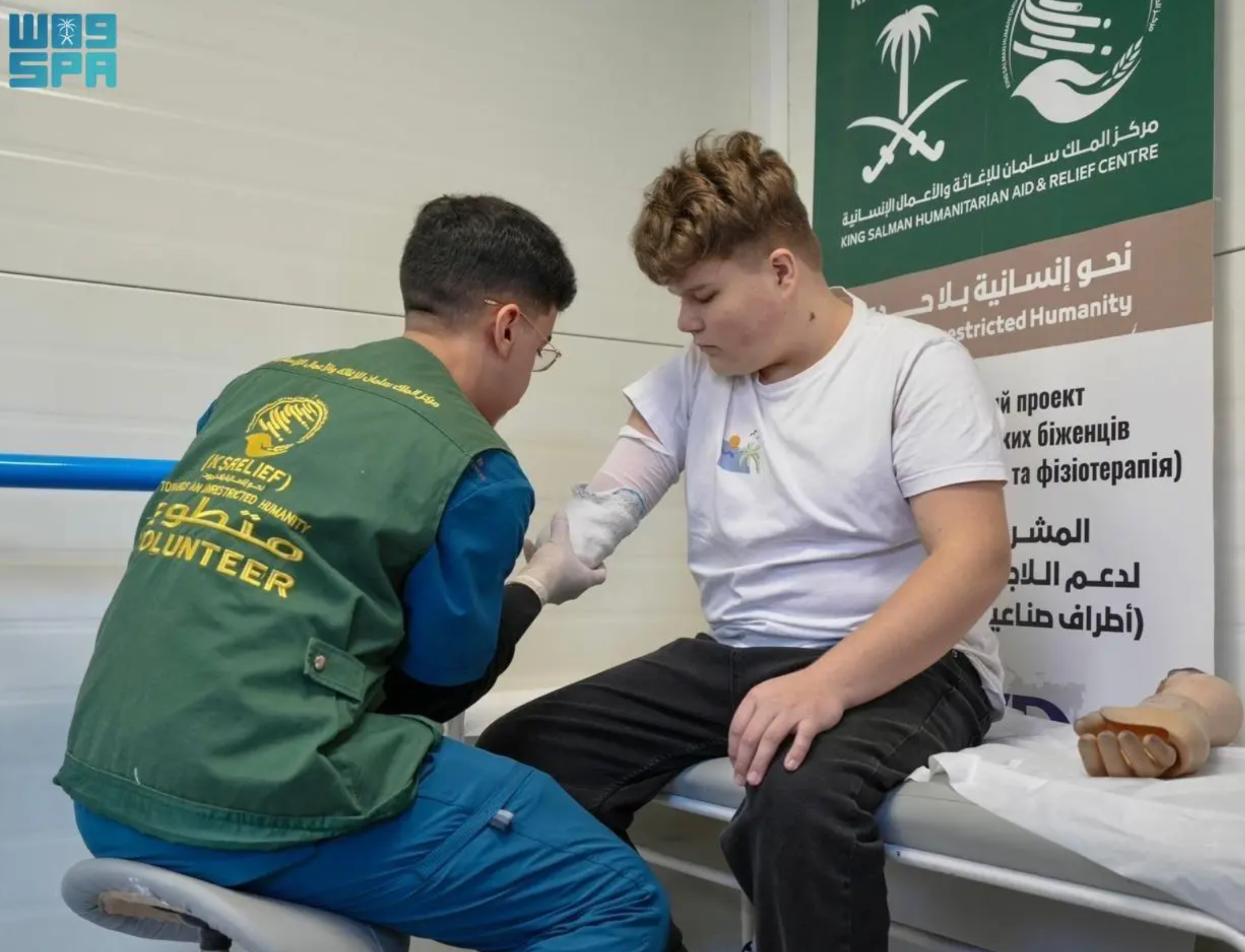
In Poland, the center implemented projects supporting Ukrainian refugees, including the provision of prosthetic limbs. In Lebanon, KSrelief rehabilitated six centers that provide health care and psychosocial services for refugees with disabilities and members of the host community, serving 6,000 individuals. Another project delivered educational, rehabilitation, and protection services for Syrian refugee children with disabilities.
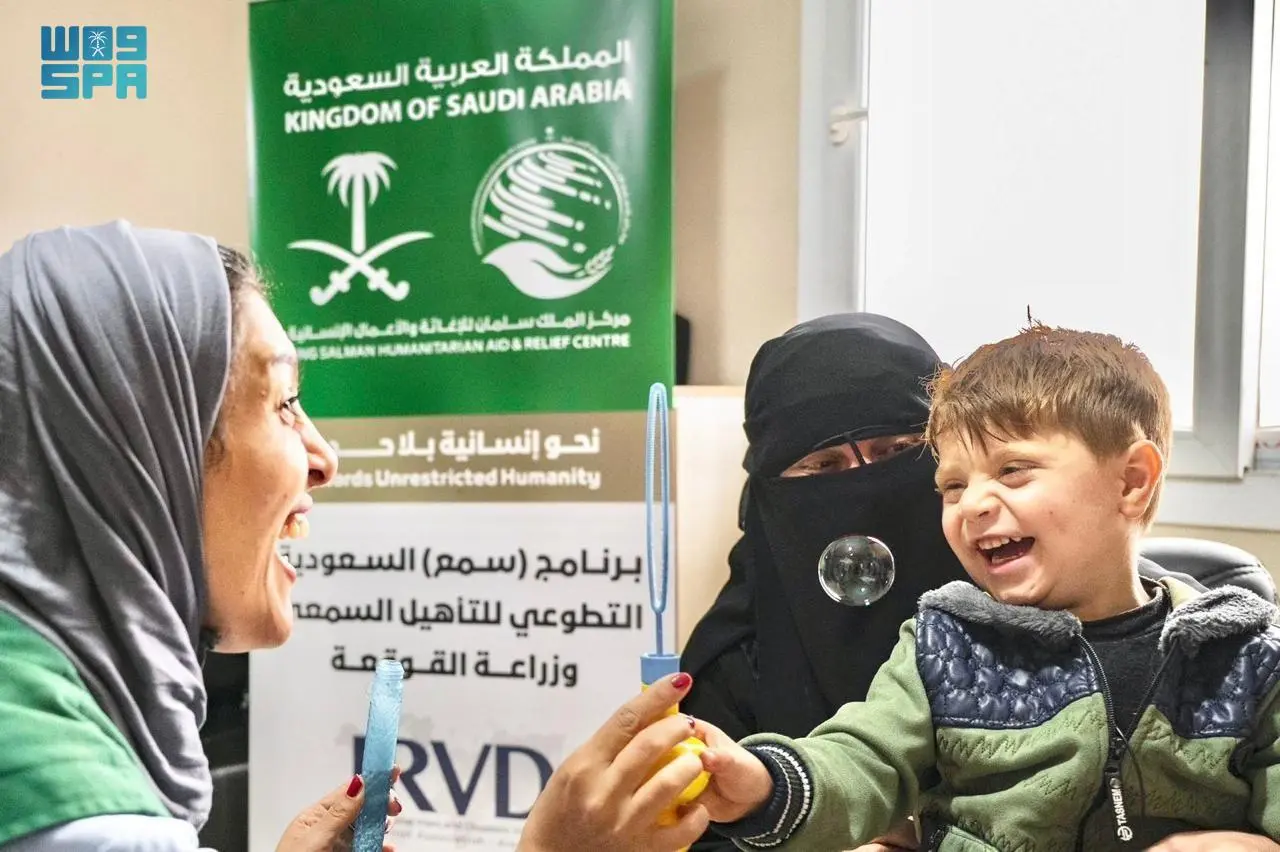
In 2024, KSrelief launched the “Hear Saudi Arabia” program in Hatay Province in Türkiye. It is the largest humanitarian cochlear-implant program of its kind for children worldwide. It aims to conduct cochlear implant surgeries, provide auditory rehabilitation, and deliver training for parents on communicating with children who have received implants. In 2025, the center implemented the program for Palestinian children in Jordan as well as children in Tunisia, Senegal, Kenya, and Somalia.
KSrelief’s observance of the International Day of Persons with Disabilities, marked annually on December 3, reaffirms the Kingdom’s leading role in protecting their rights and providing care and empowerment to ensure a dignified life.
KSrelief has implemented 3,881 projects in 109 countries since its establishment, at a total cost exceeding $8.251 billion.