




Saudi Arabia’s Fruit Self-Sufficiency: A National Journey toward Sustainable Food Security
Saudi Arabia is rapidly advancing toward strengthening food security and achieving greater self-sufficiency in agricultural products, especially fruits.
A comprehensive set of initiatives and projects has helped increase domestic production, improve resource efficiency, and introduce advanced agricultural technologies. These efforts are aligned with Saudi Vision 2030’s objectives of building a sustainable economy and developing a modern agricultural sector capable of meeting future challenges.
In recent years, the agricultural sector has undergone a qualitative transformation, driven by government support for farmers and the growing adoption of modern techniques, including protected agriculture, smart farming, and high-efficiency irrigation systems. Research and development programs, along with agricultural extension services, have also helped boost the production and quality of various fruit varieties, enabling locally grown produce to compete with imported products in domestic and international markets.
The Ministry of Environment, Water and Agriculture plays a central role in this transformation by implementing programs to improve production efficiency, optimize water use, encourage investment in agriculture, and expand the cultivation of economically viable crops. These efforts seek to strike a balance between agricultural development and the conservation of natural resources.
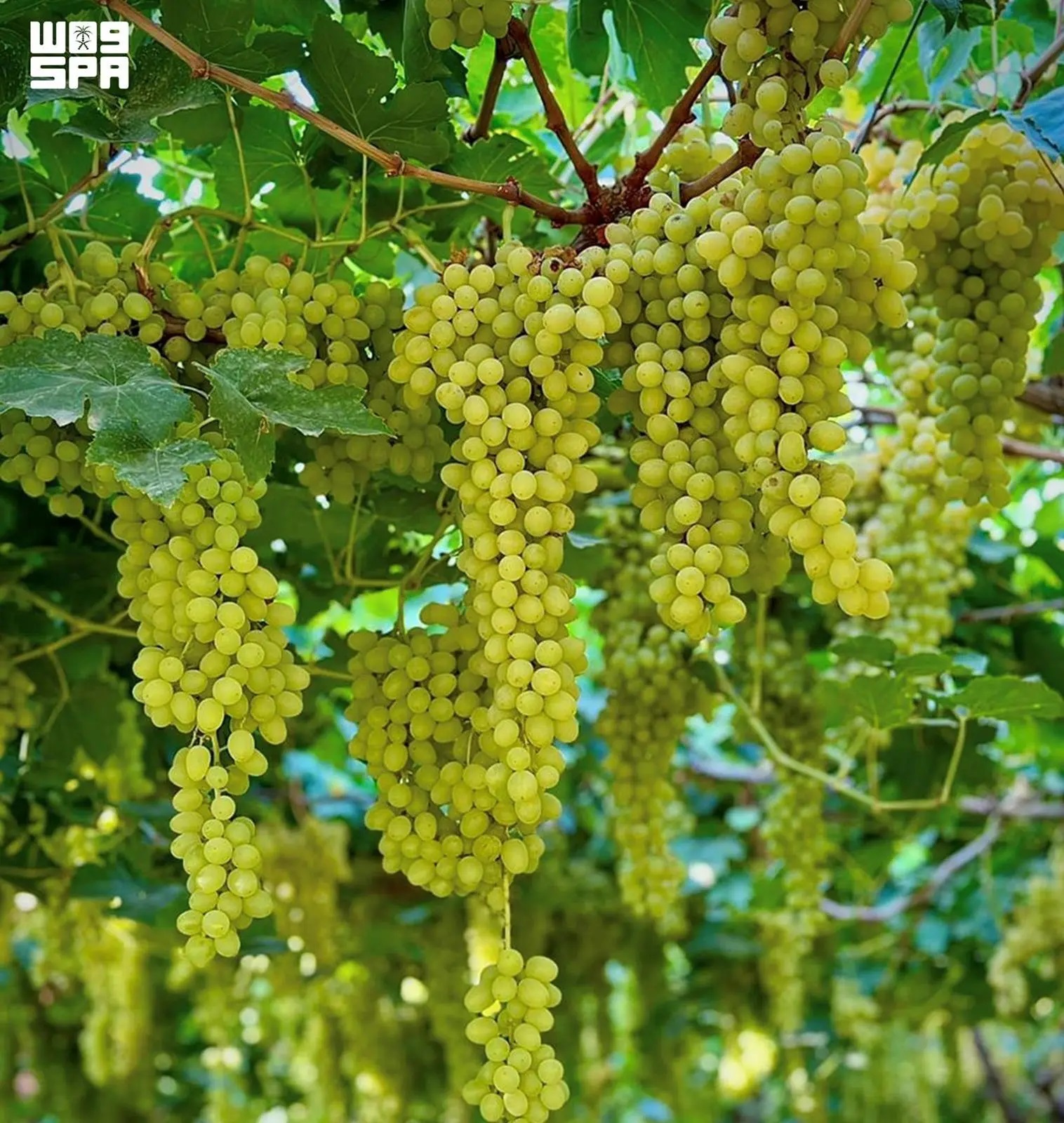
Fruit cultivation is spread across Saudi Arabia, with different regions specializing in varieties suited to their climatic conditions. Qassim is known for grapes, pomegranates, figs, and several citrus varieties, while Al-Jouf is one of the Kingdom’s leading olive-producing regions, alongside its production of grapes and pomegranates.
Tabuk is known for peaches, apricots, plums, and grapes, while Taif is renowned for its pomegranates, figs, grapes, and peaches. Aseer produces figs, pomegranates, peaches, and apricots. Jazan is a major producer of mangoes, papayas, and bananas, while Najran is known for grapes, pomegranates, and dates. Citrus cultivation is also widespread in parts of Al-Baha and several other governorates. This regional variety reflects the richness of Saudi Arabia’s environmental and agricultural diversity.
The year-round availability and diversity of fruit provide consumers with greater choice and nutritional value while increasing reliance on domestic produce. Modern storage and marketing technologies have further reduced the need for imports during many seasons, thereby contributing to sustainable market stability.
As Saudi Vision 2030 programs continue to advance, Saudi Arabia’s journey toward fruit self-sufficiency has emerged as a national model that combines innovation with sustainability. It demonstrates the ability of Saudis to turn environmental challenges into promising development opportunities through investment in land, technology, and knowledge. Each Saudi farm stands as a testament to the nation’s journey toward a thriving economy and a brighter future.


