




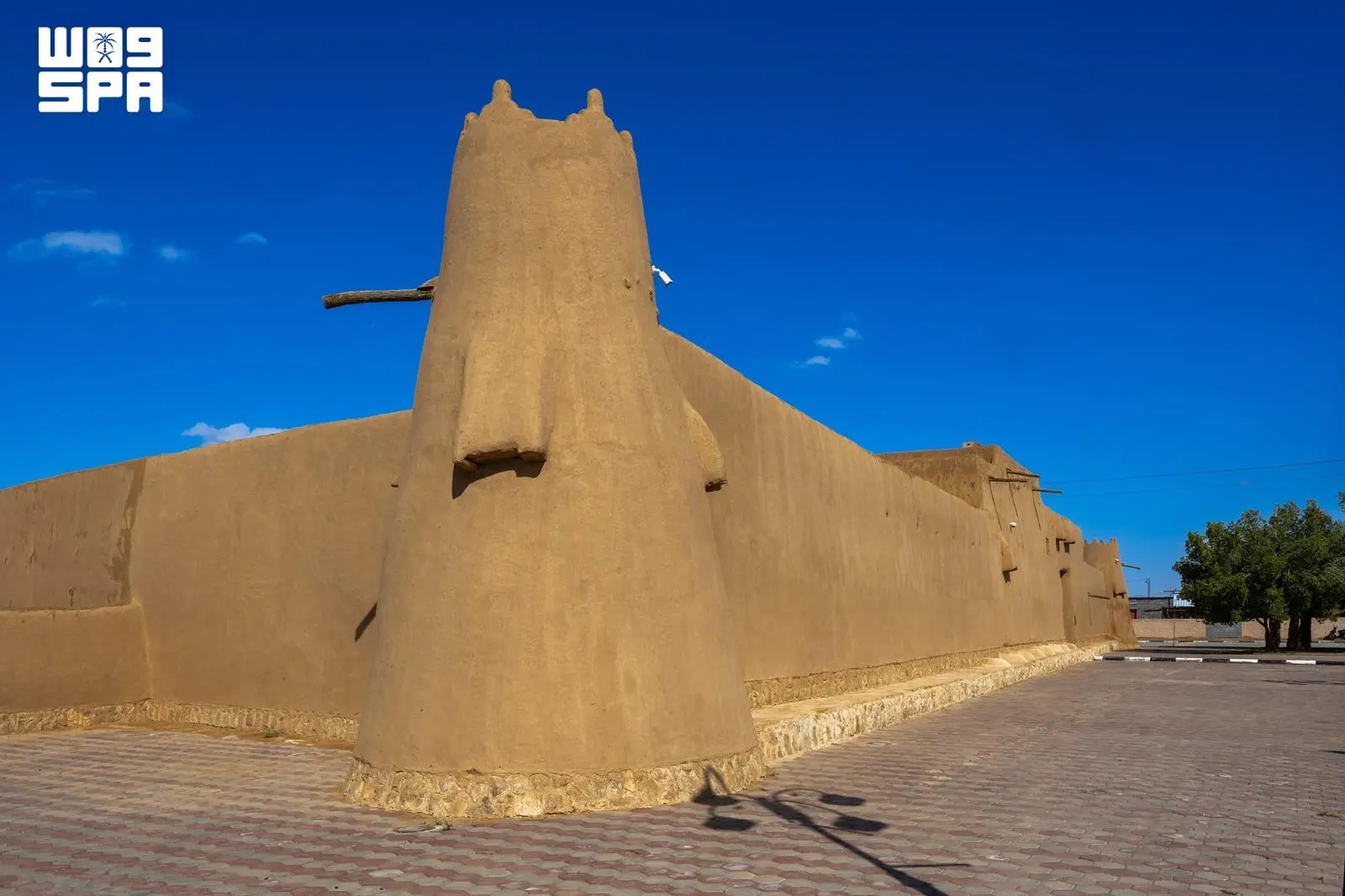
Northern Borders Mud-Brick Palaces: Symbols of Resilience and Sustainability
Historic palaces in Northern Borders Region stand as enduring symbols of traditional Najdi architecture, showcasing how simple local mud materials were transformed into fortified structures capable of withstanding harsh desert conditions for decades, serving today as unique architectural landmarks and examples of sustainable desert construction.
Among the most prominent sites is King Abdulaziz Palace in Linah, south of Rafha, built between 1354 and 1355 AH. Covering approximately 4,320 square meters, the palace remains a testament to the region’s history and the ingenuity of traditional architecture.
Constructed from rammed earth and local stone, the palace features thick, tapered walls, palm-trunk structural elements, natural ventilation systems, and defensive openings. Its design includes a central courtyard, residential quarters, a mosque, a water well, horse facilities, and a grand reception hall.
The region is home to more than 364 registered archaeological sites, 39 urban heritage sites, and four historic mosques, highlighting its rich cultural and architectural legacy.


