




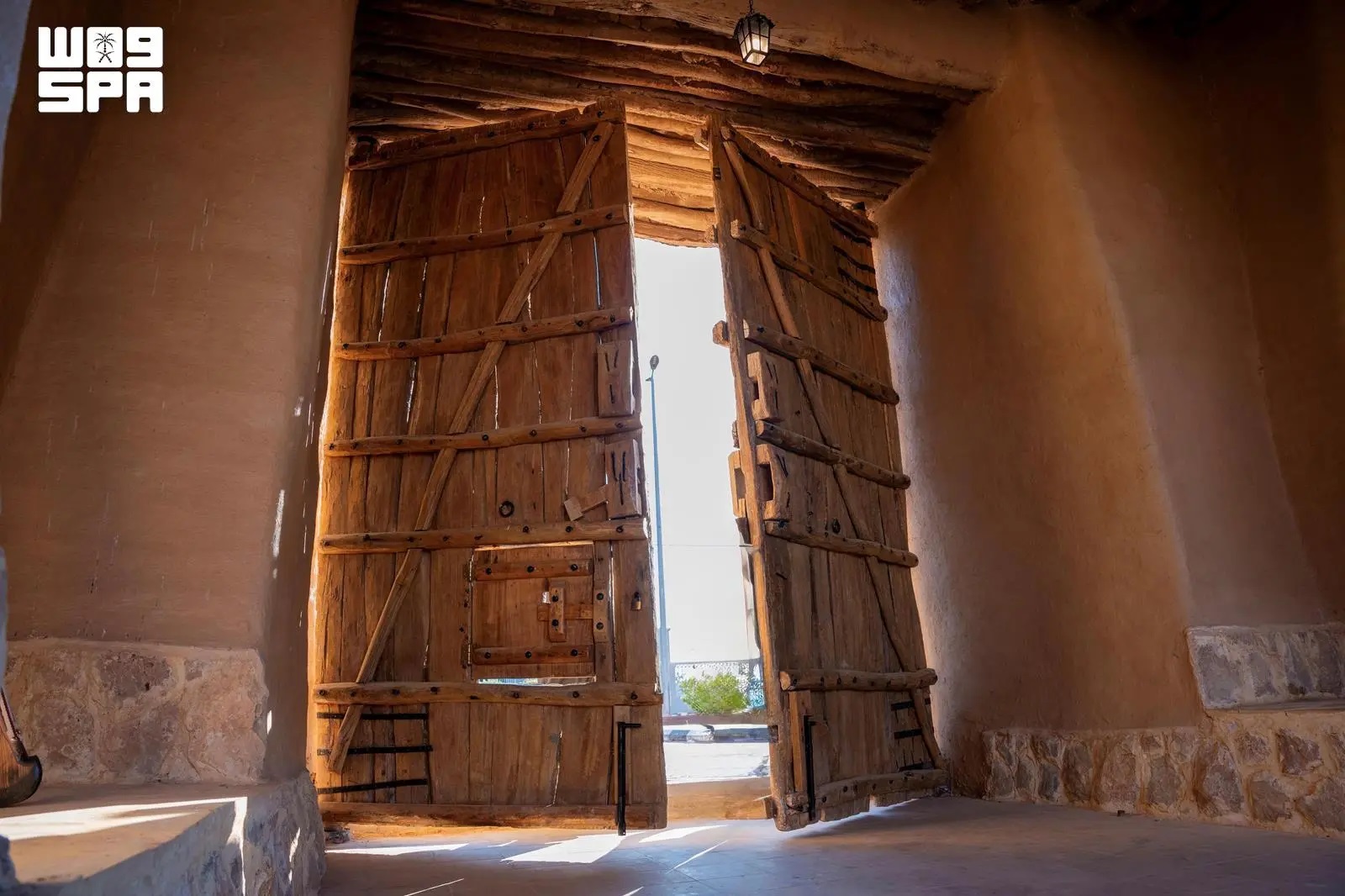
Mud-Architecture Doors in Northern Borders: Historic Testament to Region’s Heritage
The large doors of historic buildings in Northern Borders Region reflect aspects of traditional architectural philosophy, combining functionality, durability, protection, and architectural identity.
These doors were not merely entrances but integral elements of a building’s design, location, and intended use.
The historic village of Laynah offers a clear example. The entrance to the historic King Abdulaziz Palace is positioned at the center of its façade and is one of its most prominent architectural features. The palace was built in 1354–1355 AH using mud, adobe, and stone. Its southern façade features a main wooden entrance and a side entrance.
The size of the doors in such buildings was linked to the nature and function of the structure. King Abdulaziz Palace in Laynah was not merely a residence but served as the seat of the emirate. It contained various facilities, including a mosque, a well, horse facilities, a spacious courtyard, and towers used for guarding and surveillance.
The doors also showcase the skill of local craftsmen in combining wood with mud, stone, and adobe. They transformed the doors into architectural elements that combined strength, functionality, and aesthetic appeal.
Laynah’s historic buildings have preserved doors, towers, and walls that reflect an architectural style shaped by the region’s environment and locally available resources.


