




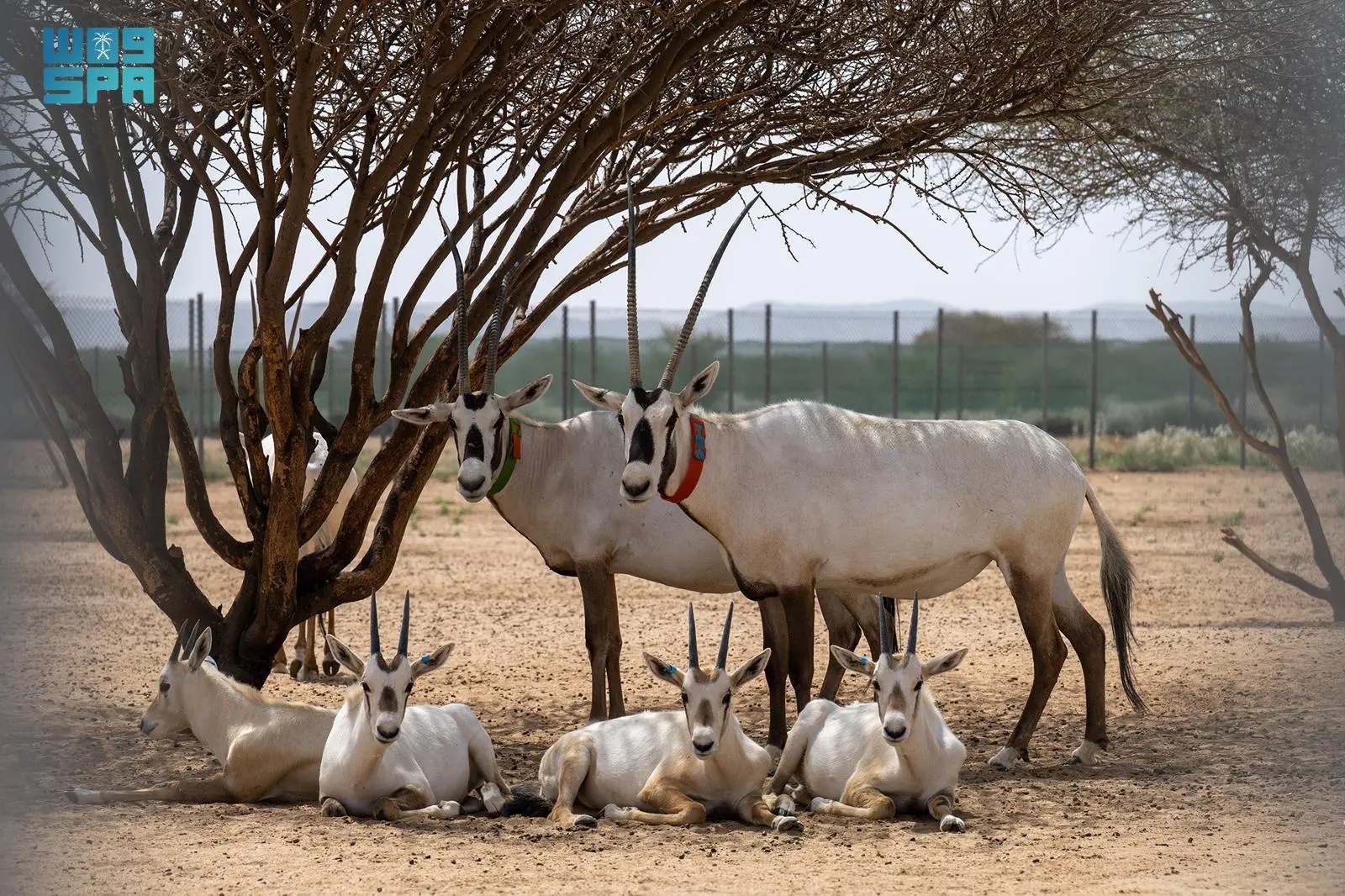
Arabian Oryx Recovery Marks Major Achievement in Saudi Conservation Efforts
The story of the Arabian oryx has been one of the most prominent national models in wildlife protection, as this desert animal nearly disappeared from its natural environment despite its high ability to adapt to harsh desert and semi-arid conditions.
Its numbers declined significantly over the past century due to overhunting, rapid development, and the deterioration of its natural habitats.
In response, Saudi Arabia launched a national program to preserve the Arabian oryx in 1986 through breeding centers affiliated with the National Center for Wildlife. Breeding efforts in captivity began with a founding group numbering around 57 heads, later supported by groups from regional and international sources.
In 1989, the first steps toward reintroducing the Arabian oryx were taken at the Imam Saud bin Abdulaziz Royal Reserve, and it has since been reintroduced across most of its historical geographic distribution range in reserves and national parks.
The Kingdom adopted integrated approaches in its efforts, including organized breeding, reintroduction, and research monitoring, in addition to cooperation with international entities concerned with wildlife conservation, which contributed to the gradual recovery of Arabian oryx numbers.
The story of the Arabian oryx represents a successful national model for biodiversity conservation, reflecting the Kingdom’s commitment to protecting its natural resources and highlighting its role in restoring environmental balance.


