




Do rising temperatures cause Asia’s deadly storms?
Scientists have been studying the recent wave of deadly storms that devastated Sri Lanka, Indonesia, Malaysia, and Thailand. They concluded in a study that the storms were "supercharged" by higher sea temperatures and made worse by rapid deforestation.
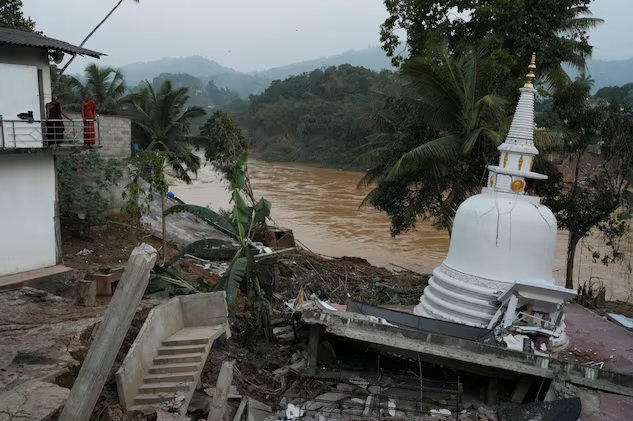
As a brief recap, tropical Cyclone Senyar devastated large parts of Southeast Asia, with the Indonesian island of Sumatra being one of the hardest-hit regions. Tropical Cyclone Ditwah battered Sri Lanka and caused floods and landslides, with the death toll exceeding 600 and economic losses estimated at around $7 billion.
A team of researchers with the World Weather Attribution group said that during the five days of most intensive rainfall, sea surface temperatures in the North Indian Ocean were 0.2 degrees Celsius higher than the 1991-2020 average, giving the storms additional heat and energy.
Without the 1.3 C rise in global mean temperatures since the pre-industrial age, the sea surface in the area would have been around one degree colder in late November, they estimated.
Tropical storms are common during the monsoon season, and while scientists say there is no evidence that climate change has made them more frequent, they say higher sea temperatures are making individual events more destructive.
Separately, scientists at the European Union's Copernicus Climate Change Service (C3S) said that 2025 is set to be the world's second or third warmest on record, potentially surpassed only by last year’s record-breaking heat.
The data is the latest from C3S following last month's COP30 climate summit, where governments failed to agree on substantial new measures to reduce greenhouse gas emissions, reflecting strained geopolitics as the United States rolls back its efforts, and some countries seek to weaken CO2-cutting measures.


