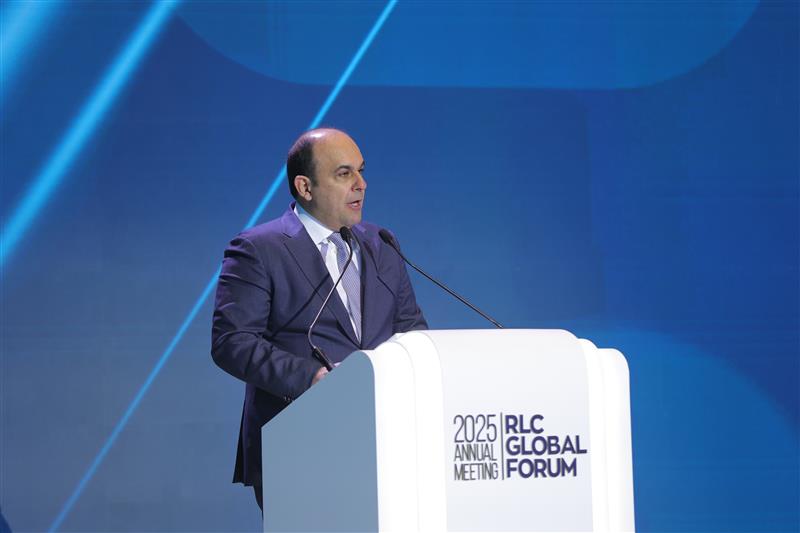
 Panos Linardos, Chairman of RLC Global Forum
Saudi Retail at a Historic Crossroads: Panos Linardos Unpacks Digital Shifts, Vision 2030, and the Future of Growth
1- How do you view the impact of digital transformation and the rise of e-commerce on traditional retail stores and sales in Saudi Arabia?
Digital transformation in Saudi Arabia is accelerating, but it’s doing so from a smaller base than many assume. According to reports from our partners, in 2023, e-commerce made up just 7.2% of total retail sales, so this remains a predominantly physical market. Still, the shift is clear. Reports from our knowledge partners expect Saudi Arabia, the UAE, and Qatar to reach just under $15 billion in retail e-commerce revenues by 2025, followed by steady growth of around 10% a year.
For traditional retailers, the impact signals a change in purpose. Stores are becoming more experiential and service-led, while digital channels handle convenience and repeat purchases. Yet, baqalas and traditional markets still dominate everyday shopping, offering low prices and strong personal trust.
In short: e-commerce is still a small slice of Saudi retail, but now it has transformed into an engine of structural change, reshaping how retailers design stores, manage logistics, and build customer experience.
2- To what extent have Saudi Arabia’s Vision 2030 programs contributed to reshaping and accelerating the growth of the retail sector?
We cannot deny that Vision 2030 has fundamentally reshaped the trajectory of Saudi Arabia’s retail sector. The national agenda has opened the economy, accelerated digital readiness, and created a far more dynamic environment for private investment.
Retail also sits within many of Vision 2030’s most active pillars. The expansion of tourism, entertainment, culture, and sports has introduced new types of consumers and elevated expectations across the entire market. At the same time, the rise of megaprojects and next-generation malls has raised expectations around experience and service standards, pushing retailers to innovate faster and, in many cases, to blur the lines between shopping, dining, leisure, and culture.
In many ways, Vision 2030 has helped broaden the role of retail in the Kingdom’s economic and social transformation.
3- What new trends do you expect to dominate the retail market over the next three years?
Globally, several shifts are set to define retail over the next three years. The most obvious, in my opinion, is the move toward fully omnichannel shopping, where consumers no longer distinguish between online and offline and expect a seamless, convenient experience across both.
We’ll also see retail continue to merge with the experience economy. Around the world, new mixed-use districts, entertainment venues, and lifestyle destinations are changing what a “store” is supposed to be, with shopping becoming part of a broader day-out rather than a standalone errand.
Another notable trend is the strengthening of homegrown and regional brands. Whether in fashion, beauty, accessories, or food, local concepts are scaling faster and earning a larger share of consumer loyalty, adding more diversity and cultural relevance to global markets.
And finally, the role of data and technology will keep expanding; not in a futuristic way, but in the everyday decisions retailers make. Better demand planning, smarter promotions, and more relevant customer experiences will simply become part of how good retail operates.
All of this points to a global retail landscape that is more fluid and more responsive to the way people actually live and shop.
4- How can local brands enhance their competitiveness amid the significant expansion of global brands in the Kingdom?
Local brands don’t need to imitate global players to be competitive in the Kingdom’s retail landscape. What works is a combination of strong local identity and solid execution. Modern consumers respond to brands that feel rooted in their culture.
At the same time, local brands have to match the basics that global brands excel at: reliable supply chains, consistent store operations, good merchandising, and investment in talent. These fundamentals matter just as much as creativity.
There’s also a regional opportunity. With e-commerce and marketplace platforms expanding quickly, Saudi brands can reach customers across the GCC without the traditional costs of physical expansion, giving them a chance to scale earlier and faster.
Put simply, the combination of authenticity, operational discipline, and regional reach will help local brands stand out as the market becomes more competitive.
5- What are the main challenges currently facing retailers, especially with changing consumer behavior and rising operating costs?
Retailers in the Kingdom are dealing with a double pressure: more demanding consumers and higher structural costs.
On the demand side, the Saudi shopper is younger, more digital, and more selective. Most of the population is under 35, and the data show consumers trading up in categories that matter to them (health, beauty, experiences), while becoming very price-sensitive in everyday baskets. Promotional intensity has increased, and loyalty is more fragile; people will switch brands or retailers quickly if they don’t see value.
On the cost side, retailers are navigating higher labor costs, rising rents, and the growing expense of technology investment. At the same time, they’re expected to upgrade stores, expand omnichannel capabilities, strengthen last-mile delivery, and meet new regulatory standards.
The result? Revenue growth looks healthy, but profitability is under pressure, making productivity, cost discipline, and operational efficiency central to staying competitive.
6- How can the 2026 RLC Global Forum in Riyadh help leaders navigate a fragmented world, marked by rising complexity and redrawn lines of growth?
The world has become more fragmented, but leadership doesn’t have to be. What we are trying to do at the 2026 RLC Global Forum on February 3 and 4 in Riyadh is create a space where decision-makers can step outside the noise and see the bigger picture. Riyadh is the right place for that conversation: the center of gravity in global commerce and economic activity is shifting, and the region sits at the very center of this changing tide.
As I always say, progress must be co-created and retail cannot exist and thrive in isolation. Leaders today need both clarity and connection. The Forum brings together voices from across retail, technology, investment, real estate, academia, and policy; people who rarely sit at the same table but who increasingly shape one another’s futures. It provides a setting that encourages meaningful interactions and strategic networking, the kind of engagement that broadens perspectives and opens new pathways for collaboration.
Ultimately, what the event offers is first and foremost context. A way to understand where opportunities are opening up, where risks are building, and where collaboration can unlock new pathways for growth.