What Do the Rock-Carved Sites of Hegra in AlUla Contain?
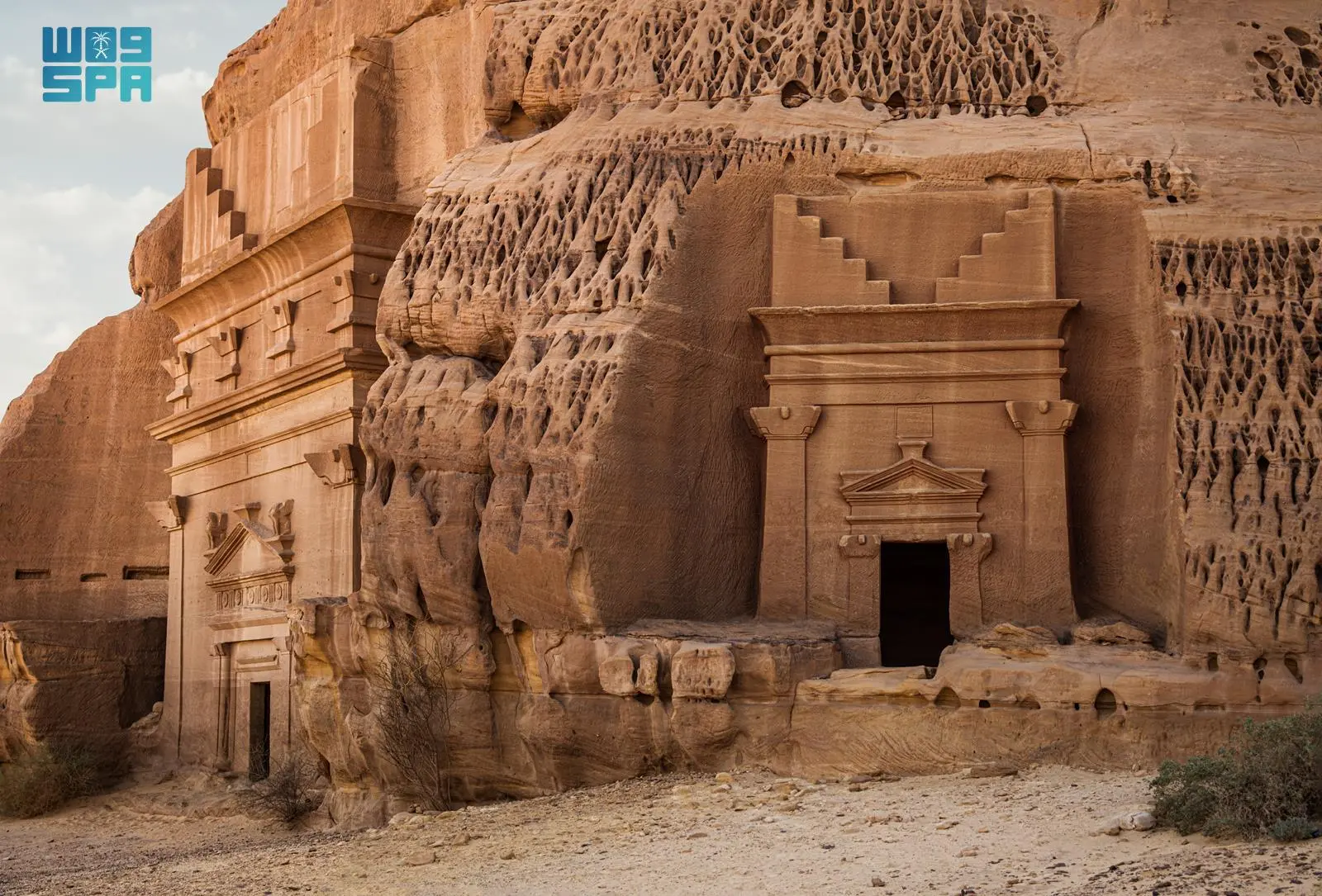
The Hegra archaeological site in AlUla Governorate features landmarks from various historical periods, most notably the Nabataean tombs dating back to the first century AD, carved into mountains in a distinctive architectural style that reflects advanced engineering and artistic knowledge as well as humankind’s ability to shape rock.
According to the Royal Commission for AlUla (RCU), the site contains 141 rock-carved tombs, 93 of which are adorned with intricately carved façades showcasing geometric designs. These tombs are distinguished by their decorative elements and inscriptions of religious and social significance, offering insights into the lifestyles of that era. This underscores the architectural and artistic mastery achieved by this civilization in rock carving and funerary façade design.
Hegra was the first Saudi site to be inscribed on the UNESCO World Heritage List, owing to its rich archaeological evidence of the region’s history and civilization. Inscriptions on the entrances of the tombs provide information about the social and professional status of people at the time.
Archaeologists have discovered the remains of approximately 80 individuals in a single tomb. Among the most notable findings are the remains of Hinat, daughter of Wahbu, in the Red Mountain tomb complex—an important humanistic indicator of the role of women in Nabataean society.
Her facial features were reconstructed using modern techniques under the supervision of the RCU by an international team that included archaeologists specializing in Nabataean civilization and other experts. This marks the first reconstruction of a Nabataean woman’s face worldwide, and she is believed to have been over 45 years old at the time of her death. The Hegra Visitor Center presents Hinat’s story as part of an educational experience highlighting the human dimension of the site’s cultural heritage.