




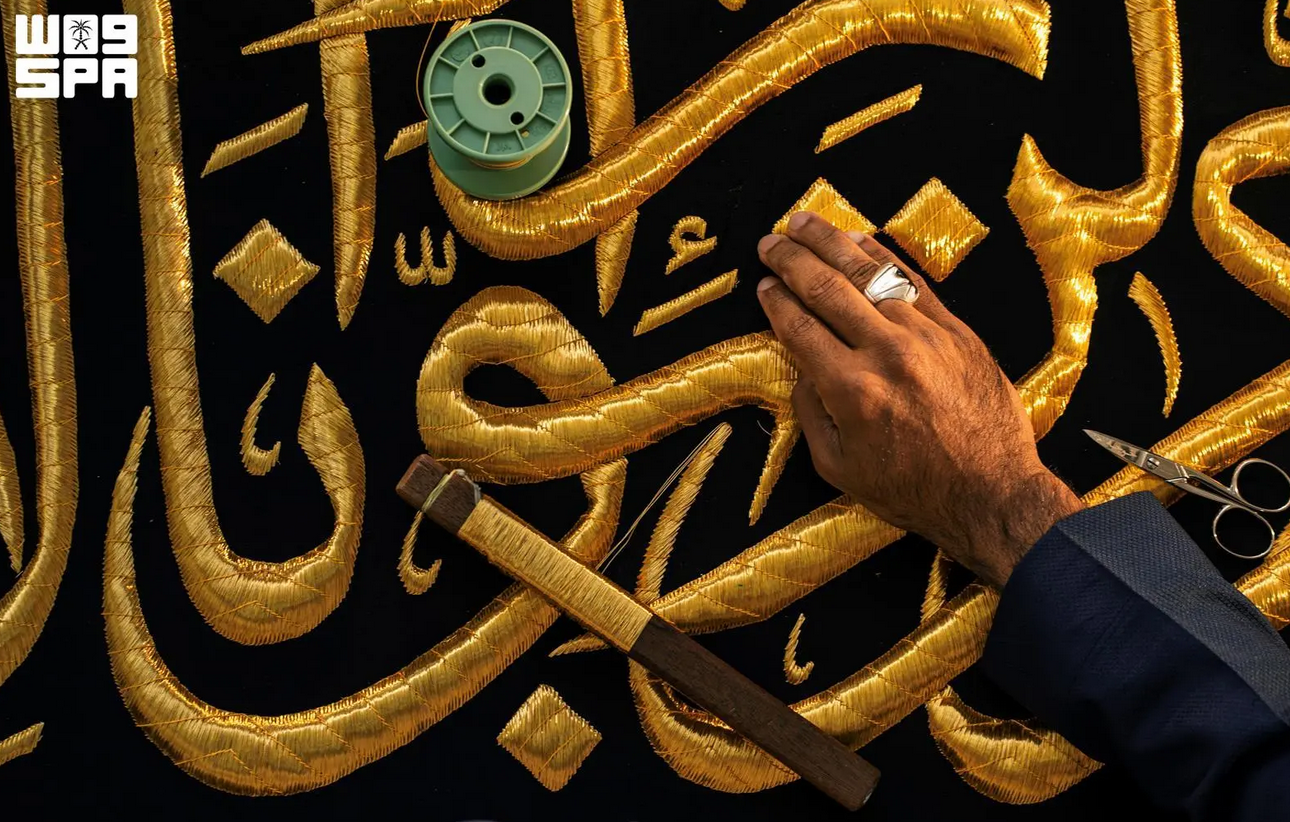
Wrth Highlights Traditional Arts in Kaaba Kiswa Replacement Ceremony for 1448 AH
The Royal Institute of Traditional Arts (Wrth) highlighted the traditional arts embodied in the making of the Holy Kaaba's Kiswa, coinciding with the Kiswa replacement ceremony at the beginning of the new Hijri year 1448 AH, through an enriching digital campaign that explored the artistic and aesthetic elements that have, for decades, formed part of the identity of this longstanding Islamic tradition.
The campaign showcased several traditional arts associated with the Holy Kaaba's Kiswa, most notably the art of hand embroidery used in the Quranic verses and decorative motifs crafted with gold and silver threads, in addition to Arabic calligraphy in the Thuluth script, which is considered one of the most important scripts used for inscribing Quranic texts on the Kiswa due to its artistic beauty and its ability to present texts prominently across large surfaces.
Through educational content published across its digital platforms, Wrth reviewed the details of these traditional arts, highlighting embroidery's role in presenting the Kiswa's calligraphic and decorative elements and emphasizing the importance of Arabic calligraphy as one of the most prominent visual components that gives the Kiswa its distinctive and majestic character.


