




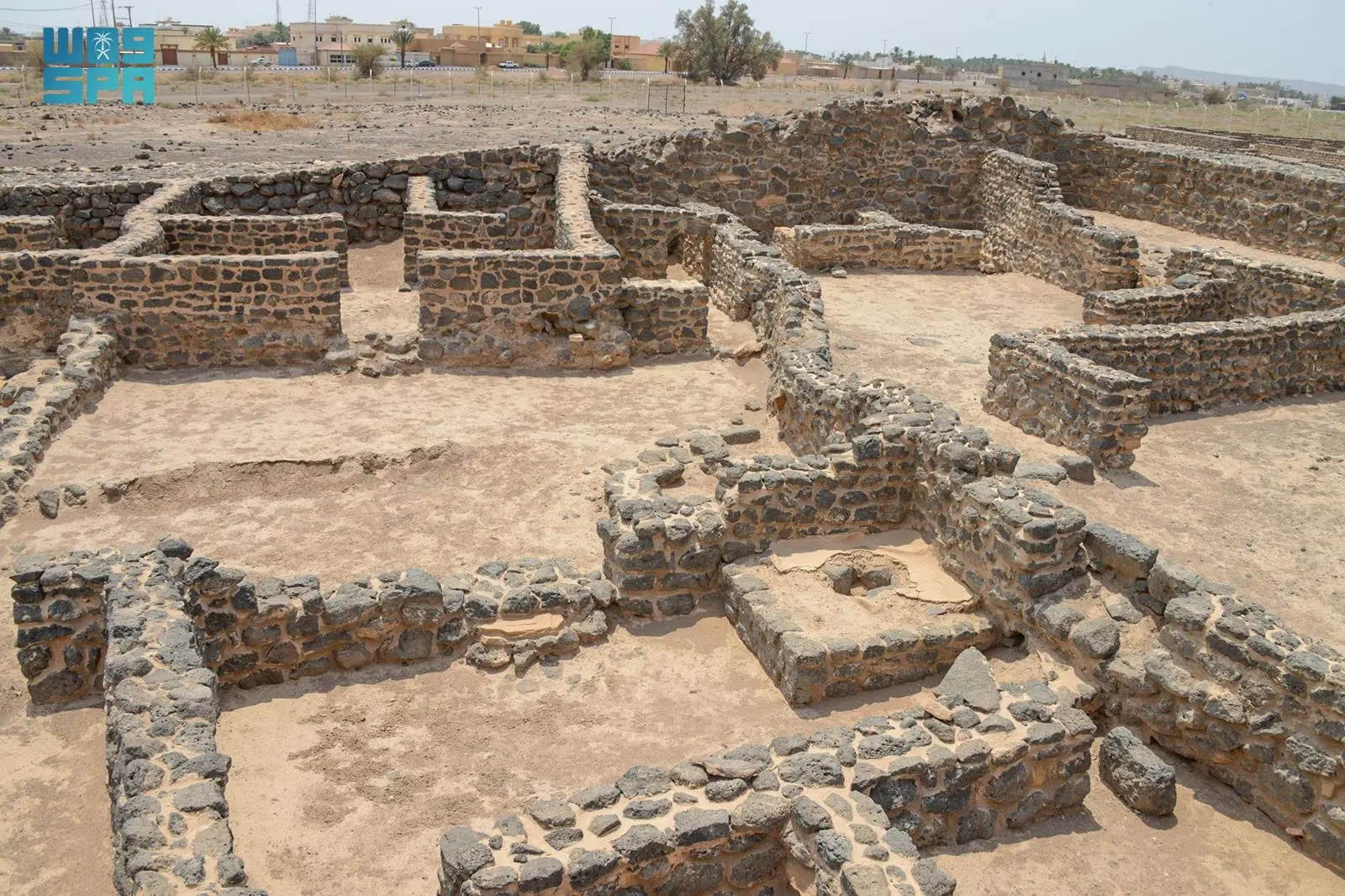
Kharash Palace: A Symbol of Architectural Harmony and Historical Significance
Kharash Palace stands as one of the most significant historical landmarks in Hail Region. It is located in the archaeological village of Fayd, which served as a major station along the pilgrimage and trade routes throughout the Islamic eras.
The palace stands out for its defensive architectural character, reflecting the strategic importance of the site and its role in protecting caravans and monitoring transit routes.
The palace was constructed from the black basalt stones abundant in the area, in a style that demonstrates the harmony between local architecture and the natural environment. It also illustrates the ingenuity of past societies in utilizing available resources to meet security and military needs.
Kharash Palace was designed to play a central role in securing caravan routes. It includes watchtowers and integrated defensive features, and its walls rise to approximately seven meters in height—an indication of its military significance and its capacity for fortification and protection.
The palace stands today as a living testament to ancient defensive architecture, embodying an important chapter in the history of human settlement and urban organization in Fayd.
Historically, the village was closely associated with serving pilgrims and travelers, contributing to the flourishing of economic and social activity during that period.
Kharash Palace continues to receive attention from national heritage authorities as part of ongoing efforts to preserve and document archaeological sites, while enhancing their cultural and tourism value. These initiatives contribute to showcasing the rich historical and civilizational depth of Hail Region and support the Kingdom’s cultural tourism objectives.


