




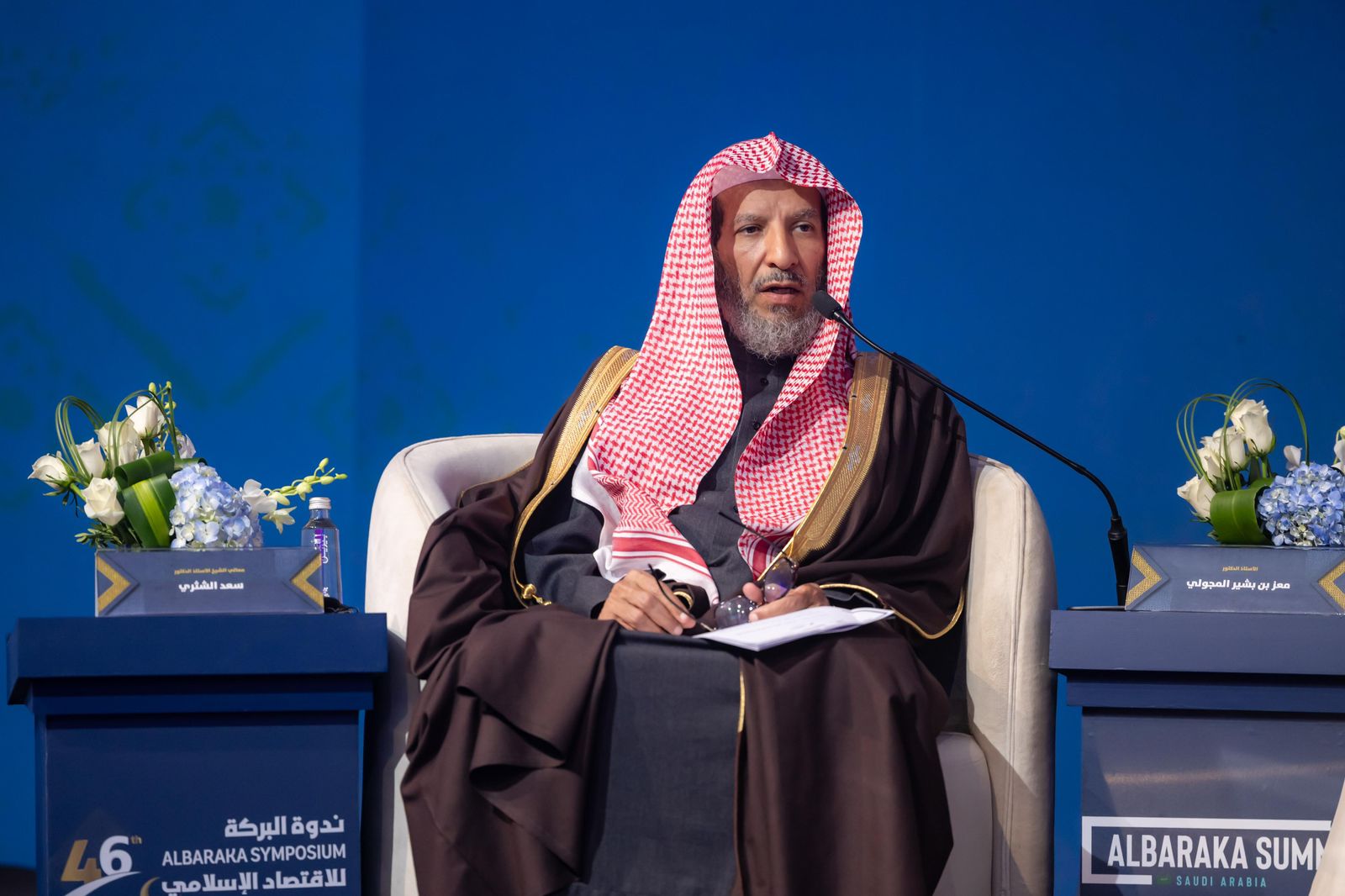
His Royal Highness the Prince of the Madinah Region Patronizes the Opening of the 46th AlBaraka Islamic Economics Symposium
His Royal Highness Prince Salman bin Sultan bin Abdulaziz, Prince of the Madinah Region, patronized the opening ceremony of AlBaraka Islamic Economics Symposium (46), “The Righteousness and Benevolence in Islamic Economy: The Future Forward,” organized by AlBaraka Forum for Islamic Economy at Prince Muqrin bin Abdulaziz University in Madinah.
During the ceremony, H.E. Mr. Abdullah Saleh Kamel, Chairman of the Board of Trustees of AlBaraka Forum for Islamic Economy affirmed that the sector of righteousness and benevolence constitutes the largest sector within the Islamic economic system. He stressed that achieving genuine and balanced development cannot be realized without recognizing this sector as a core economic pillar, rather than merely a complementary charitable activity.
In his address, Kamel explained that selecting “The Righteousness and Benevolence in Islamic Economy” as the theme of this year’s symposium reflects a forward-looking vision for the future of Islamic economics. He noted that Madinah, the host city of the symposium, witnessed the earliest foundations of Islamic economic practice, where the concepts of waqf (endowment), spending, and benevolence were established as enduring economic and developmental values throughout history.
He further highlighted that over past decades, AlBaraka Symposium has played a pivotal role in developing modern Islamic economic instruments, most notably Islamic banking. He emphasized that the coming phase requires advancing integrated pathways that include the economy of righteousness and benevolence, activating the role of capital, and upholding ethics and values as the fundamental foundation of the Islamic economy.
Kamel added that these three pathways collectively form the basis for shaping the future of Islamic economics, alongside the continued development of key instruments that have emerged over the past fifty years—such as sukuk and takaful insurance—as well as the optimal use of modern financial technologies to enhance impact and sustainability.
He also underscored the importance of empowering the non-profit sector, noting that the Saudi experience in this field represents an inspiring national model with strong potential for global replication, contributing to sustainable development and maximizing social impact.
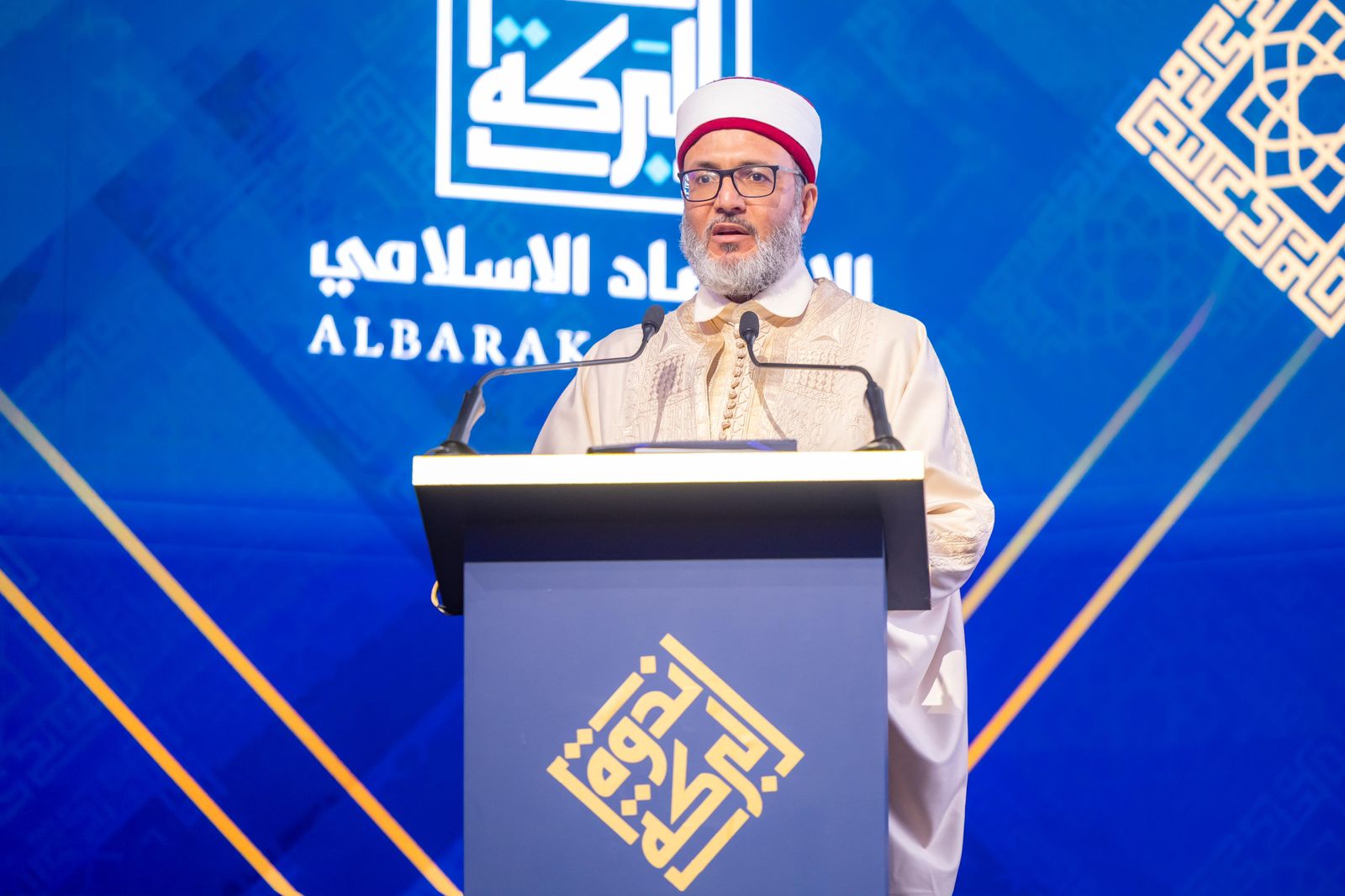
Following this, His Excellency Sheikh Hisham bin Mahmoud, Grand Mufti of the Republic of Tunisia, delivered a speech in which he affirmed that holding the symposium in the city of the Prophet Muhammad (peace be upon him) embodies the values of righteousness, benevolence, and social solidarity upon which the Islamic message was founded. He cited the historical model of cooperation between the Muhajirun and the Ansar, emphasizing that these values form the cornerstone of humanitarian and economic action in Islam.
He praised the Kingdom of Saudi Arabia’s pioneering role—under the leadership of the Custodian of the Two Holy Mosques and His Royal Highness the Crown Prince (may God protect them)—in supporting charitable and developmental initiatives and in promoting the principles of compassion and solidarity. He also commended the experience of AlBaraka Group and AlBaraka Bank in Tunisia as an integrated model that combines banking practice with jurisprudential vision, grounded in the principle of social solidarity and support for those in need. He further highlighted the contributions of the late Sheikh Saleh Abdullah Kamel, may God have mercy on him, to developmental work, and the continuation of this approach by his family and successors, expressing his appreciation for the patronage of His Royal Highness the Prince of the Madinah Region.
The ceremony also featured a video produced by AlBaraka Form, titled “The Economy of Righteousness and Benevolence: Giving That Creates Lasting Impact”, which traced the historical roots of the economy of giving in Islam—from the first waqf established in Madinah to the transformation of the non-profit sector into a significant economic and developmental driver in the modern era. The presentation highlighted the Kingdom’s experience in empowering the non-profit sector within the framework of Saudi Vision 2030, reflecting its evolution into an effective developmental force supporting economic and social sustainability.
In the same context, His Royal Highness the Prince of the Madinah Region oversaw the signing of three Memoranda of Understanding. The first was signed between the AlBaraka Forum for Islamic Economy and the Islamic University of Madinah, aimed at strengthening institutional integration and enhancing programs and activities that support human development.
The second memorandum was signed between the AlBaraka Forum for Islamic Economy and INCEIF University, to support scientific research and encourage the exchange of knowledge and expertise. The third was signed with King Abdulaziz University, represented by the Institute of Islamic Economics, to enhance research and knowledge integration and to develop academic resources.


