




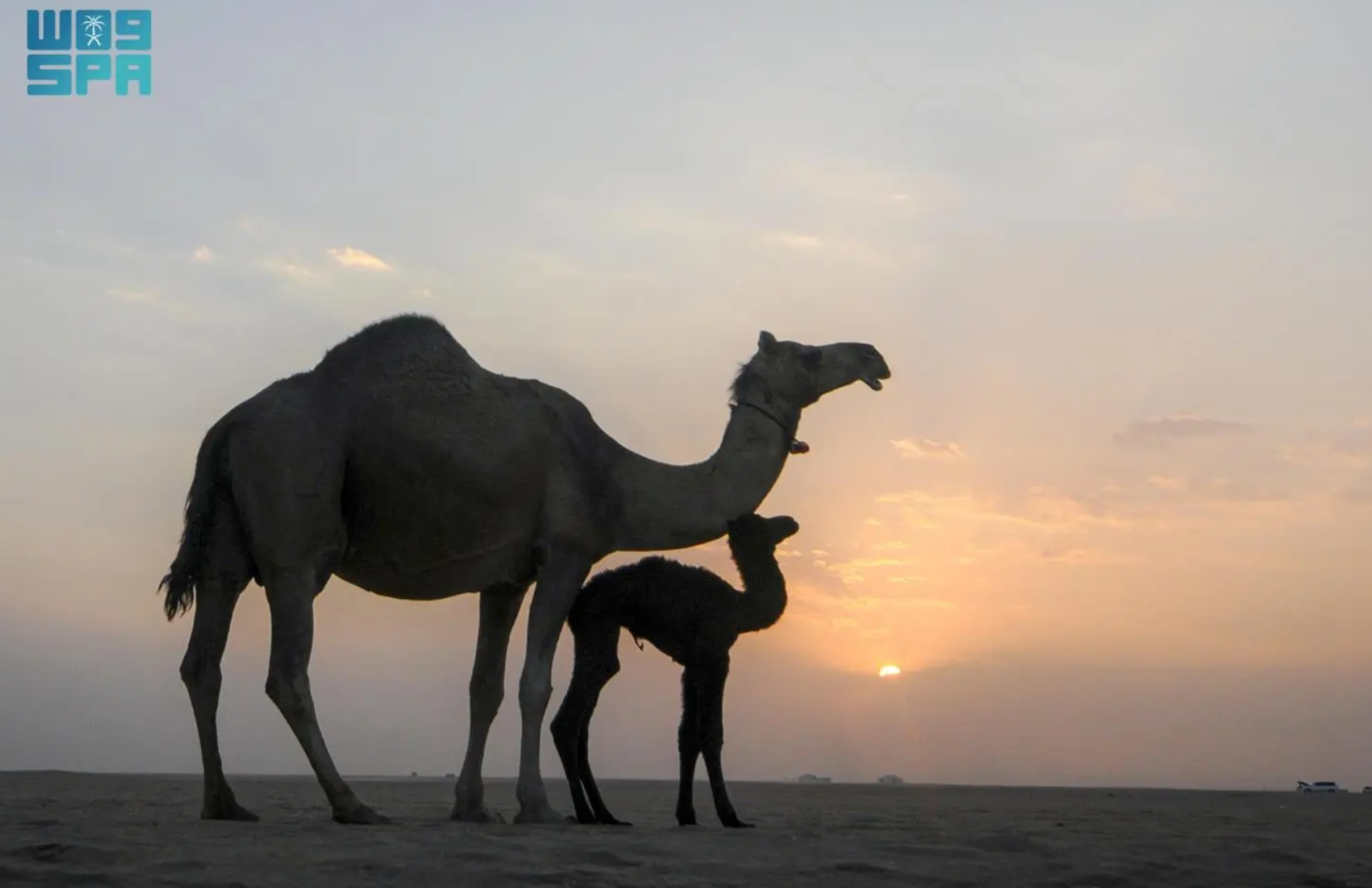
Camels in Najran: A Living Heritage and Cultural Symbol
Camels represent a deeply rooted heritage symbol in Najran Region, reflecting a long history of interaction between people and nature. They are among the most important animal resources and form an integral part of identity and popular heritage.
Head of the Camel Association in Najran Hadi Al Amer noted that camel breeds in Najran are diverse, with some of the most prominent being “Al-Awark,” one of the ancient Arabian breeds associated with areas where arak trees grow. This breed is characterized by its light color, sparse hair, and high endurance, making it widespread in southern Arabia.
He also noted “Al-Majahim,” a breed known for its dark color ranging from black to brown, which is considered among the best for milk production and endurance, while “Al-Asayel” camels are distinguished by their agility and slender build, giving them a speed advantage.
Dr. Hind bint Daoud Al-Shaqir from the Arabic Language Department at Najran University said that camels are an essential component of Arab cultural identity. She noted that archaeological sites such as Al-Ukhdood, Al-Tharwa Mountain, and the Hima area have documented through ancient inscriptions and drawings the relationship between humans and camels, reflecting their deep-rooted heritage and their role in the lives of the region’s inhabitants across the ages in culture, trade, and travel.
She also pointed to the Kingdom’s strong interest in camels, noting that 2024 was designated as the “Year of the Camel,” highlighting their status as part of national wealth and cultural identity. In addition, efforts continue to support camel breeders and owners through the establishment of the Camel Club and the organization of the King Abdulaziz Camel Festival, affirming the camel’s role as a source of future economic opportunity and a national heritage that must be preserved.


