




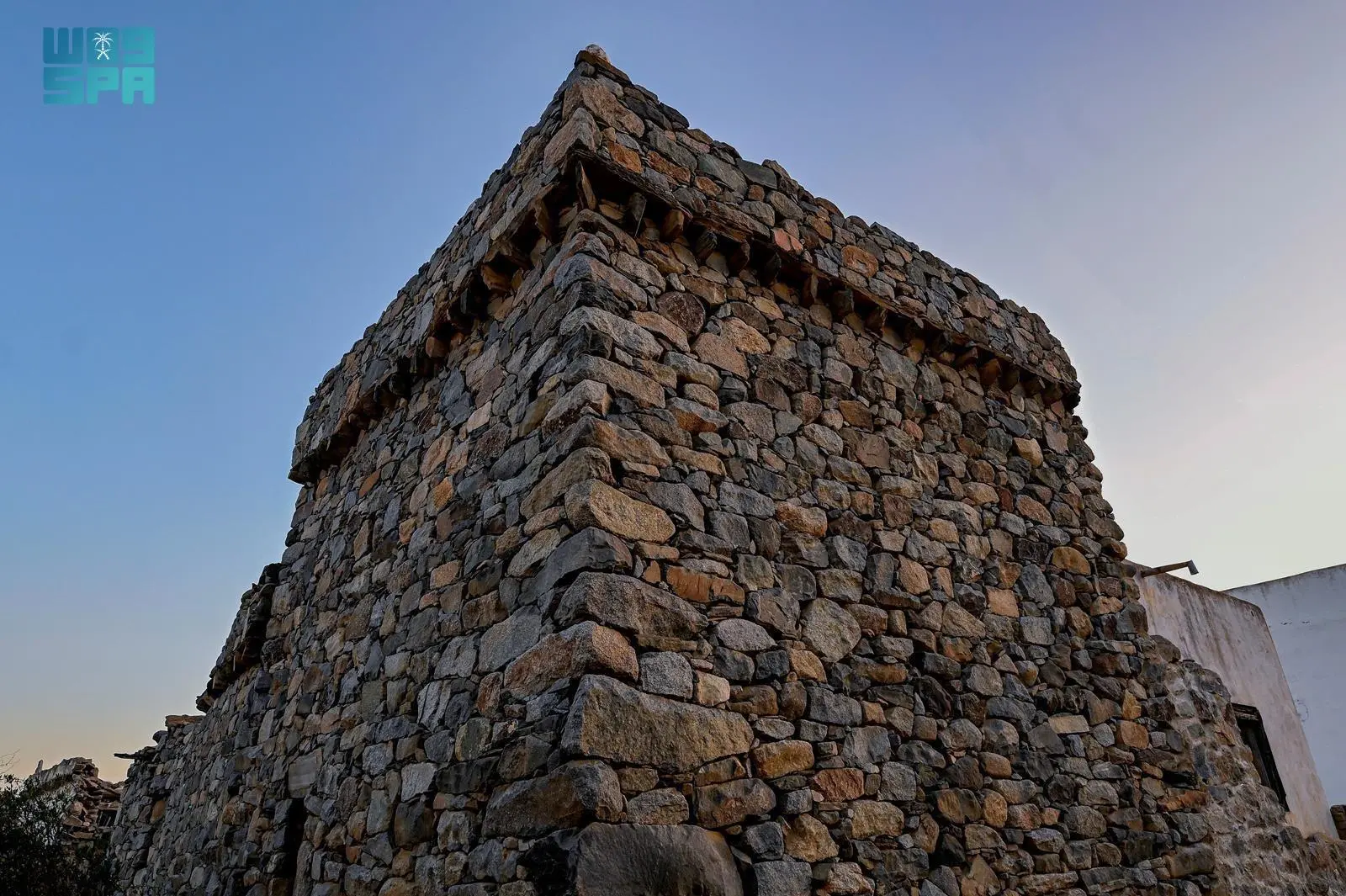
‘Bin Habish Palace’ Historic Landmark Recounts Founding Stages, Rich National Identity
Historic palaces and forts in Al Baha Region preserve a living national memory, reflecting events and occasions and witnessing the Kingdom’s founding stages and development transformations.
They form a distinctive legacy of traditional architecture. So do houses, mosques and castles built from local materials such as stone, timber and sand used in roofs, columns and other parts.
These heritage buildings blend with traditions, customs and folk arts as a core part of national identity. They also reflect cultural and social diversity and add value to the national economy. These villages have become destinations for tourists from within the Kingdom and abroad.
Heritage Commission official statistics show Al Baha Region has 313 archaeological sites and 2,634 architectural heritage sites. The region is rich in heritage villages and archaeological buildings built by ancestors amid varied terrain and climates.
Among these sites, the historic “Bin Habish Palace” stands in Bani Salim village in Baljurashi Governorate, rooted in a long history. Its mud-brick corners and rooms seem to hold the voices of those who gathered there to consult and deliberate.
Abdullah Al Habish told the Saudi Press Agency the palace takes its name from its owner, Saleh bin Misfer bin Habish Al Ghamdi. He was born around 1173 AH and lived about 57 years before his death in 1230 AH.
Al Habish said the palace once functioned like a small hub, combining residence, hospitality and protection. It consists of eight houses covering about 3,000 square meters and includes a spacious guest hall to receive guests and delegations, the palace fortress and a private family wing. It also has stables for purebred horses, an internal well to supply water and multiple service areas that reflect careful planning and skilled building.


