




KAUST Develops Cooling Coating to Boost Power Line Capacity in Hot Climates
A passive cooling coating that reflects solar radiation while also dissipating heat generated by electrical currents could increase the amount of electricity existing overhead power cables can safely carry, particularly in extreme heat.
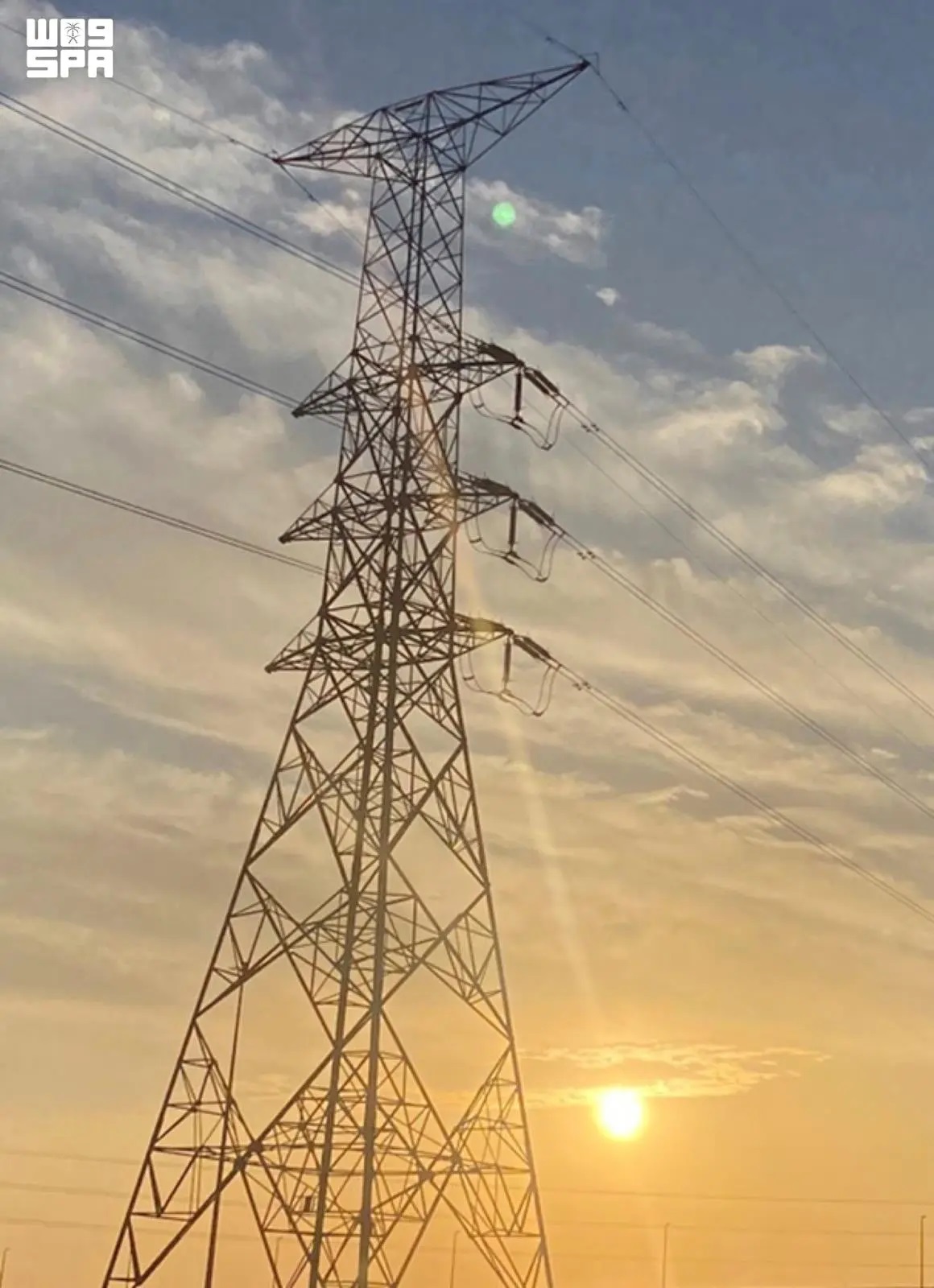
Overhead power lines are heated both by solar radiation and by the electrical current they carry. As their temperature rises, the amount of electricity they can safely carry decreases because the cables must remain below their maximum operating temperature.
Published in Light: Science & Applications, the King Abdullah University of Science and Technology (KAUST)-led paper describes a proof-of-concept coating that combines silicone with boron nitride particles to scatter sunlight while also conducting internally generated heat toward the cable surface.
This distinguishes the technology from conventional radiative cooling coatings, which are typically designed for surfaces such as roofs and buildings that are heated primarily from the outside. Because power cables also generate heat internally as electricity flows through them, a coating that blocks the escape of that heat can work against the cooling effect. The technology is designed to be retrofitted onto existing power cables.
KAUST professor of materials science and applied physics Qiaoqiang Gan, whose group led the research, said: “Power cables present a particular challenge because they are heated not only by the sun but also from within by the electricity they carry. We wanted a coating that could address both sources of heat, rather than solving one problem while making the other worse.”
He added that the challenge is particularly relevant in countries with hot climates, such as Saudi Arabia, where high ambient temperatures and intense solar radiation place additional thermal pressure on overhead transmission lines. Outdoor testing of commercial cables at KAUST without electrical current showed that coated cables remained approximately 5 C cooler than bare cables and 15 C cooler than conventional insulated cables around midday.
With contributions from researchers at King Abdulaziz City for Science and Technology (KACST) and Beijing University of Chemical Technology, the study’s first author, KAUST postdoctoral fellow Kai Xu, designed the coating and led its fabrication, characterization, and outdoor testing.
To evaluate the coating while accounting for heat generated by electrical current, researchers also tested simulated cables with internal heating during Saudi summer conditions. With ambient temperatures reaching approximately 45 C and intense solar radiation, the coated cable remained between about 50 C and 70 C, while bare and conventionally insulated cables reached temperatures of up to 90 C and 80 C, respectively.
To assess its potential durability in harsh outdoor environments, the researchers subjected the coating to abrasion, ultraviolet aging, salt spray, and flame testing. After 1,000 sandpaper abrasion cycles and 240 hours of accelerated UV aging, the coating retained its solar-reflecting and heat-emitting properties.
While the proof-of-concept cable solution still requires testing on operating transmission lines, modeling for Riyadh indicates the coating could allow power lines to carry approximately 10 percent more electricity on average during the daytime throughout the year, rising to as much as 18.3 percent more during the hottest summer period.
Across 13 cities with hot climates, the researchers modeled potential average daytime increases in current-carrying capacity of about six to 10 percent. Further work is needed to assess and optimize the coating’s mechanical reliability and long-term durability under real-world outdoor conditions, important steps toward determining its potential for wider deployment.


