




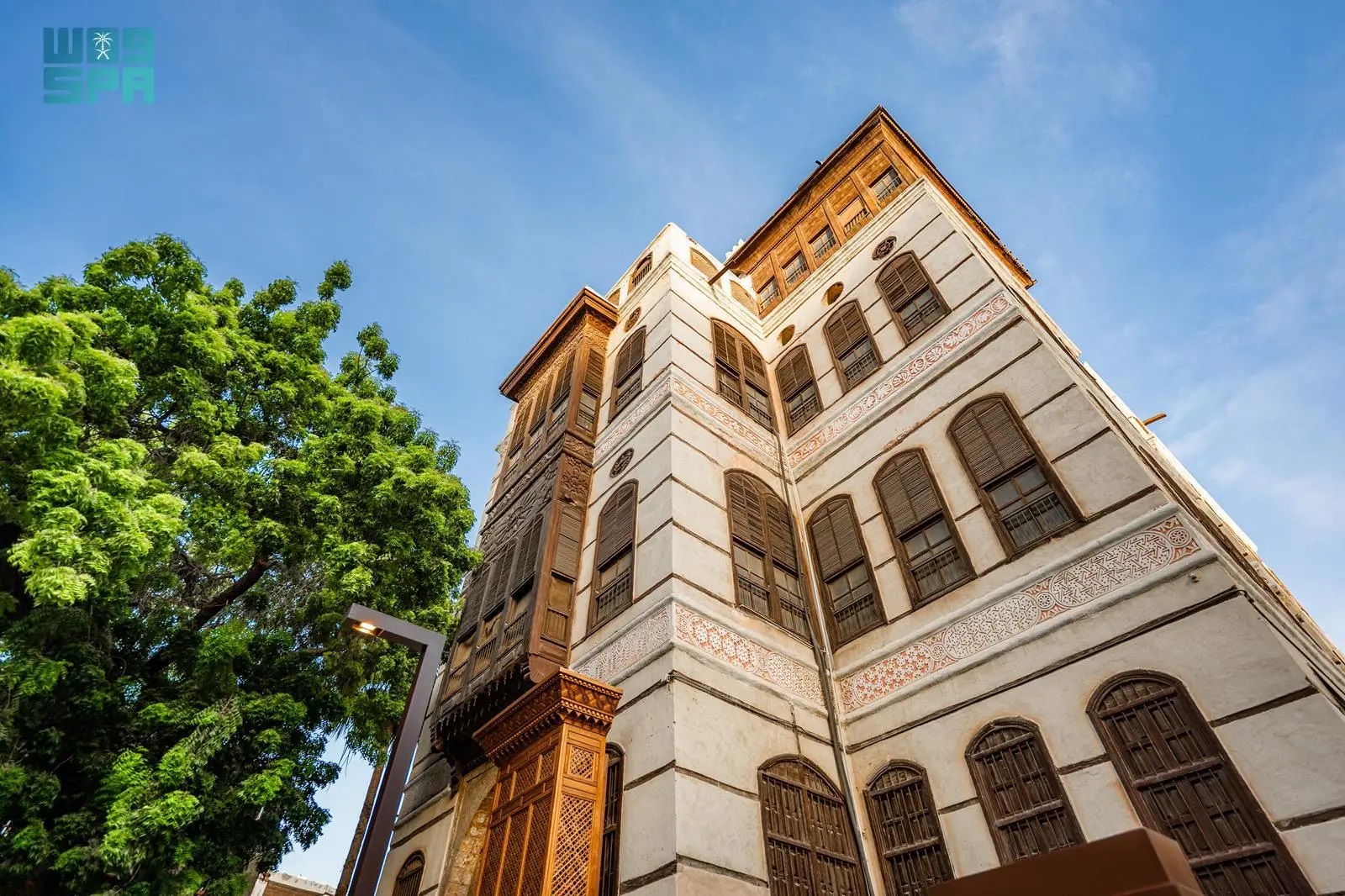
Historic Jeddah Revives Its Seaside Legacy on World Heritage Day
The story of Historic Jeddah is renewed with the arrival of World Heritage Day, as its ancient alleyways come alive and its coral-stone houses reclaim their splendor, standing as enduring testaments to the Kingdom’s rich history and its role as a commercial and cultural hub along the Red Sea coast.
Inscribed as a UNESCO World Heritage Site in 2014, Historic Jeddah represents a distinctive architectural model that blends traditional design with maritime and mercantile influences shaped over centuries. Landmarks such as Nassif House (Beit Nassif) and Baeshen House (Beit Baeshen) stand as symbols of this heritage, adorned with intricate wooden latticework (rawashin) and detailed carvings.
Beyond its architectural significance, Historic Jeddah embodies a broader narrative of coexistence and cultural exchange. For generations, it served as a gateway for pilgrims and traders arriving from across the world, reinforcing its status as a crossroads of civilizations.
Extensive efforts have been undertaken to preserve both the tangible and intangible heritage of the area. Restoration initiatives have focused on safeguarding historic buildings constructed from coral stone and wood, while rehabilitation projects have revived key religious sites, including Al-Shafi’i Mosque. Archaeological efforts have also contributed to uncovering significant landmarks such as the Othman bin Affan Mosque and the Al-Shuna archaeological site.


