




Saudi Arabia’s Arabian Oryx Restoration Marks Major Conservation Success
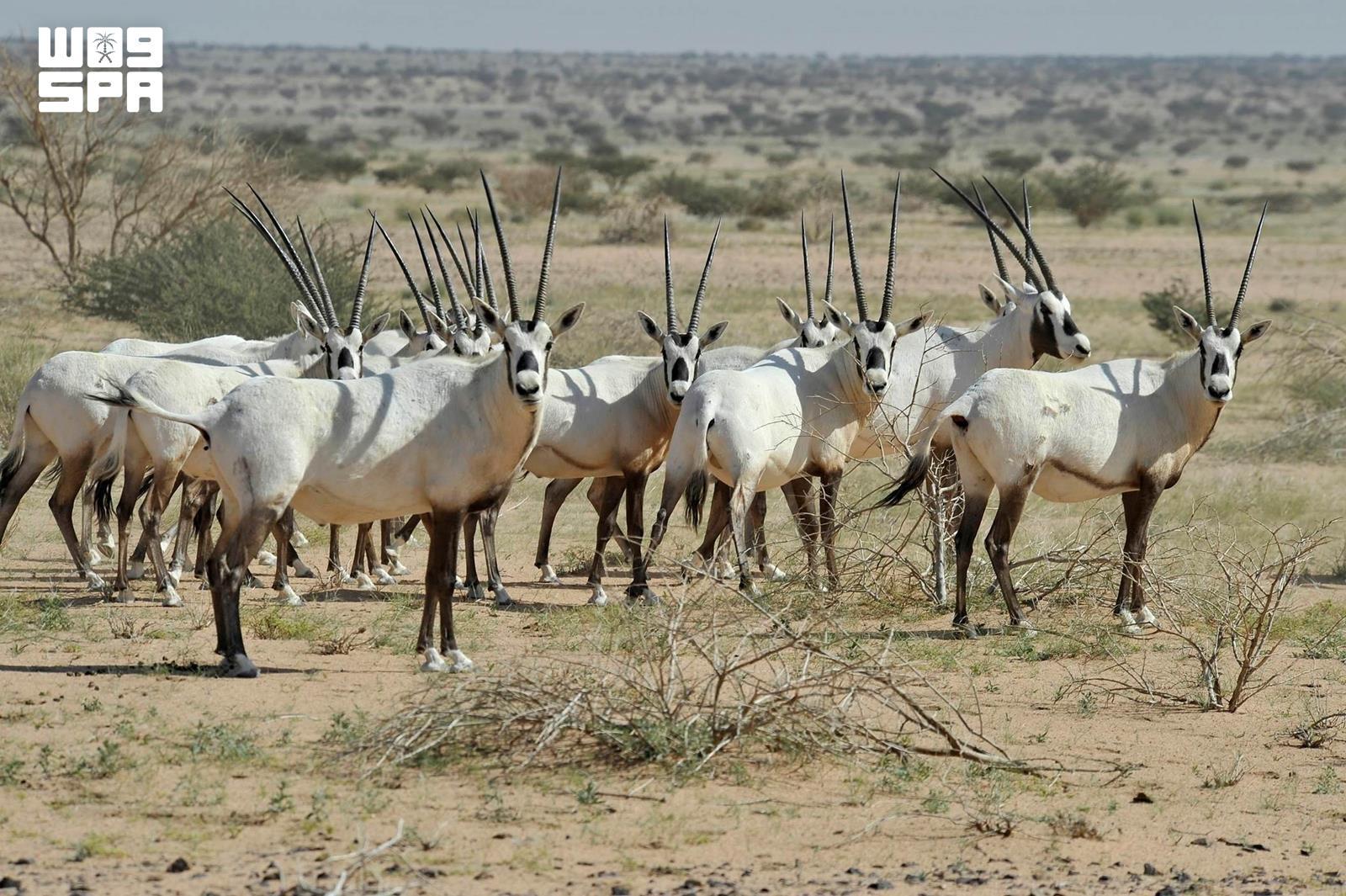
For four decades, Saudi Arabia has pursued a successful journey to restore the Arabian oryx to its historical habitats, following the species’ disappearance from the wild in the 1970s.
This national conservation success has been documented by PANORAMA, the international platform for sharing conservation solutions, highlighting the Kingdom’s efforts led by the National Center for Wildlife through conservation breeding, reintroduction, habitat protection, and post-release monitoring and management.
International efforts to save the Arabian oryx date back to the early 1960s, when the International Union for Conservation of Nature (IUCN), in collaboration with the World Wildlife Fund (WWF), launched Operation Oryx to establish a breeding herd and conserve the species as its wild population declined rapidly.
Saudi Arabia participated in these early efforts before developing a comprehensive national program. In 1986, the Kingdom launched a structured Arabian oryx breeding program, marking a new phase that paved the way for its return to the wild.
In 1989, the first reintroduction efforts began in Imam Saud bin Abdulaziz Royal Reserve, followed by further releases and the establishment of wild herds. The program expanded to Uruq Bani Ma'arid Reserve in 1995 and later to other sites across the species’ historical range in the Kingdom.
The successful restoration of the Arabian oryx is the result of decades of sustained and coordinated conservation measures. These efforts gained further momentum with Saudi Vision 2030 and the Saudi Green Initiative, which aims to expand protected areas to cover 30% of the Kingdom’s terrestrial and marine territory.
The program’s impact extends beyond the species itself, helping build national expertise in conservation breeding, protected-area management, veterinary care, monitoring, and applied research. It has also strengthened the capabilities of rangers and technical personnel and enhanced coordination among stakeholders involved in breeding, release, monitoring, and long-term management, supporting a more sustainable future for biodiversity in the Kingdom.


