




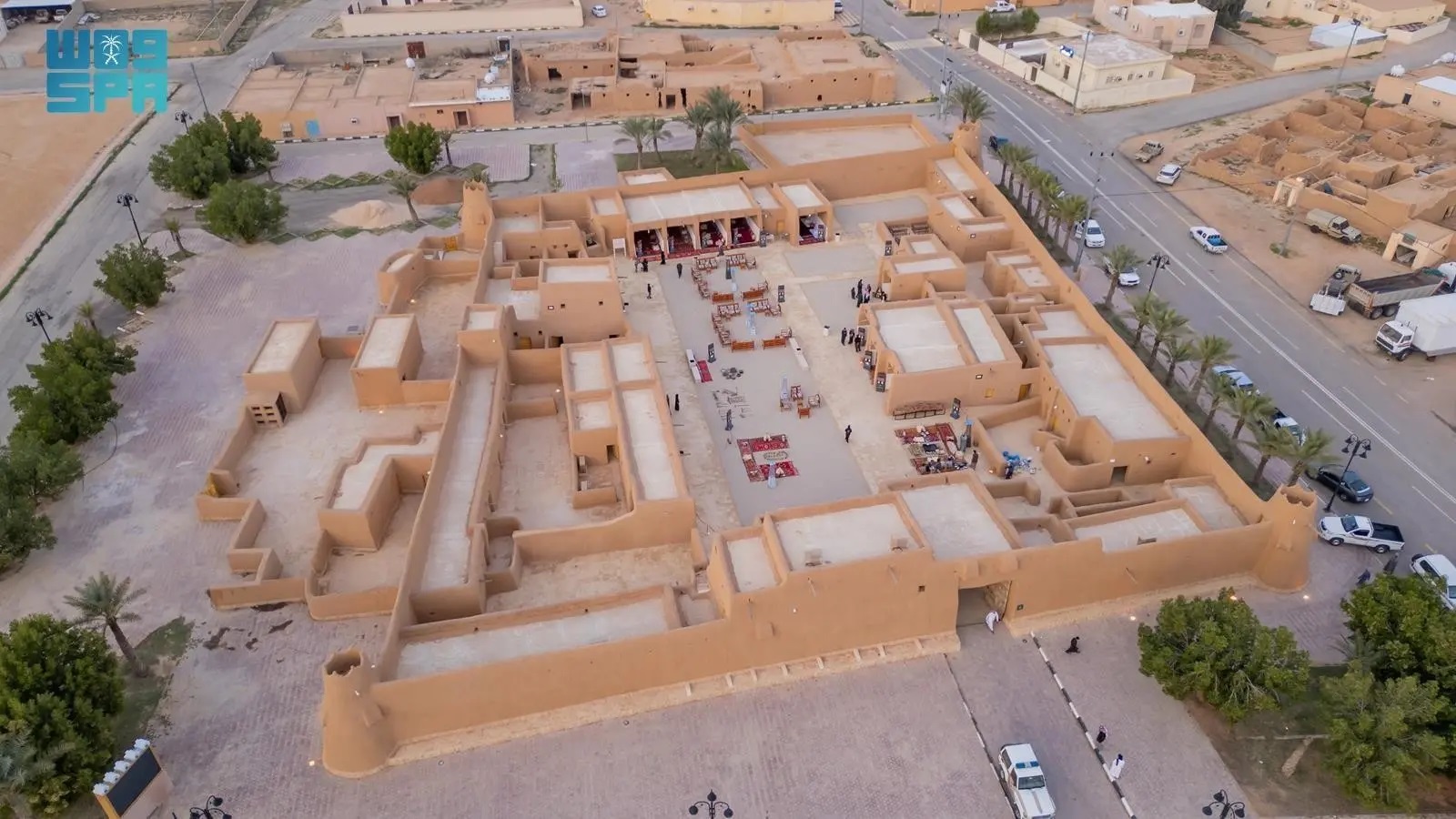
Mud Houses in Northern Borders: A Living Memory of Ancestors’ Stories
Traditional mud houses in the villages of Northern Borders Region stand as living testaments to the authenticity of the place and its deep-rooted history. They embody the beauty and simplicity of rural architecture, preserving within their walls the stories of ancestors and the contours of a life shaped by the environment and molded by human spontaneity and creativity.
These houses reflect the prevailing lifestyles of earlier eras, during which residents faced climatic challenges and the harshness of nature, with ingenious solutions that sustained and facilitated daily life.
They represent an advanced model of environmental adaptation, relying on locally sourced materials such as clay, wood, and palm fronds. This demonstrates a harmonious relationship between humans and their land, as well as an early awareness of sustainable building concepts.
The mud houses resemble an open book, allowing visitors to explore the details of past life—from people’s concerns and aspirations to their simple dreams and daily rituals. They do not merely tell the story of construction; rather, they narrate chapters of social memory, document the human connection to place, and evoke the warmth and essence of traditional life.
Although their designs vary from house to house, they share common features, most notably the presence of majlis spaces in some homes. These spaces served as the heart of the house and the center of gatherings—a place for receiving guests and exchanging conversations—reflecting the values of generosity and social cohesion for which local communities have long been known.
King Abdulaziz Palace in the historic Laynah village, south of Rafha Governorate, stands out as one of the most important examples of the development of mud construction in the region. Built entirely of adobe, it has remained intact for more than ninety years, clearly reflecting the strength and high quality of mud buildings of that period.
This architectural style provided natural protection against weather variations, serving as an effective insulator against both heat and cold while resisting rain and other environmental factors.
The mud houses of Northern Borders Region remain a valuable architectural and cultural heritage, reflecting community identity and embodying the story of humanity’s relationship with the land. They deserve care and documentation as integral to the nation’s memory and history.


