




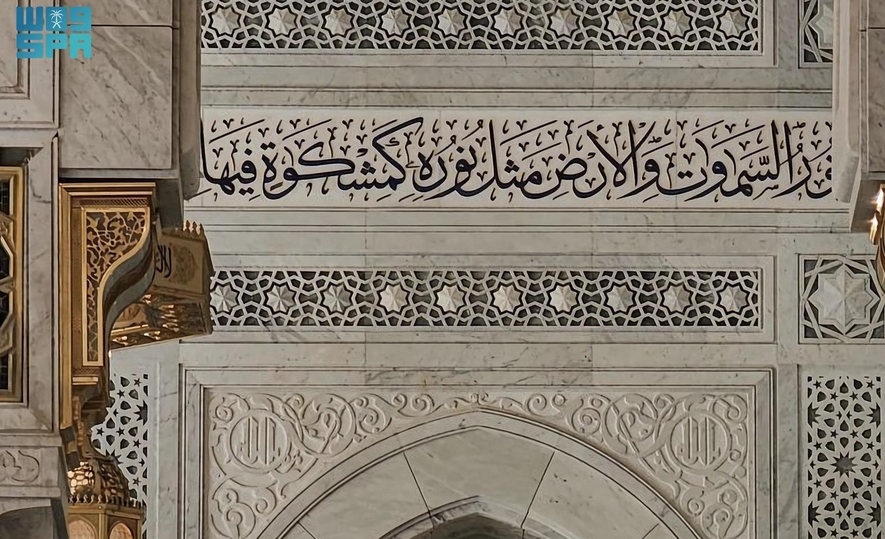
Arabic Calligraphy Adorns Arcades, Walls of the Grand Mosque of Makkah
The Grand Mosque of Makkah serves as a profound gallery for the beauty of the Arabic language, with intricate calligraphy transforming the walls and arcades into a space where sanctity meets artistic expression through the harmonious inscription of verses from the Holy Quran, reflecting a rich heritage of Islamic art that emphasizes the sublimity of divine revelation.
In this holiest of sites, writing serves as more than simple ornamentation; it is a spiritual message designed to resonate with the faith of every visitor, connecting the majesty of the word to the grandeur of its sacred environment.
The Thuluth script, known for its complexity and visual clarity, remains the primary choice for the Grand Mosque and the covering of the Kaaba, the Kiswa. Reserved for sacred spaces due to its elegance and fluidity, its interweaving nature uniquely allows calligraphers to gather a large number of words within a confined space while maintaining an appearance of exceptional beauty. This very quality makes it ideal for the Kiswa’s embroidery, a result of meticulous work by highly skilled craftsmen. Utilizing these authentic schools of calligraphy, they give the covering a spiritual dimension that honors the status of the Holy Kaaba.
This artisanal creativity highlights the exalted position of Arabic calligraphy as the primary vessel for the Quranic text and a central symbol of Islamic identity.
Coinciding with World Arabic Language Day on December 18, these inscriptions affirm the deep historical and religious bond between the Arabic language and Islamic rituals. By presenting the Quranic text with the highest level of artistic mastery, the calligraphy within the Grand Mosque continues to preserve a cultural legacy that connects past generations of believers with the modern era through the timeless beauty of the written word.


