




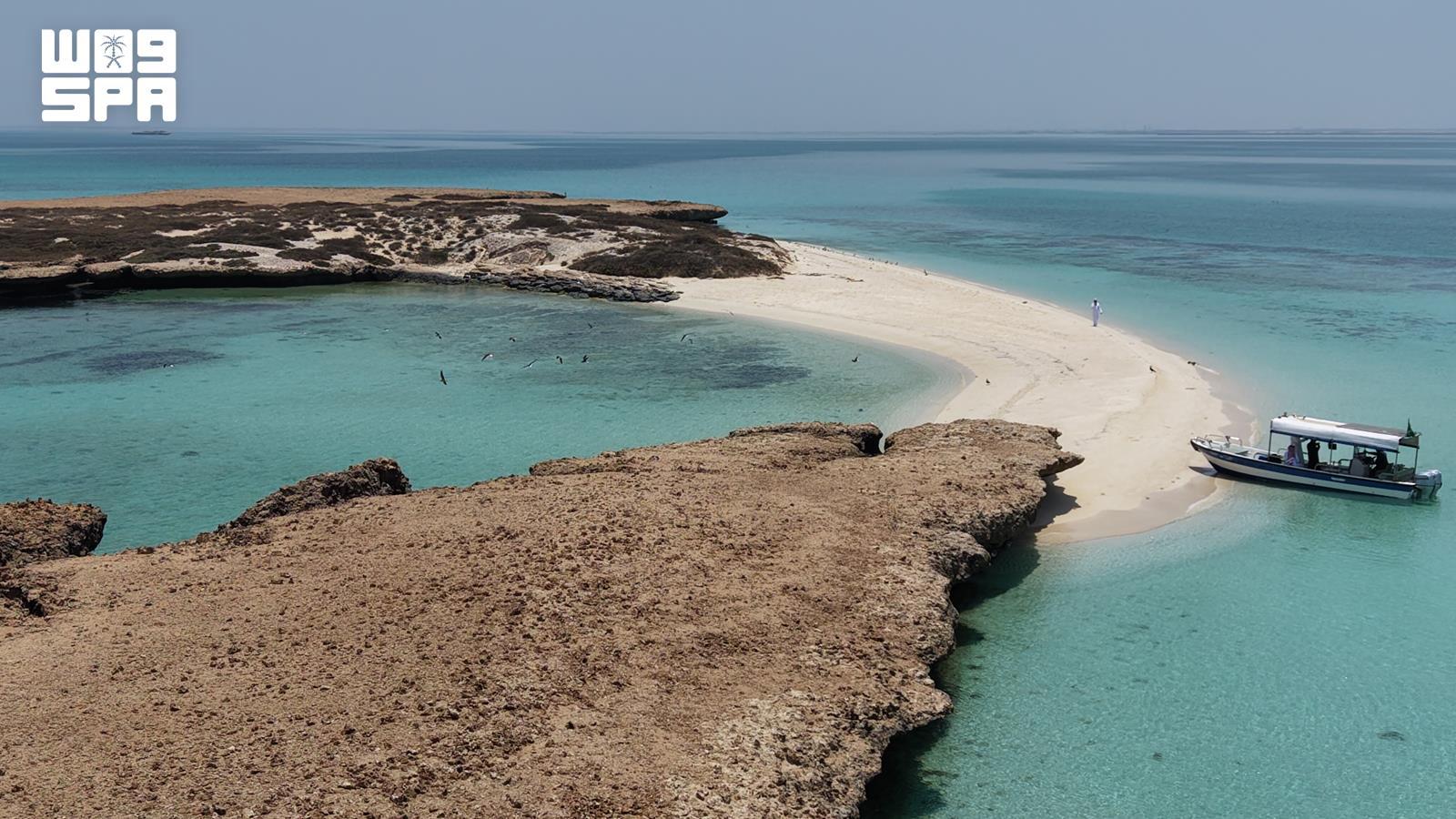
What Makes the Farasan Islands a Global Model for Nature Conservation?
Farasan Islands Protected Area in Jazan has cemented its position as a global model for nature conservation, as reported by the National Center for Wildlife, by achieving three major international milestones: designation under UNESCO's Man and the Biosphere (MAB) Programme in 2021, addition to the Ramsar List of Wetlands of International Importance in 2025, and inclusion on the IUCN Green List in 2026 for exemplary environmental governance and biodiversity protection.
As one of Saudi Arabia’s premier marine protected areas, the Farasan Islands embody the Kingdom’s ongoing conservation achievements in safeguarding biodiversity, enhancing ecosystem sustainability, and balancing natural resource protection with sustainable development in line with international best practices.
Farasan Islands Protected Area covers 5,657 square kilometers and comprises an archipelago of 266 coral islands. It is distinguished by rich biodiversity, including 180 plant species, 150 bird species, and 230 fish species.
The protected area stands out as one of the Red Sea's richest natural environments, providing a critical refuge for Farasan gazelles, dugongs, and endangered sea turtles amidst lush mangroves and coral reefs, while offering notable historical sites and distinctive ecotourism appeal.


