




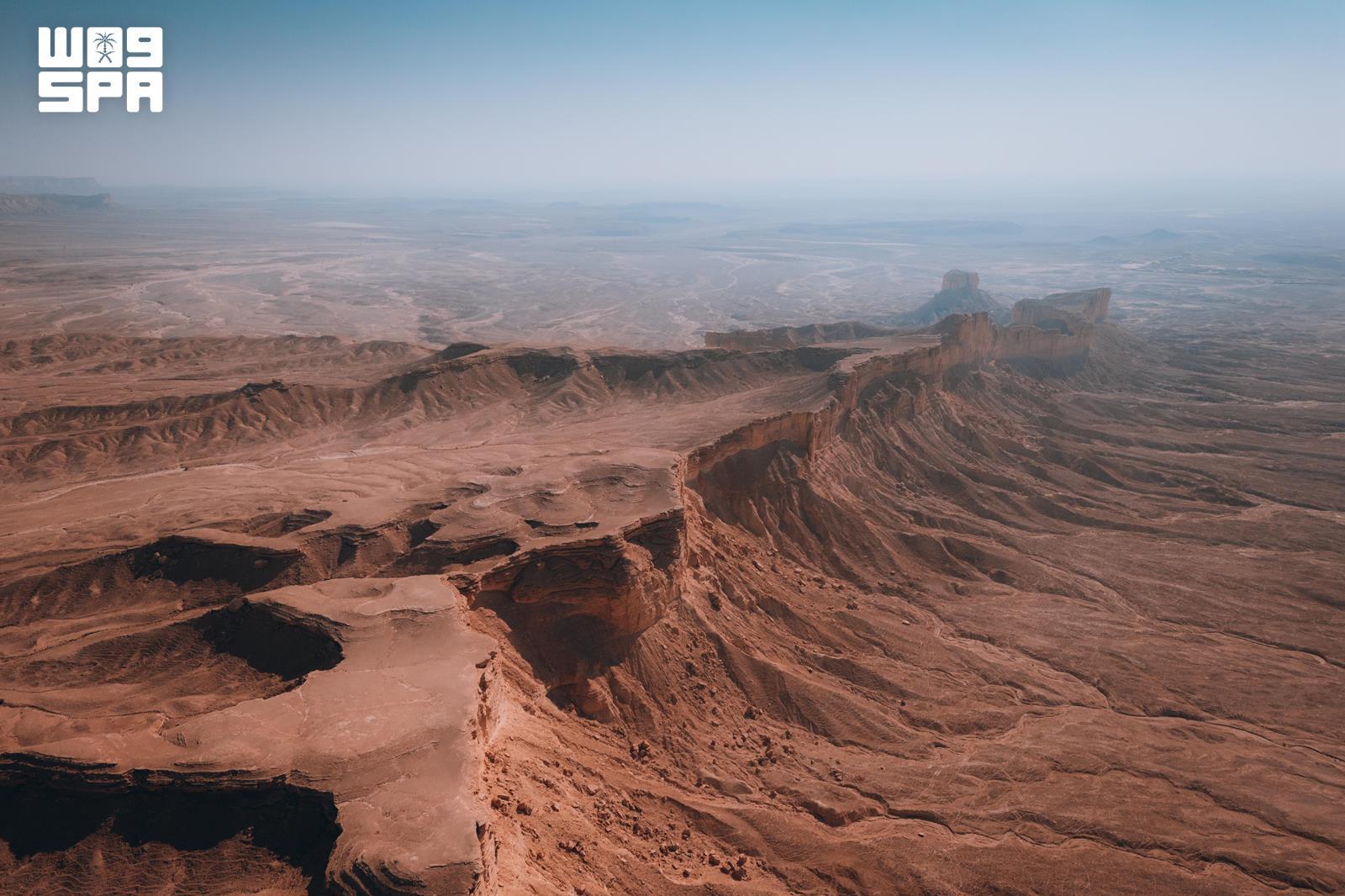
How Did Mount Tuwaiq Get Its Name and Shape the Landscape of Najd?
Mount Tuwaiq derives its name from its distinctive arc-like formation, which curves like a collar or hoop across the Najd area in central Saudi Arabia; the name itself is the diminutive form of the Arabic word "tawq" (collar).
The landmark forms a narrow limestone escarpment extending roughly 800 kilometers, stretching from the Thuwairat dunes in Al-Zulfi Governorate in the north down to the borders of the Empty Quarter (Rub' al-Khali) dessert in the south.
Geographically, its eastern slopes descend gradually, whereas its western face drops sharply in sheer, dramatic cliffs. Wadi Hanifah drains from its eastern side, while other valleys intersect the mountain range from west to east.
Historically known as "Jabal al-Arid" or "Arid al-Yamamah," the escarpment has long featured prominently in classical and modern Arabic poetry. Major settlements throughout central and southern Najd developed along the fertile wadis descending from its slopes, with the mountain acting as a natural divider between the villages of Sudair to the east and Al-Washm to the west.
Mount Tuwaiq also stands as a cultural symbol of national resilience, memorably cited by His Royal Highness Prince Mohammed bin Salman bin Abdulaziz Al Saud, Crown Prince and Prime Minister, who famously remarked at the 2018 Future Investment Initiative conference: "The resolve of the Saudi people is like Mount Tuwaiq."


