




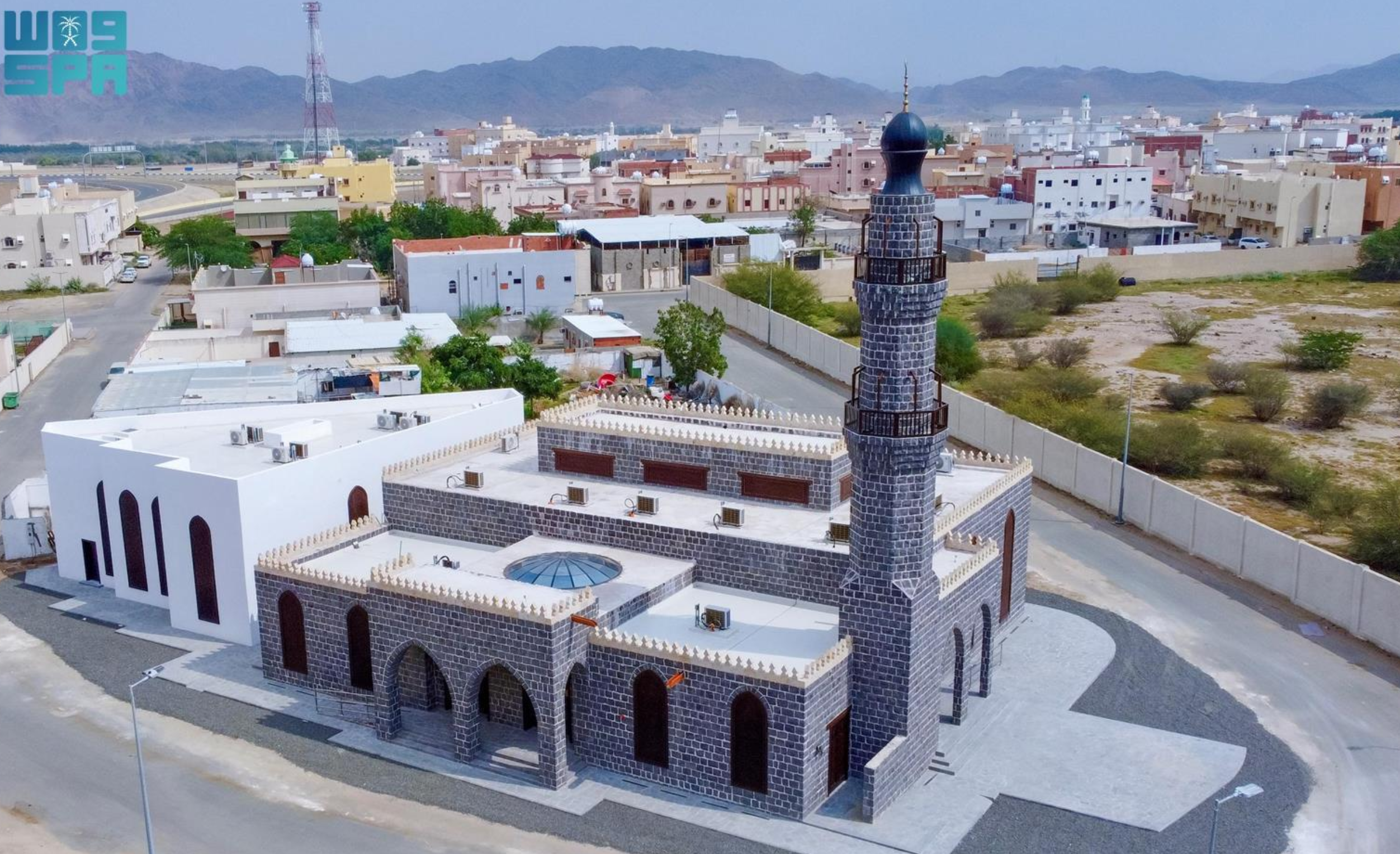
Prince Mohammed bin Salman Project Restores Al-Fath Mosque to Architectural Glory
Al-Fath Mosque in Al-Jumum Governorate, Makkah Region, a key site in the second phase of the Prince Mohammed bin Salman Project for the Development of Historic Mosques, is being restored to its former splendor. Believed to be the location where Prophet Muhammad (peace be upon him) prayed during the Conquest of Makkah, the mosque has undergone centuries of neglect and reconstruction, including renovations in 1398 AH and 1419 AH.
The current restoration will expand Al-Fath Mosque from 455.77 square meters to 553.50 square meters, increasing its capacity from 218 to 333 worshippers. Natural building materials typical of the western region, including brick, basalt stone, gypsum, and wood, will be used, with mashrabiyas and rawasheens—intricate wooden window and balcony features—integral to the mosque's design.
Architectural styles in the western region are renowned for their resilience to coastal conditions and their reflection of sophisticated building traditions. Wood has been a prominent material since the early 14th century AH, with facades characterized by simplicity and the ability to maintain comfortable interior temperatures.
The Prince Mohammed bin Salman Project balances traditional and modern construction standards, ensuring the sustainability of mosque components while preserving heritage and historical characteristics. Saudi companies specializing in heritage restoration are carrying out the development.
Al-Fath Mosque is one of 30 mosques across all 13 regions of the Kingdom in the project's second phase, including six mosques in Riyadh, five in Makkah, four in Madinah, three in Aseer, two each in the Eastern Region, Al-Jouf, and Jazan, and one each in the Northern Borders, Tabuk, Al-Baha, Najran, Hail, and Al-Qassim.
The second phase follows the successful completion of the first, which restored 30 historic mosques across 10 regions.
The project's four strategic objectives include restoring historic mosques for worship, preserving their architectural authenticity, highlighting the Kingdom's cultural heritage, and enhancing their religious and cultural significance. It also aligns with Vision 2030 by preserving architectural heritage and integrating it into modern mosque designs.


