




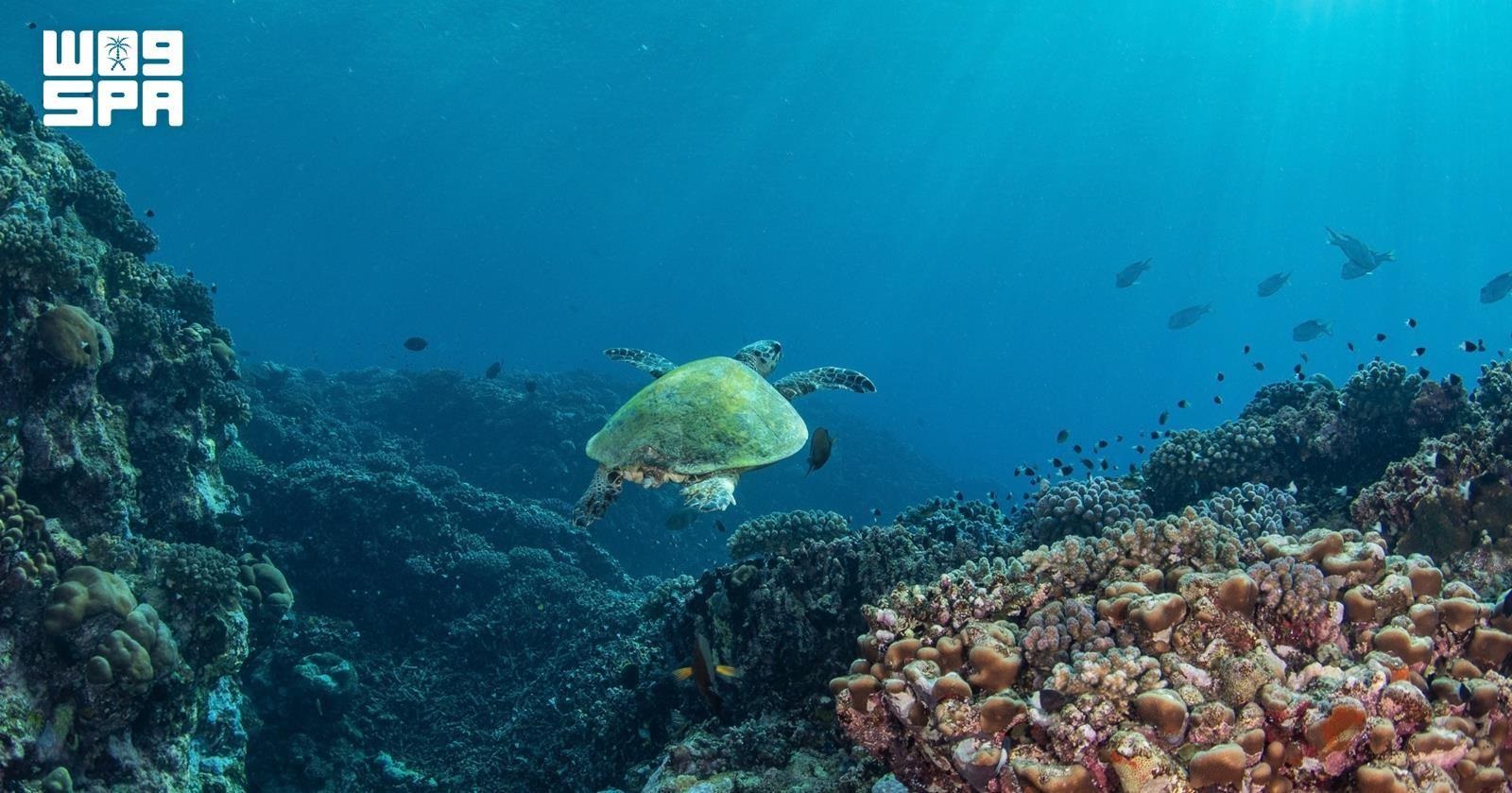
SHAMS Returns 79 Sea Turtles to Natural Habitats After Treatment and Rehabilitation
The General Organization for Conservation of Coral Reefs and Turtles in the Red Sea, known as SHAMS, has returned 79 sea turtles to their natural habitats after completing treatment and rehabilitation programs. The initiative is part of SHAMS' efforts to conserve sea turtles and enhance the sustainability of their populations in the Red Sea. These efforts involve an integrated system of rescue, veterinary care, rehabilitation, monitoring of nesting sites, and conservation of natural habitats.
The return of the turtles to the sea reflects SHAMS' specialized work in treating injured or sick turtles. The rehabilitation process begins with assessing each turtle's condition, conducting the necessary veterinary examinations, and identifying treatment needs. Each turtle then undergoes a care and rehabilitation program tailored to its health status. Before its release, specialists confirm that it can swim and has regained its natural abilities.
Some turtles require long-term care and close monitoring, with treatment and rehabilitation lasting more than 190 days in certain cases. During this period, they receive veterinary care and undergo health monitoring until they regain the ability to return to their natural habitats.
These efforts come amid several challenges facing sea turtles, including entanglement in fishing gear, ingestion of plastic waste, marine pollution, and degradation of natural habitats. Human activities may also affect nesting sites and feeding areas. These threats underscore the importance of rescue and rehabilitation programs and early intervention to reduce their impact.
SHAMS' efforts extend beyond treating injured turtles and returning them to the sea. The organization also implements scientific and field programs to monitor nesting sites and identify priority areas for conservation. Surveys covered approximately 2,200 beaches along the Saudi Red Sea coast, identifying 23 high-priority nesting sites that account for approximately 70% of recorded nesting activity in Saudi Red Sea waters.
The survey results provide a scientific basis for determining conservation priorities for nesting sites, monitoring potential changes, and guiding environmental monitoring and management efforts. These measures contribute to conserving the habitats that sea turtles depend on during their reproductive stages.


