




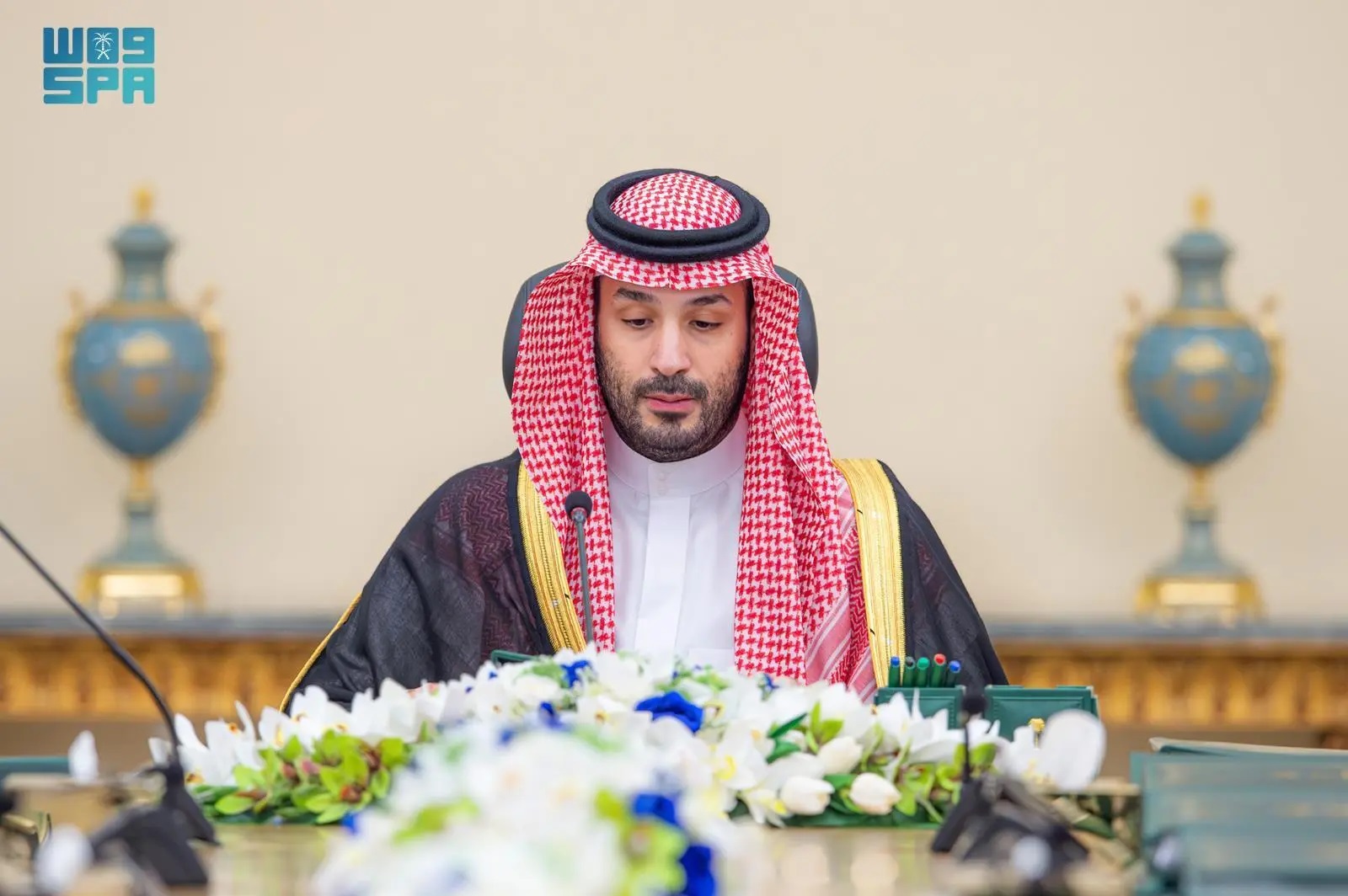
HRH the Crown Prince Chairs Cabinet Session in Jeddah
His Royal Highness Prince Mohammed bin Salman bin Abdulaziz Al Saud, Crown Prince and Prime Minister, chaired the Cabinet session held today in Jeddah.
HRH the Crown Prince, on behalf of Custodian of the Two Holy Mosques King Salman bin Abdulaziz Al Saud, welcomed the pilgrims arriving from around the world to the Kingdom of Saudi Arabia to perform Hajj, and emphasized the pride of this blessed land in serving the Grand Mosque of Makkah and the Prophet's Mosque of Madinah and in caring for their visitors.
HRH the Crown Prince directed that all resources and capabilities be utilized to ensure the success of the organizational, security, and preventative plans adopted for this year's Hajj season, and to continue providing the highest quality services and facilities to the pilgrims in Makkah, Madinah, the holy sites, and at air, land, and sea ports of entry.
HRH the Crown Prince then briefed the Cabinet on the content of the phone call with President Xi Jinping of the People’s Republic of China, and on the content of HRH the Crown Prince’s meetings with Chairman of the Transitional Sovereignty Council of the Republic of Sudan Abdel Fattah Al-Burhan, Prime Minister of the Islamic Republic of Pakistan Muhammad Shehbaz Sharif, and President of the European Council Antonio Costa.
In a statement to the Saudi Press Agency following the session, Minister of Media Salman Al-Dossary stated that the Cabinet discussed the outcomes of the Kingdom’s participation in recent international meetings. These engagements reflect Saudi Arabia’s ongoing support for multilateral action, which strengthens consultation and coordination regarding regional and global challenge, contributing to fostering dialogue and diplomatic solutions while reinforcing international security and peace.
The Cabinet also reviewed developments in maritime traffic within the Strait of Hormuz. It emphasized that the Kingdom’s decades-long investments in energy security and alternative export routes have bolstered its ability to supply the world with energy during the most challenging circumstances despite geopolitical tensions in the region and their subsequent repercussions on global supply chains.
On the domestic front, the Cabinet welcomed the launch of the Public Investment Fund’s five-year strategy, which aligns with the third phase of Saudi Vision 2030. This strategy focuses on building highly competitive local economic systems that enhance international leadership, support assets and sustainable returns, and increase the private sector's contribution to national development.
Al-Dossary noted that the Cabinet commended the historic performance of non-oil exports in 2025, which achieved an annual growth rate of 15% compared to 2024. This milestone reflects the success of national efforts aimed at developing exports, expanding the Kingdom's export base, and strengthening its position among the world's fastest-growing economies.
The Cabinet also considered the Kingdom's achievement of first place globally in the digital readiness framework, issued by the International Telecommunication Union, as confirmation of Saudi Arabia's status as a leading international hub for the digital economy and artificial intelligence, as well as an attractive destination for investment and innovation supported by rapid strides toward a prosperous and sustainable future.
The Cabinet addressed other items on its agenda and issued several decisions, including the following:
First:
Authorizing the minister of foreign affairs, or a deputy, to discuss and sign a draft memorandum of understanding on political consultations with the Ministry of Foreign Affairs of Indonesia.
Second:
Approving an agreement between the governments of the Kingdom of Saudi Arabia and the People’s Republic of China on mutual visa exemption for holders of diplomatic, special, or service passports.
Third:
Authorizing the minister of Islamic affairs, dawah and guidance, or a deputy, to discuss and sign a draft memorandum of understanding on Islamic affairs with the National Commission on Muslim Filipinos.
Fourth:
Approving a memorandum of understanding for cooperation in the legal and judicial field between the Saudi Ministry of Justice and the Qatari Ministry of Justice.
Fifth:
Approving a memorandum of understanding for cooperation in the roads sector between the Saudi Roads General Authority and the Egyptian National Institute of Transport.
Sixth:
Approving a memorandum of understanding for tourism cooperation between the Saudi Ministry of Tourism and the Belizean Ministry of Tourism, Youth, Sports and Diaspora Relations.
Seventh:
Approving a memorandum of understanding on economic cooperation between the Saudi Ministry of Economy and Planning and the Guinean Ministry of Planning and International Cooperation.
Eighth:
Approving a memorandum of understanding on promoting direct investment between the Saudi Ministry of Investment and the Bahrain Economic Development Board.
Ninth:
Approving an agreement between the governments of Saudi Arabia and Bahrain on the avoidance of double taxation with respect to taxes on income and the prevention of tax evasion and avoidance.
Tenth:
Approving agreements in the field of air transport services between Saudi Arabia and the governments of Antigua and Barbuda, Cape Verde, and Costa Rica.
Eleventh:
Approving the National Framework for Physical Security and Safety.
Twelfth:
Approving the Non-Oil Revenues Development Center's regulations.
Thirteenth:
Approving the amendment of the State's fiscal year to commence on the eleventh day of Capricorn, January 1, and conclude on the tenth day of Capricorn, December 31.
Fourteenth:
The State shall continue to bear the temporary work visa fees for seasonal workers providing Hajj and Umrah services within the Kingdom of Saudi Arabia Project for Utilization of Hady and Adahi for the year 1447 AH.


