





Smart Buildings to Drive Energy Efficiency as Saudi Arabia Accelerates Development
As Saudi Arabia continues its rapid expansion across residential, commercial and infrastructure sectors, the role of intelligent electrical systems is becoming increasingly critical. Beyond powering buildings, these systems influence energy efficiency, operational performance and long-term lifecycle costs.
“As Saudi Arabia continues to develop its buildings and infrastructure, efficient electrical systems play an increasingly important role in ensuring buildings operate safely, reliably and efficiently throughout their lifecycle,” said Ahmad Alhussein, Regional Sales and Marketing Leader, Middle East, Smart Power and Smart Building Division at ABB Electrification.
ABB’s division supplies technologies that distribute, protect and control electricity within buildings, from main switchboards, electrical distribution systems, wall switches and socket outlets to electric vehicle (EV) chargers, building management and automation systems and HVAC systems control.
Alhussein stated that developers and property buyers should look beyond location, architectural design and finishing quality when evaluating buildings. With buildings often expected to serve communities for 30 to 40 years or more, electrical infrastructure is a key determinant of energy performance, operational resilience and future adaptability. Looking beyond upfront costs to total cost of ownership is critical when selecting building technologies.
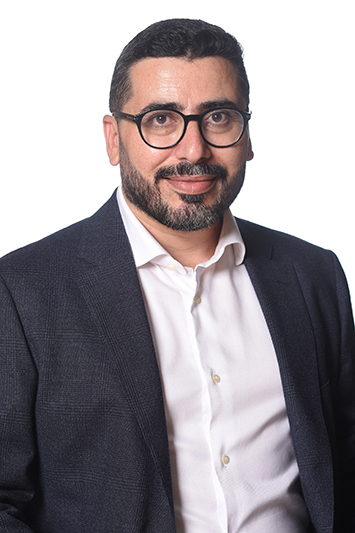
Ahmad Alhussein
Intelligent cooling control is central to energy efficiency
In Saudi Arabia, where air conditioning is essential for much of the year, intelligent cooling control can help reduce energy consumption without compromising comfort. Systems can adjust temperatures according to occupancy, while automated shutters respond to sunlight to limit heat entering indoor spaces.
“What matters is that the person using the system shouldn't notice. If the efficiency makes people uncomfortable, they will abandon it and lose all the savings,” Alhussein said.
He described a smart building as one that seamlessly integrates daily operations, from preparing indoor environments before occupants wake up to automatically adjusting cooling, lighting and energy consumption throughout the day. Smart systems can also prioritize electrical loads and schedule EV charging during lower tariff periods to optimize efficiency without compromising comfort.
“Electrical loads are prioritised to optimise energy consumption without compromising comfort and adapts your daily routines. That is not science fiction; it is available now,” he added.
Sustainability without compromising comfort
Alhussein believes sustainability at its best should deliver practical benefits rather than impose additional costs or reduce comfort.
“In my opinion, sustainability becomes a natural choice when it enhances comfort and delivers long-term economic value rather than requiring trade-offs.” he said.
Efficient operation can reduce energy bills and unnecessary strain on equipment through better control and management.
“When the efficient option is also more convenient and cost-effective over the building's lifetime, it becomes an easier choice for people to make,” he added.
While green building certifications and EV charging requirements have helped raise standards, Alhussein said maintaining efficiency after handover remains essential.
“Meeting certification requirements is only one part of the picture,” he said, highlighting the importance of monitoring energy consumption and adjusting building systems as needs change.
Digital technology and faster delivery
Connected electrical systems can also help maintenance teams identify potential problems before equipment fails utilising embedded predictive maintenance, while digital-ready and modular infrastructure makes it easier to accommodate additional loads and future technologies.
The pace of Saudi Arabia’s development presents another challenge for electrical infrastructure suppliers, requiring projects to be delivered quickly without compromising safety or reliability.
“One of the biggest challenges is delivering at the scale and speed of the Kingdom’s development. At this scale, we don’t re-engineer each project from scratch. Our approach has been to promote standardisation and modularity. We use proven designs we can reuse, then adapt them to other projects, this lets us deliver quickly without sacrificing reliability or safety, while making the systems easier to maintain and adapt future loads. For projects of this scale, this balance keeps delivery on schedule,” Alhussein explained.
Designing for the future
As electric mobility, digital services and new ways of using buildings become more widespread, Alhussein said the ability to adapt will be critical to long-term performance.
“No one can predict exactly how buildings will be used in 20 years, with more electric vehicles, digital services and new ways to use space. Buildings with digital-ready electrical infrastructure can adapt to evolving technologies and user needs. Those that fail to embrace available innovations today may face costly and disruptive upgrades in the future. Decisions made today in Riyadh and across the Kingdom will shape the next generation’s lives. The technologies needed to build smarter, more efficient buildings already exist. The opportunity is to design with the entire building lifecycle in mind, creating infrastructure that remains adaptable, efficient and valuable for decades to come,” Alhussein concluded.


