




Saudi Health Sector: Pioneering a Digital Transformation Through Innovation
The Kingdom of Saudi Arabia is advancing a modern health model centered on innovative technologies, particularly artificial intelligence and medical robotics, as part of a strategic transformation aligned with Saudi Vision 2030, aimed at enhancing service quality and operational efficiency.
The shift from traditional healthcare to a value-based health system integrates advanced infrastructure, qualified personnel, research, local manufacturing, and investment. This responsive system prioritizes health maintenance and early prevention through digital health, AI-supported diagnostics, robotic surgeries, and virtual care.
Health Transformation: A New Philosophy of Care
Saudi Arabia’s health transformation represents a strategic shift from disease treatment to health maintenance. The new model emphasizes home care and digital connectivity between patients and healthcare providers, facilitating unified systems, data integration, and improved access to sub-specialties.
The Seha Virtual Hospital exemplifies this integration, linking 242 hospitals and serving over 597,000 beneficiaries, thereby bridging geographic gaps and enhancing follow-up care for chronic and complex conditions. This model increases operational efficiency and reduces pressure on high-density facilities.
The transformation is supported by a robust healthcare infrastructure committed to sustainability. Investment in human capital focuses on developing specialized programs to prepare leaders for a value-based care model that optimizes quality and efficiency.
Artificial Intelligence: From Medical Decision to Proactive Care
The Ministry of Health's initiatives in AI align with the Health Sector Transformation Program and Vision 2030 objectives to enhance life expectancy, service quality, and innovation.
At the 2025 Global Health Exhibition, the ministry introduced the "AI Physician" virtual doctor experience for accurate diagnoses and improved clinical decision-making. Additionally, the "smart health coach," developed with Google via the Sehhaty application, serves as a digital guide for beneficiaries, promoting preventive health behaviors and personalized recommendations.
Agreements and investments exceeding SAR133 billion were announced at the exhibition, showcasing the healthcare sector's rapid growth and the Kingdom's appeal to investors. This includes SAR31 billion for hospital infrastructure, over SAR12 billion for venture capital, and SAR2.3 billion in life sciences. Strategic partnerships in digital health were established with companies like HUMAIN, Lean Business Services, and Google Cloud, further advancing a world-class digital health system.
In June 2025, the ministry launched its Biotech Accelerator in partnership with BioLabs to foster innovation and global partnerships, enabling Saudi companies to enhance service quality. These efforts aim to build a vibrant society and a thriving economy, solidifying the Kingdom’s position in regional and global health innovation.
Robotic Surgery: Higher Precision and Less Intervention
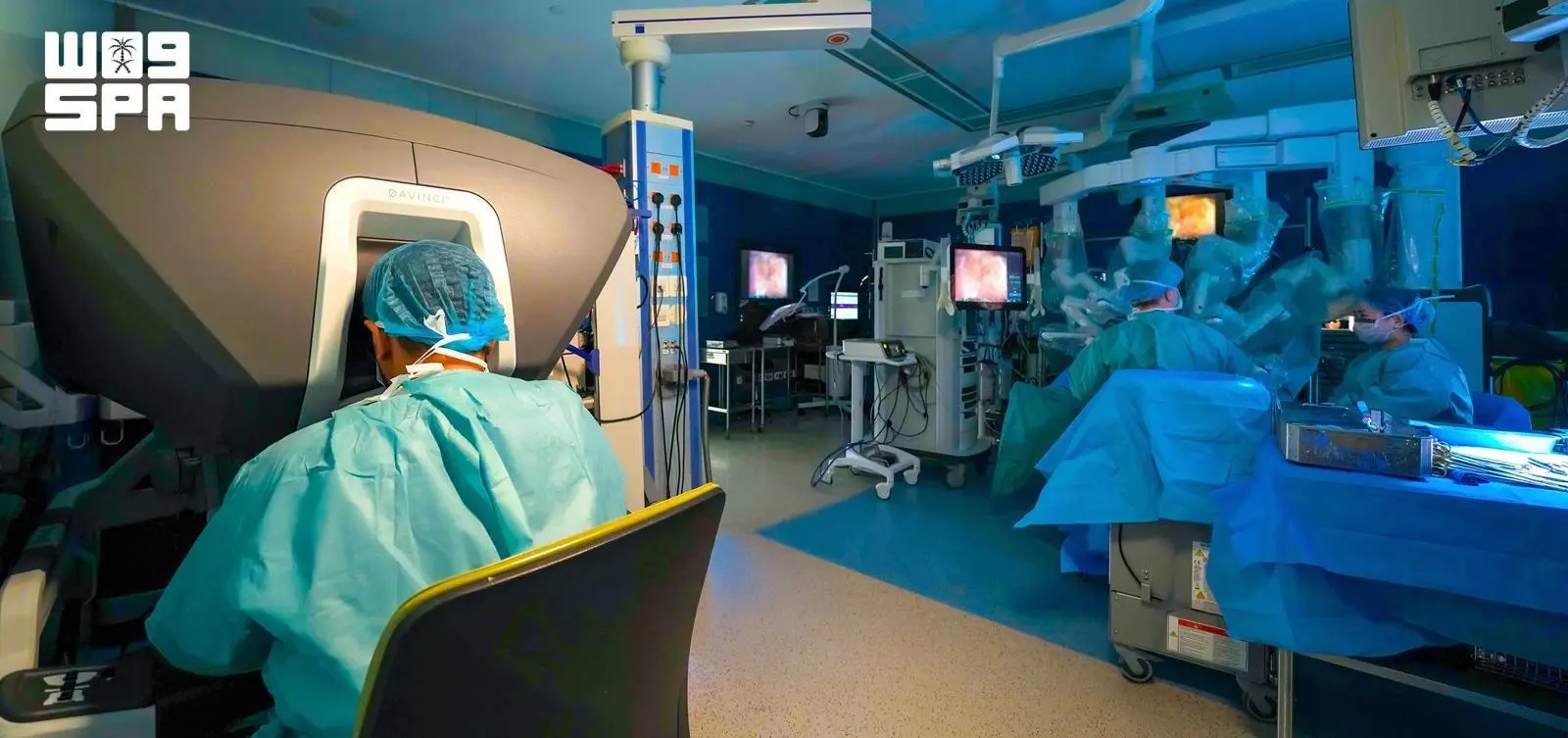
Hospitals across several regions of the Kingdom are rapidly expanding the use of advanced robotic systems, including Da Vinci, ROSA, and CORI, in a wide range of surgeries such as cardiac procedures, organ transplants, tumor removal, joint replacements, spinal surgeries, brain operations, knee replacements, and thyroidectomies without neck incisions. These cutting-edge systems allow surgeons to perform precise procedures through incisions as small as one centimeter, significantly reducing pain and accelerating recovery.
On May 19, 2025, King Abdullah Medical City, part of the Makkah Health Cluster, launched its advanced robotic surgery service with the Da Vinci Xi device, reinforcing its position as a reference center for specialized care. Equipped with a 3D camera and highly precise robotic arms, the system enables surgeons to access complex areas with accuracy through minimal incisions, compared to traditional surgical cuts that can exceed 10 centimeters. This innovation has led to reduced pain, minimized bleeding, fewer blood transfusions, faster recovery, shorter hospital stays, and higher health facility capacity, ultimately enhancing system efficiency and improving the quality of clinical outcomes.
Smart Healthcare for Pilgrims
The Kingdom is committed to delivering high-quality healthcare to pilgrims, in line with the objectives of the Health Sector Transformation Program and the Pilgrim Experience Program, both pillars of Vision 2030, which aim to enhance quality of life and provide comprehensive, safe healthcare services.
As part of preparations for the 2025 Hajj season, the Ministry of Health worked to provide integrated healthcare services that meet the highest standards of quality and safety, ensuring a comprehensive health environment for pilgrims to perform their rituals with ease. In May 2025, Minister of Health Fahad AlJalajel inaugurated the surgical robot project at King Abdullah Medical City, and reviewed an advanced PET-CT imaging device that enables early detection of tumors, heart disease, and neurological disorders, enhancing diagnostic accuracy and speeding up treatment decisions.
The Makkah Health Cluster also showcased a model of smart field care for the Hajj season through a suite of technological initiatives employing artificial intelligence in high-density environments. In June 2025, it officially launched the “i-Selfie” project, a cutting-edge system that measures vital signs and electrocardiograms without contact, using optical and biometric sensing supported by AI algorithms that analyze blood flow in the face within seconds. This innovation accelerated patient assessment by 70%, reducing the time to acquire vital signs from seven minutes to two minutes.
A clinical study conducted by the clinical research center of the Seha Virtual Hospital, involving over 1,000 participants, demonstrated that the platform's accuracy is comparable to traditional devices, reinforcing its reliability as a low-cost and rapid solution in emergency environments.
The city's projects also included the interactive Hajji platform, available in over 200 languages via WhatsApp. Utilizing AI, it provides health consultations and awareness, offering reliable preventative content accessible to every pilgrim, anytime, anywhere. Additionally, the Makkah Health Cluster deployed a mobile stroke unit equipped with instant CT scans and live virtual consultations with specialists. This unit represents one of the latest field medical technologies available in the holy sites, designed to save pilgrims' lives with the fastest possible response time.
The mobile cardiac catheterization service at East Arafat Hospital allowed for precise therapeutic interventions to be performed on-site, eliminating the need to transport patients. Additionally, the Pharmini digital pharmacy assistant app, available in 11 languages, provides detailed explanations of medication uses, interactions, dosages, and prescription translations, along with live chat with specialized pharmacists. Furthermore, the smart health assistant app was activated to provide pilgrims with preventative and educational content and direct them to the nearest healthcare facility when needed.
The King Abdullah Medical City also monitors the health of pilgrims with chronic illnesses using smartwatches connected to the Seha Virtual Hospital, enabling medical teams to follow up on pilgrims' conditions after their discharge.
KFSH: Global Achievements in Robotic Surgery
King Faisal Specialist Hospital and Research Centre (KFSH) has transitioned from employing robotic surgery to pioneering its clinical expansion, notably performing the world's first fully robotic heart and liver transplants.
Its record of innovation includes the first fully robotic intracranial brain tumor resection and, in February 2026, the first documented case of seven successful cardiac interventions within a single robotic surgery for a patient with complex congenital defects.
These advancements provide superior control and 3D visualization, reducing patient pain, blood loss, and recovery time while enhancing healthcare efficiency and sustainability. Consequently, KFSH ranked 12th globally among academic healthcare institutions and was featured in Newsweek’s 2026 lists for the world's best, smart, and specialist hospitals.
National Guard Health Affairs Sets the Smart Hospital Standard
Simultaneously, the Ministry of National Guard Health Affairs was recognized as Saudi Arabia's top smart hospital in 2026, marking its fifth consecutive year on Newsweek’s list. Its integrated digital infrastructure features a unified electronic medical record, virtual medicine models, and a smart application for patient management.
The system utilizes artificial intelligence to predict diseases like sepsis and cancer, while virtual reality allows inpatients to communicate safely with families. This digital integration extends to smart operating rooms and "digital twin" simulations that optimize patient flow and operational efficiency.
Furthermore, the integration of AI into robotic systems for general and urological surgery has significantly improved patient safety, reduced complications, and shortened hospital stays.
King Khaled Eye Specialist Hospital: Leveraging AI and Innovation to Transform Patient Care
The King Khaled Eye Specialist Hospital and Research Centre continues to solidify its position as a leading national model in the application of AI within specialized care, seamlessly combining technological innovation with clinical excellence.
At the diagnostic level, the hospital utilizes AI-enhanced optical coherence tomography (OCT) imaging to reduce assessment discrepancies among physicians and expedite the interpretation of medical images. These advanced algorithms enable the precise segmentation of retinal layers, identification of lesions, and monitoring of treatment responses. This technology significantly increases early detection rates for retinal diseases, optimizes treatment durations through data-driven recommendations, and boosts overall physician productivity.
Underscoring this success, the hospital's EYENAI project, which uses AI for the early detection of diabetic retinopathy, won gold at the 2025 Saudi Customer Experience Awards, reflecting the maturity and impact of locally developed digital health solutions.
Building on this approach, the hospital recently organized the second Eye Hackathon 2025 in collaboration with national technology entities. The event explored using the eye as a window for the early detection of systemic diseases, resulting in innovative solutions that analyze retinal images to detect early indicators of heart disease, neurodegenerative disorders, and Alzheimer's.
As part of its comprehensive digital transformation, the hospital also launched an AI-driven revenue cycle automation project, which shifted insurance operations from a traditional, human-driven model to an intelligent, automated system, significantly reducing claims processing time and operating costs while maximizing revenue and ensuring operational sustainability.
Alongside these technological advancements, the hospital continues to strengthen its clinical leadership. In late 2025, it successfully performed the Middle East's first Boston Type II Keratoprosthesis (B-KPro II) corneal transplant. This globally rare procedure, typically reserved for advanced referral centers, underscores the hospital's ability to localize highly complex medical practices and solidifies its standing among the world's elite ophthalmology centers.
These advanced models of AI and medical innovation reflect a new phase in the Kingdom's healthcare sector. Driven by continued infrastructure investments, the cultivation of national talent, and the goals of Saudi Vision 2030, the Kingdom is rapidly establishing itself as a premier regional hub for digital medicine, building a sustainable healthcare system rooted in prevention, technology, and enhanced quality of life.


