




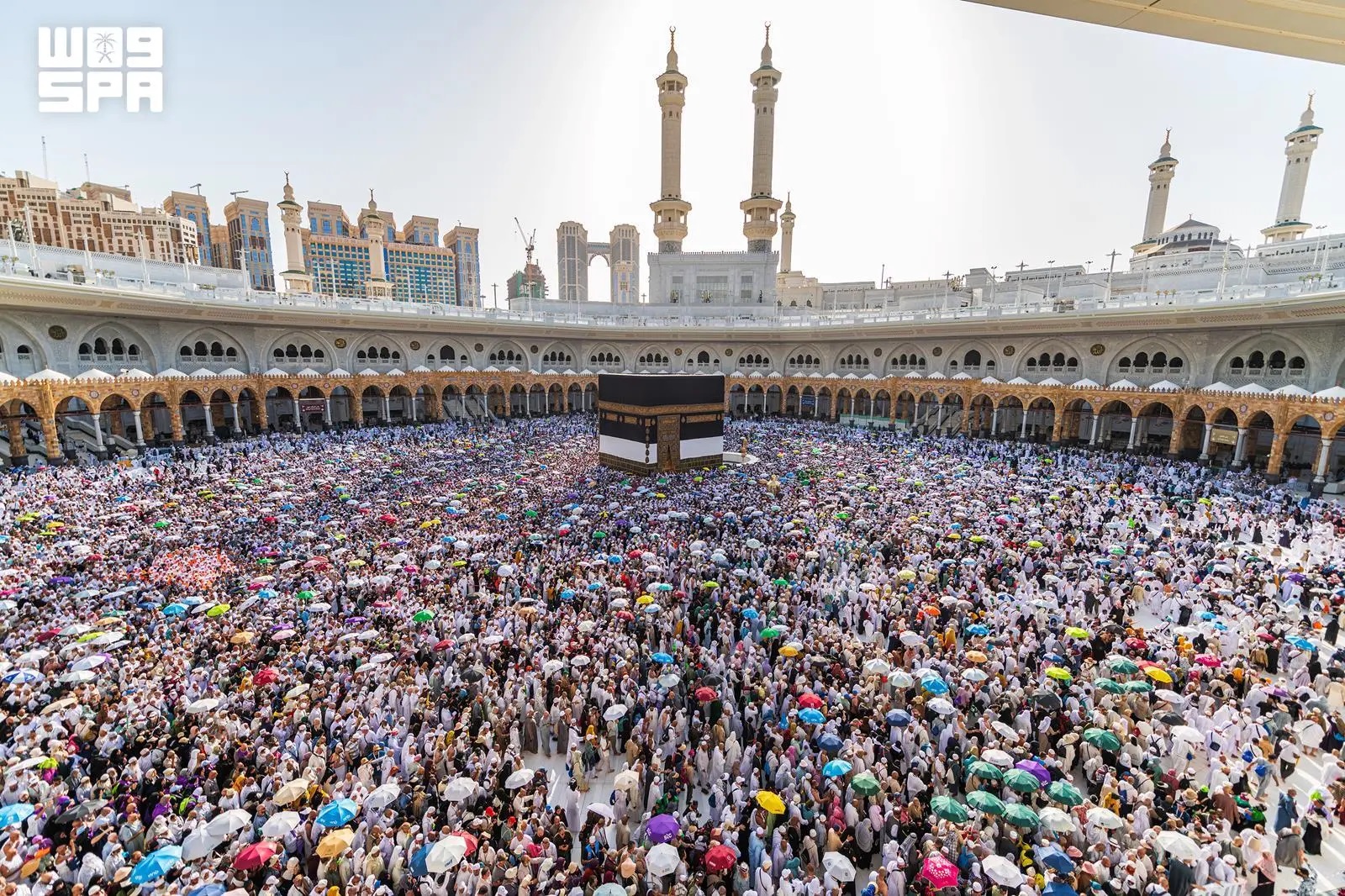
Periodical Briefing: Saudi Arabia Concludes Epidemic-Free Hajj 1447 AH in May, Deploys Cutting-Edge AI and Robotics to Serve 1.7 Million Pilgrims
The conclusion of May 2026 marks the successful completion of the 1447 AH Hajj season, standing as a global benchmark in crowd management, technological integration, and public health. Saudi Arabia’s execution of the pilgrimage showcased the seamless convergence of advanced digital infrastructure and large-scale logistical operations.
A Triumph of Public Health and Technological Integration
Saudi Arabia achieved a monumental public health victory, officially declaring the Hajj season free of epidemic outbreaks, despite global health challenges. The health sector delivered over 2.5 million services, utilizing ground-breaking innovations such as medical robotics for complex surgeries, drones for rapid medicine delivery, and smartwatches to remotely monitor high-risk pilgrims.
Unprecedented Crowd Management and Infrastructure Scale
To accommodate pilgrims recorded by GASTAT, Saudi Arabia deployed a sophisticated security and mobility apparatus. The AI-powered Sawaher platform managed crowd flow using 16 algorithms and 5,000 cameras, while the Al Mashaaer Al Mugaddassah Metro transported over two million passengers, replacing 50,000 bus trips to ensure eco-friendly, zero-emission mobility. Simultaneously, the Kingdom maintained immense supply chain stability, securing over 712 million food and beverage items and executing an enormous sanitation operation that removed over 266,000 tons of waste across Makkah and the holy sites.
Global Humanitarian and Economic Stewardship
Beyond the domestic achievements of Hajj, the Kingdom continued to assert its stabilizing role internationally. Through the Saudi Development and Reconstruction Program for Yemen (SDRPY) and KSrelief, Saudi Arabia deployed $150 million in urgent fuel derivatives and a $3 million protection program with the UNHCR to support displaced families in Yemen. Economically, the Kingdom optimized its global energy and industrial portfolios, highlighted by Aramco’s strategic transfer of PRefChem stakes to PETRONAS, reinforcing its long-term economic diversification strategy.
The period by numbers:
1,707,301: The total number of pilgrims who performed Hajj in 1447 AH, including 1.54 million international arrivals.
388,694: The number of pilgrims pre-cleared in their home countries through the Makkah Route Initiative across 10 nations.
300,000: The hourly pilgrim capacity of the massive, five-story Jamarat facility.
2.5 Million: The total number of healthcare services provided to pilgrims by medical teams during the season.
40 Seconds: The record time taken to complete comprehensive entry procedures for each pilgrim under the Makkah Route Initiative using AI-powered mobile counters.
98%: The exceptional weather forecasting accuracy achieved by the National Center for Meteorology using AI and 21 automated stations.
266,000 Tons: The combined volume of waste removed from Makkah and the holy sites by 22,000 personnel.
410: The number of complex surgical procedures performed during Hajj, including 33 open-heart surgeries, supported by medical robotics.
20,000: The number of lighting units newly installed across 5,000 towers to illuminate Arafat.
60,000: The number of trees planted in the holy sites as part of a massive environmental cooling and shading initiative.
386: The number of escalators operating within the massive, 950-meter-long Jamarat facility to ensure smooth crowd flow.
1.9 Million: The number of Holy Quran copies, translated into 80 languages, gifted to departing pilgrims.
2,500: The number of international pilgrims hosted by the Custodian of the Two Holy Mosques' Guests Program for Hajj, Umrah, and Visit.
44,722: The number of displaced and refugee individuals in Yemen benefiting from the new $3 million joint protection program signed by KSrelief and the UNHCR.
1 Million+: The number of mango trees in Jazan Region, producing over 60 varieties that added a unique local flavor to this year's Eid hospitality.
The developments in the latter half of May 2026 illustrate a period of profound operational success for Saudi Arabia, anchored by the flawless execution of the 1447 AH Hajj season. The integration of artificial intelligence, automated logistics, and advanced medical protocols not only ensured a secure, epidemic-free environment for 1.7 million pilgrims but also set new global benchmarks for crowd management. Concurrently, the Kingdom’s continued provision of critical humanitarian aid to Yemen and strategic maneuvers within its energy and mining sectors underline a steadfast commitment to regional stability and long-term economic development.


