




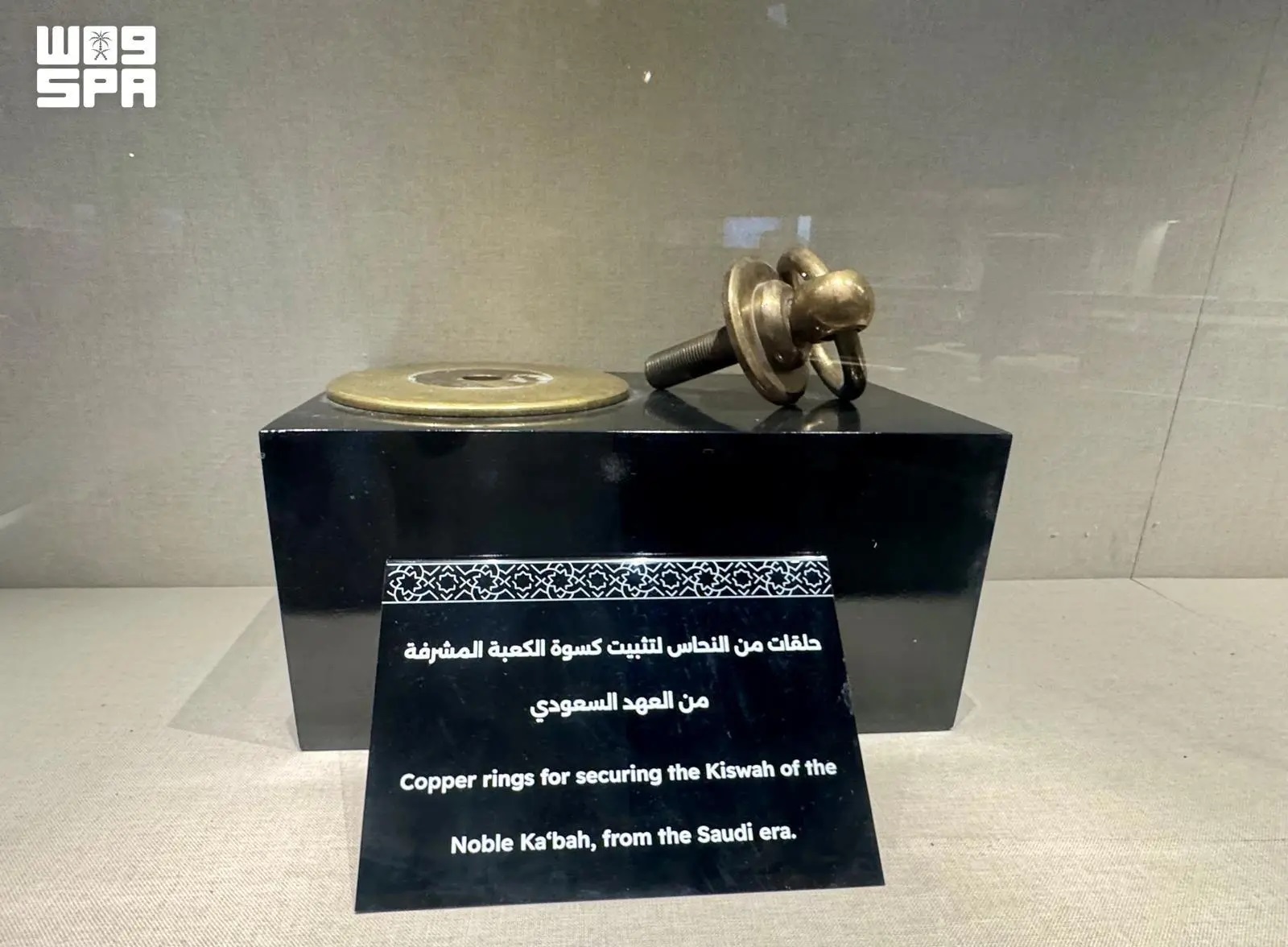
Copper Rings Used to Secure Kaaba Kiswa Preserved at Exhibition of Two Holy Mosques
The Exhibition of the Two Holy Mosques Architecture in Makkah showcases a collection of historical artifacts and materials documenting aspects of the architecture of the Two Holy Mosques and the care given to the Holy Kaaba throughout successive periods. Among the exhibits are copper rings once used during the Saudi era to secure the Kaaba’s kiswa, serving as a tangible testament to details associated with the service of the Holy Kaaba and care for its kiswa.
The copper rings preserved at the exhibition are among the artifacts associated with the Kaaba’s covering. They offer insight into some of the methods used to secure and fasten the kiswa, giving visitors an opportunity to examine closely the intricate details involved in caring for the kiswa. The rings also carry documentary value as part of the historical collection of artifacts associated with the Grand Mosque.
The Exhibition of the Two Holy Mosques Architecture houses artifacts, architectural elements, inscriptions, and historical materials documenting successive stages in the history of the Grand Mosque and the Prophet’s Mosque. It enables visitors to explore aspects of the evolution of architecture, services, and tools associated with the Two Holy Mosques, in a setting that combines the historical value of the exhibits with their cultural significance. Despite their modest size and simple design, the copper rings stand out among the exhibition’s artifacts. They encapsulate an aspect of the meticulous care devoted to the Kaaba’s kiswa, transforming a functional tool once used in serving the Grand Mosque into a preserved historical artifact that tells visitors part of the place’s memory and the details of the care given to the Holy Kaaba during the Saudi era.


