




Al-Saeed Palace in Qassim Revives Two Centuries of Architectural Heritage
The reconstruction of the heritage Al-Saeed Palace in Al-Shamasiyah Governorate, Qassim Region, has revived more than two centuries of regional architectural history, guided by ancestral deeds and archival family documents that enabled restoration to its original state.
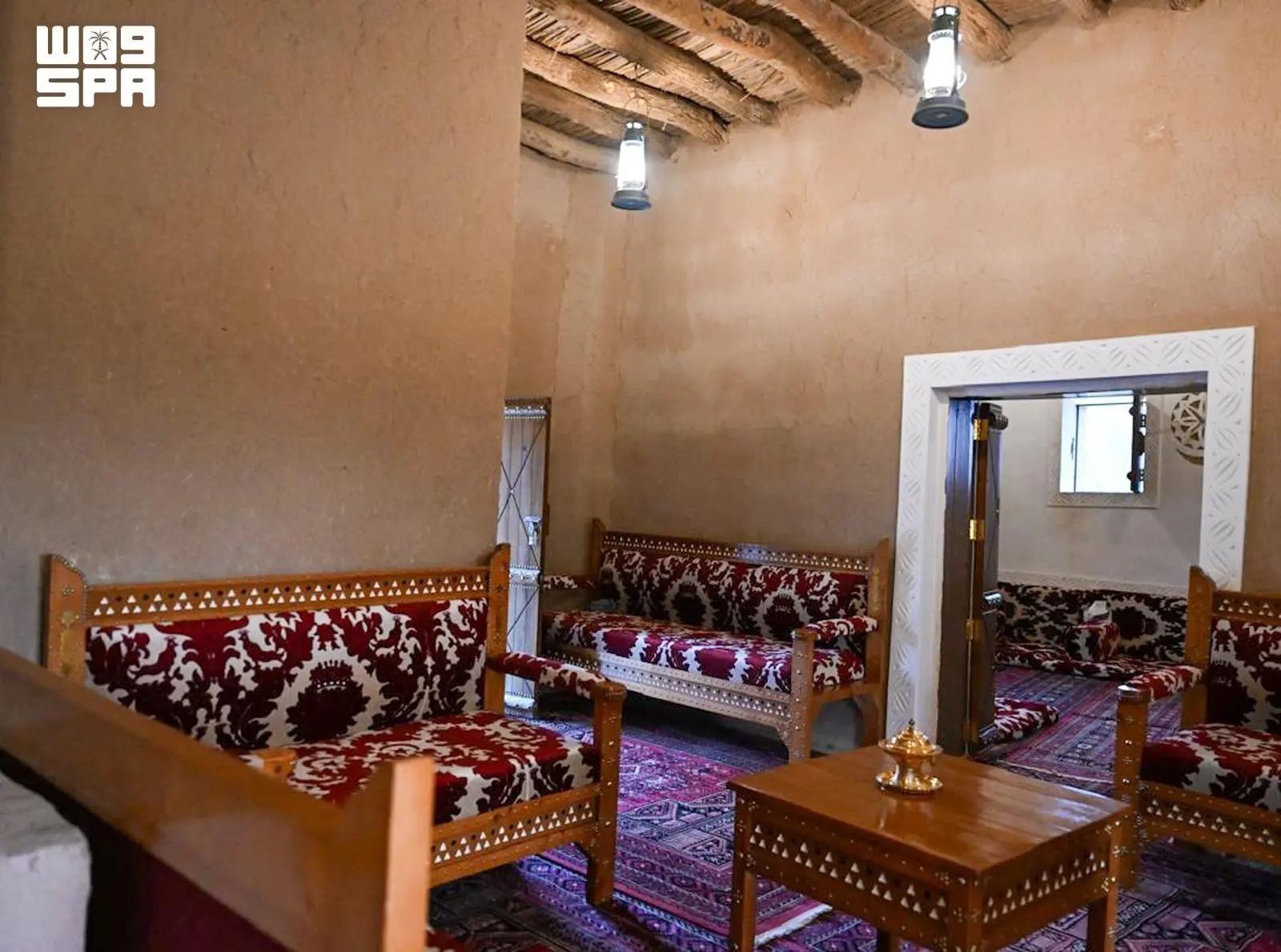
Dating back over 200 years, the palace stands as one of the earliest architectural landmarks associated with permanent settlement in Al-Shamasiyah. Its mud-brick construction and layout reflect the social status of its early inhabitants and the period's socio-economic life.
Engineer Khalid Al-Saeed noted that the family approached the project not as a modern remodeling effort, but as an authentic preservation initiative. He explained that historical title deeds and records served as the foundational blueprint for the reconstruction, allowing roughly 90% of the site's original features to be accurately restored.
The restoration encompassed architectural foundations, perimeter walls, traditional doorways, engravings, an internal well, and historic excavation zones. Built entirely from mud to preserve its traditional identity, the three-story palace includes an open rooftop terrace, grain storage facilities, and a traditional subterranean date and grain storage pit tailored to the era's daily needs.
By relying on primary historical records rather than contemporary building techniques, Al-Saeed Palace project serves as a model for authentic heritage conservation, preserving the collective memory and traditional craftsmanship of Al-Shamasiyah community for future generations.


