





Building Resilient Energy Supply Chains for Saudi Arabia’s Next Era of Growth
Saudi Arabia’s oil and gas industry is entering a new era of transformation. As the Kingdom advances toward Vision 2030, energy producers are expanding operational and processing capacity while modernizing operations. This shift places new demands on industrial logistics, particularly when it comes to moving heavy, high-value equipment that keeps production running.
In an industry where a single delayed shipment can result in significant operational downtime, logistics has become a strategic enabler of resilience and competitiveness. With Saudi Arabia’s logistics market valued at more than SAR 510 billion (USD 136 billion) in 2024 and projected to approach SAR 750 billion (USD 200 billion) by 2030 , industrial sectors such as energy and manufacturing are shaping demand for logistics services, where large-scale, complex shipments are the norm.
Connectivity is the new supply chain advantage
As equipment and components move across longer distances and multiple regulatory zones, logistics networks increasingly require end-to-end freight solutions that balance speed with scale, and precision with flexibility. Heavyweight shipments, specialized freight, and time-critical spare parts place different demands on logistics networks that go beyond conventional freight.
Saudi Arabia’s expanding multimodal corridors are a direct response to these requirements, strengthening its role as a global trade crossroads. Nonstop air connectivity from the West, combined with regional road corridors across key Middle East markets, are enhancing access to global supply lines for the Kingdom’s energy sector. These routes link Europe, Asia, and Africa while supporting reliable movement to neighboring markets such as Bahrain, Kuwait, and Qatar.
Why visibility has become non-negotiable
As energy supply chains grow more complex, visibility and control have become operational necessities. Digital tools are reshaping how industrial shipments are tracked and managed, particularly for regulated cargo. For energy operators managing critical spare parts or equipment worth millions, near real-time insight into shipment location and condition helps reduce delays, enhance safety, and prevent cost escalation through earlier intervention, if needed. GPS-enabled fleets, electronic trade documentation, and continuous monitoring of shipment flow across the logistics network strengthen operational oversight, delivering greater reliability and shipment visibility for businesses.
This level of transparency helps keep energy facilities operating as planned. Even short production interruptions at refineries, processing plants, or upstream facilities can carry significant financial and operational consequences. Predictive monitoring and precise execution now sit at the center of resilient energy logistics.
Built for speed, volume, and flexibility
Energy logistics operations require flexibility across modes of transport. Priority airfreight options play a critical role when urgent equipment or components must reach site within days. Faster transit services help mitigate the risk of project delays when timelines are tight and alternatives are limited. For the energy sector, this often includes the movement of regulated and dangerous goods, where certified handling, strict compliance, and expertise are essential to preserve shipment integrity.
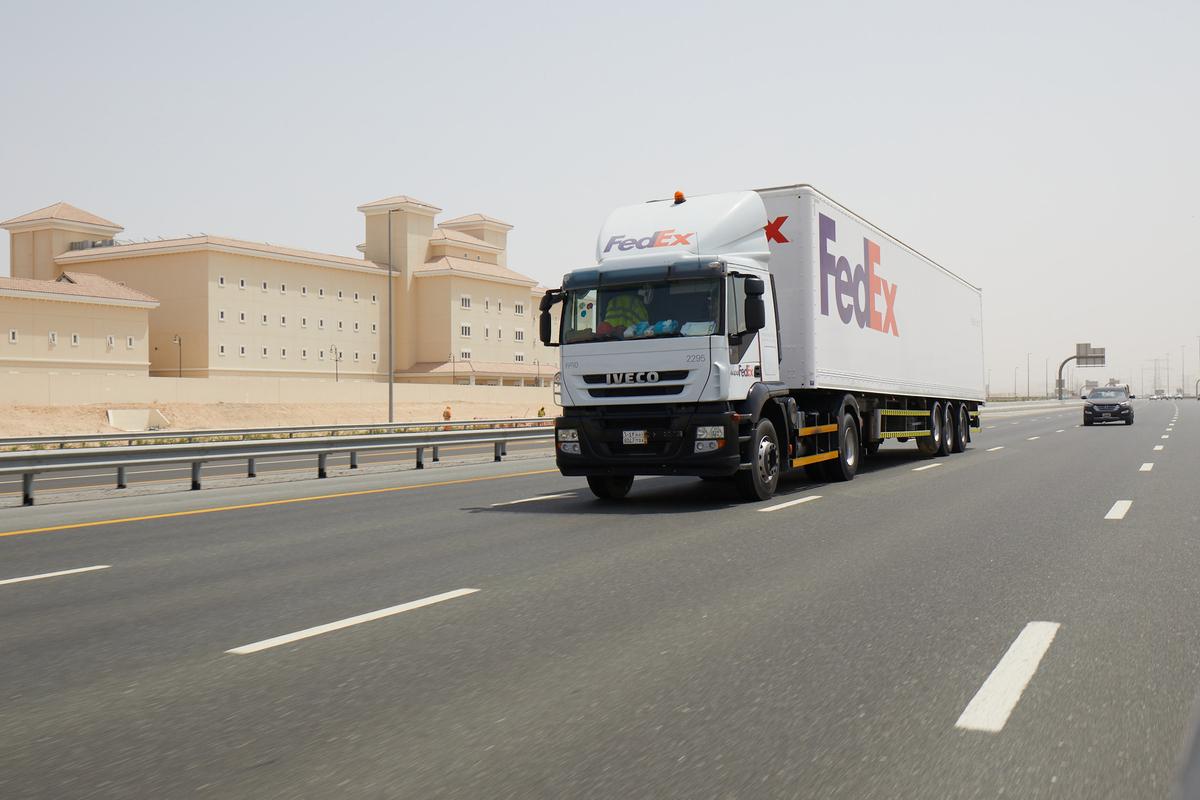
At the same time, not every shipment requires immediate express movement. Deferred air freight and day-definite road freight services provide cost-efficient options for less time-sensitive cargo, allowing businesses to balance urgency with demand. Across the Middle East, integrated road freight is a vital extension of air connectivity, enabling planned movement of large machinery components and specialized equipment between ports, airports, and energy sites.
This combination of air and road capability is particularly important in a region where distances are significant and infrastructure continues to evolve. Saudi Arabia’s geographic position, bridging Europe, Asia, and Africa, places it at the center of global energy and industrial flows. Upcoming developments such as the King Salman International Airport and the Riyadh Integrated Logistics Zone are strengthening multimodal connectivity under the National Industrial Development and Logistics Program, reducing friction and enhancing consistency for time-critical industrial supply chains.
Preparing for the future of energy logistics
As Saudi Arabia builds on its established position in global energy markets, logistics will play a decisive role in sustaining growth. Future energy supply chains will be digital, data-driven, and multimodal, built to balance network capacity with speed.
From our experience supporting energy supply chains, the ability to move heavy and regulated freight safely and reliably is a prerequisite for operational continuity. Integrated air and road networks, specialized handling, and near real-time visibility are now foundational capabilities in the oil and gas sector. As the Kingdom continues to invest in infrastructure and cross-border connectivity, resilient logistics will remain central to keeping critical equipment moving and energy operations running.

By: Abdulrahman Al-Mubarak, managing director operations at FedEx Middle East, Indian Subcontinent and Africa


