




Nokia: AI-native networks will help Saudi operators prepare for 6G without abandoning existing 5G investments
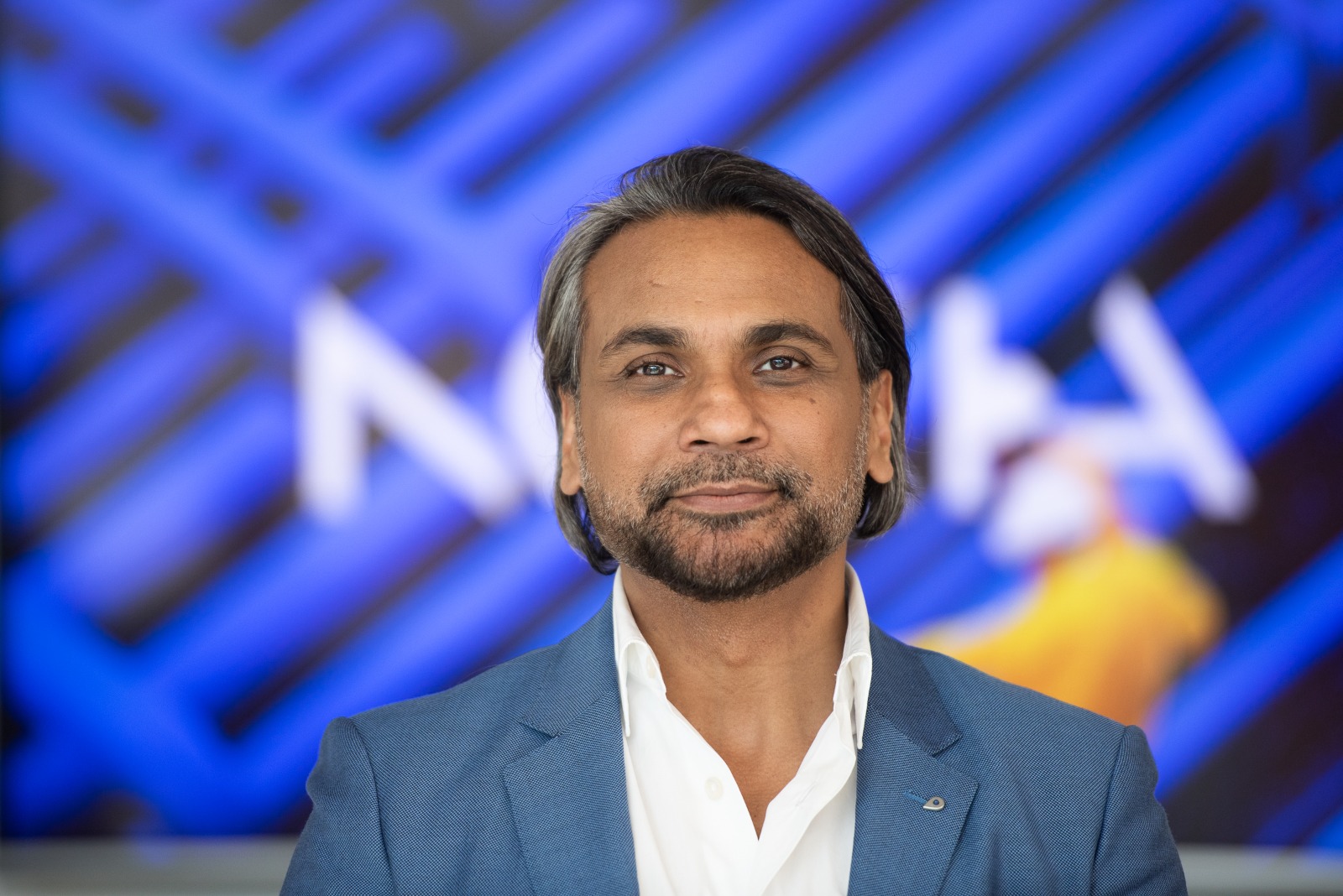
On the sidelines of LEAP 2026, Riyadh Daily spoke with Danial Mausoof, Vice President of Mobile Infrastructure at Nokia Middle East and Africa, about the evolution of AI-native mobile networks, the role of automation during major events such as Hajj, opportunities for Saudi industries, and how operators can prepare for 5G-Advanced and 6G without making premature technology investments.**
1. AI is increasingly described as the next major workload for telecom networks. In practical terms, what makes a mobile network “AI-native,” and how is that different from simply using AI tools to optimize an existing 5G network?
There is an important distinction between using AI to improve a network and building a network that is fundamentally designed for AI. The underlying shift is toward AI-native networks.
Today, operators already use AI and machine learning for activities such as predicting traffic, optimizing energy consumption, improving network performance and identifying potential issues. These are valuable capabilities, but they essentially involve applying AI to an existing network.
An AI-native network goes further. AI becomes part of the architecture and the way the network operates. The network can continuously sense what is happening, understand changing conditions and make decisions, rather than relying on fixed configurations and periodic manual intervention.
This is particularly important because AI is changing the nature of network traffic itself. AI applications can generate more demanding and less predictable traffic patterns, with greater requirements for uplink capacity, low latency and processing closer to the user. The network therefore needs to become more adaptive as the applications it supports become more intelligent.
In the radio network, this is where AI-RAN becomes particularly relevant. We are moving toward a software-defined, programmable RAN where AI can be used not only to optimize the network but increasingly to make it more efficient, responsive and capable of supporting new AI workloads.
For Nokia, AI-RAN is therefore not simply about adding AI to a 5G network. It is about turning the RAN into a programmable, software-driven platform that can continuously evolve as AI workloads and network demands change. Nokia’s latest AI-RAN platform, for example, is designed to increase the capacity operators can extract from spectrum they already own while providing a software path toward 6G.
2. Saudi networks must remain reliable during extraordinary demand peaks, particularly during events such as Hajj. How does Nokia determine which decisions AI can safely make autonomously and where human oversight must remain?
Major events — whether music festivals, sporting events or religious gatherings such as Hajj — place immense pressure on networks as large numbers of people and mobile devices concentrate in one location. This can lead to congestion, requiring operators to respond rapidly to changing network conditions.
Automation and AI increasingly play an important role in addressing this challenge. During Hajj, Nokia has worked with operators to use AI and closed-loop automation to respond to rapidly changing traffic conditions. In stc’s case, Nokia’s MantaRay AutoPilot was used to perform autonomous network optimization as traffic increased significantly, helping maintain consistent network performance.
The important point is that autonomy does not mean removing people from the decision-making process. AI is particularly valuable for the large number of decisions that need to happen continuously and much faster than a human team could reasonably manage. These can include predicting traffic, balancing capacity, identifying anomalies and optimizing network resources in real time.
However, when a decision could have a significant impact on the network, customers or security, stronger controls, human approval or human supervision should remain in place. Nokia’s approach is to move progressively from recommendations to supervised execution and ultimately to autonomous action as the system demonstrates that it can make those decisions reliably.
Ultimately, we believe trust has to be engineered into autonomous networks through policies, guardrails, explainability, monitoring and the ability to intervene or roll back decisions when necessary. That is how AI can make a network more responsive without compromising the reliability people expect from critical communications infrastructure.
3. Beyond improving consumer connectivity, which Saudi sectors are most likely to benefit first from AI-native mobile infrastructure, and what is currently preventing these applications from operating at scale?
The opportunity for AI-native mobile infrastructure extends well beyond consumer connectivity and improvements in network performance and efficiency. It is equally relevant to Saudi Arabia’s enterprise sector.
The industries likely to benefit first are those where connectivity, real-time data and automation can directly improve productivity, safety and efficiency. These include energy and utilities, oil and gas, mining, manufacturing, logistics and ports, as well as smart-city and public-sector applications.
In energy and utilities, for example, AI combined with highly reliable connectivity can enable more real-time monitoring of assets, predictive maintenance, remote operations and greater automation. In mining, opportunities include autonomous vehicles, remotely operated machinery, worker safety applications and continuous monitoring. Nokia is already working globally on these types of industrial applications.
Having a 5G network alone, however, is not enough to scale these applications. Networks, computing, cloud and AI capabilities need to work together with the appropriate levels of security and reliability. Applications also need to integrate with existing industrial systems, while organizations need a workforce with the skills to deploy and manage them.
This is where AI-native infrastructure can make a real difference. Instead of treating connectivity, computing and AI as separate layers, they can be brought closer together — including through edge computing — allowing decisions to be made nearer to where data is generated.
The major opportunity lies in identifying the right use cases for individual industries, particularly given Saudi Arabia’s diverse industrial base. Nokia works closely with telecom operators, enterprises and the broader ecosystem to identify those use cases, strengthen the business case and introduce the intelligence needed to bring them to life within strong security and economic parameters.
4. Saudi Arabia is already preparing for 5G-Advanced and 6G. How can operators prepare without investing prematurely in technologies whose standards are still evolving, and how is Nokia helping?
Saudi Arabia and its telecom operators have long sought to be pioneers and leaders in regional and global markets. In our experience, Saudi operators have also taken a pragmatic approach, focusing on the value a new technology can deliver, how it can be applied to the Saudi market, the benefits it can provide to consumers and enterprises, the ecosystem required to deploy it and the underlying business case.
Ultimately, this is a journey of continuous network evolution. 5G-Advanced is available today and represents an important part of that journey. It builds on existing 5G investments while introducing capabilities such as greater efficiency, AI-driven optimization, improved performance and new industrial use cases. Nokia sees 5G-Advanced as an important stepping stone toward 6G.
Saudi telecom operators are already engaging with infrastructure providers such as Nokia to understand emerging technologies, including 5G-Advanced, 6G, generative AI and agentic AI, fiber connectivity and AI data centers.
LEAP provides a platform for companies such as Nokia to demonstrate products and solutions relevant to Saudi Arabia and engage in discussions with industry leaders about accelerating operators’ ambitions. Beyond events such as LEAP, operators examine analyst research, study market developments and conduct extensive trials to ensure technologies perform as expected before wider deployment.
Most importantly, operators want their investments to be future-proof because network infrastructure is built for the long term. Nokia focuses on developing products and solutions that can evolve over time. Our AI-RAN platform, for example, is designed for 5G and 5G-Advanced today while providing a software upgrade path toward 6G.
Operators can introduce AI acceleration into existing baseband deployments, add new AI-RAN capacity where it makes economic sense or move toward cloud-native deployments without having to make a single, all-or-nothing technology decision.
At the same time, Nokia is deeply involved in the standards process through 3GPP, while Nokia Bell Labs is already working on technologies and architectures expected to shape 6G. This gives us a role not only in developing the technology but also in helping operators understand what is coming and how today’s network investments can evolve toward it.


