




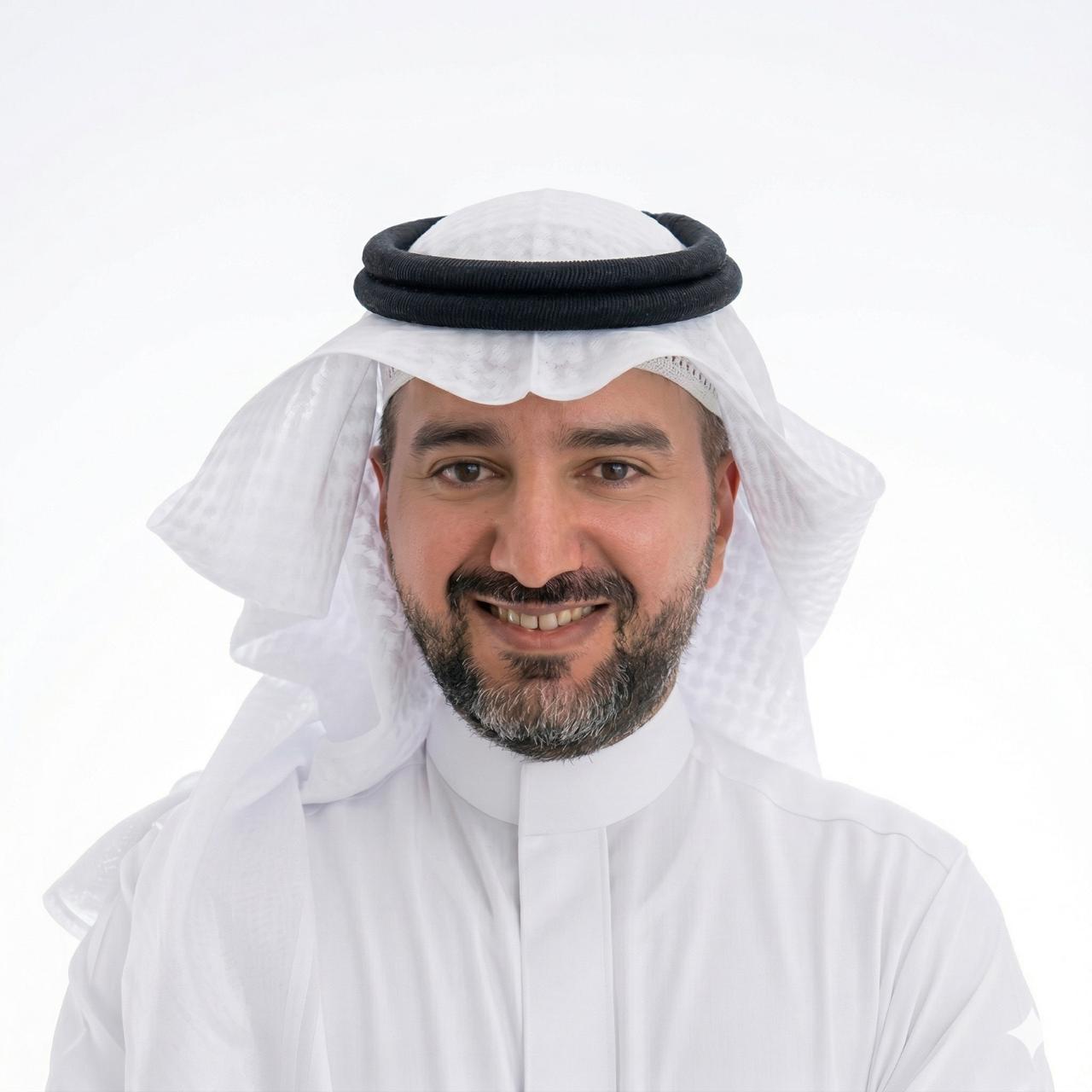
 Dr. Dhary Abuhimed, Area Vice President, Solution Consulting MEA, ServiceNow
ServiceNow: Saudi Arabia Enters the Next Phase of AI-Driven Transformation
As Saudi Arabia advances its digital transformation agenda under Vision 2030, artificial intelligence and automation are moving from emerging technologies to core drivers of how organizations operate. Businesses and government entities are increasingly rethinking their operating models, with greater emphasis on AI, governance, security, talent, and scalable digital infrastructure. In this interview, Dr. Dhary Abuhimed, Area Vice President, Solution Consulting MEA, ServiceNow, shares his perspective on the evolution of AI-driven operations, the unique dynamics of the Saudi market, the challenges organizations face in turning technology investments into tangible value, and ServiceNow’s role in supporting the Kingdom’s transformation journey beyond 2030.
1. How do you see AI reshaping the way government entities and businesses operate across the region over the next three years?
Government and enterprises are starting to fundamentally rethink how they organize their operating models around AI. Right now, most organizations have added AI to their existing workflows. Over the next three years, the region is moving from "let's apply AI to our processes" to "let's redesign our processes assuming AI is at the center."
This raises three critical questions that will define success across the region.
First is governance. Government entities and enterprises are realizing that AI governance isn't a compliance checkbox. It's a business imperative. In the region, we're seeing regulatory frameworks that demand transparency, auditability, and clear accountability for algorithmic decisions. Saudi Arabia's risk-tiered approach through SDAIA and the UAE's upcoming mandatory impact assessments for high-risk AI are concrete examples. Organizations that treat governance as something they bolt on at the end will find themselves stuck in legal review cycles. Those that architect governance into their operating model from day one move faster and with more confidence.
Second is talent. Deploying AI at scale requires people who understand both the technology and the business context. The region doesn't have an unlimited pool of those people. So organizations are making a strategic choice: do we hire externally, or do we invest in upskilling our existing teams? The winners are the ones thinking about this as a multi-year talent transformation, not just hiring contractors. That's where the real competitive advantage emerges.
Third is sovereignty. Many organizations across the region are asking how to build AI capabilities that remain under their control and don't create dependencies on external platforms or vendors. This is especially true for government and critical infrastructure. The next three years will be about building the institutional knowledge to own your AI roadmap rather than outsourcing your strategic capability.
2. What makes the Saudi market different from global markets when it comes to digital transformation and process automation?
The Saudi and GCC markets are fundamentally different because they're public sector led, not market driven. That's the structural distinction.
In most global markets, digital transformation is organic. Enterprises compete, innovate, and improve on their own timeline. Governments react and regulate. Here, it's inverted. Government sets the standard and the pace, and enterprises follow.
What makes this powerful is centralized decision-making combined with a clear national mandate and strategy. The Kingdom’s strategy created an aligned directive across all sectors: modernize, digitize, improve citizen and customer experience, and so forth. The government have systematically eliminated bureaucracies and streamlined processes across the board. They've set new standards for efficiency and transparency.
That creates a ripple effect through the entire economy. Enterprises doing business with government have to operate at the new efficiency level the government has established. Your procurement process, your compliance, your reporting, your service delivery. All of it now has to meet digital-first standards because government platforms are the gateway.
But this goes beyond just meeting compliance. The citizen-first mandate means governments are competing with each other to provide the best digital experience. That competition drives innovation and creates a reference standard that enterprises adopt internally because they realize it works. Your government services are streamlined and efficient, so your internal operations should be too.
The difference is clarity and alignment. Everyone in the market is moving in the same direction because the direction is set. That's why digital transformation happens faster and more cohesively here than in markets where enterprises are figuring out their own path.
3. How is ServiceNow helping organizations move beyond simply using AI tools toward building fully AI-driven ways of working?
This is where most organizations get stuck. They deploy ChatGPT or a large language model and ask "now what?" They've bought the tool, but they haven't built the operating model that makes the tool valuable.
The fundamental difference between using AI tools and building AI-driven ways of working comes down to orchestration and governance. An AI tool is isolated. You plug it in somewhere and it does one thing well. An AI-driven way of working is integrated. It touches multiple processes, multiple teams, multiple data sources. It's governed. It's auditable. It's connected to outcomes.
ServiceNow sits at that intersection. We're not selling AI as a tool. We're helping organizations orchestrate AI across their entire operating model. That means connecting the AI to the processes that actually run the business. It means ensuring that when AI makes a decision, that decision is traceable and complies with the governance frameworks we talked about earlier. It means that the output of one AI-driven process becomes the input to another, creating a truly integrated system.
But here's the part that's often overlooked: when you're automating processes and orchestrating AI across your infrastructure, you also need complete visibility into what's connected, what's running, and what's being accessed. If you're feeding sensitive data into AI-driven workflows without understanding your entire asset and device landscape, you've created a security blind spot. You can't govern what you can't see. That's why security visibility has to be built into the AI-driven operating model from the start. You need to understand the infrastructure layer, the data flows, and the potential vulnerabilities as you orchestrate.
Take a government agency or an enterprise in the region. They might use AI for document processing, for scheduling, for anomaly detection across different systems. But if those are disconnected point solutions with no security foundation underneath, you haven't transformed anything. You've just replaced one manual task with another AI task while creating new security risks.
What we're doing is different. We're building the connective tissue that turns these isolated capabilities into a coordinated, governed system that actually changes how the organization operates, with security and visibility built in as a core component, not an afterthought.
4. As digital transformation accelerates in Saudi Arabia, what are the main challenges organizations face in achieving tangible returns on their technology investments?
The first issue is integration complexity. Organizations have built point solutions across different parts of their operation. A new ERP here, a cloud platform there, legacy systems still running critical processes alongside modern ones. When you're trying to achieve end-to-end automation and intelligence across that landscape, the connective work becomes massive. You can't extract value from isolated systems. You need them talking to each other, sharing data, and coordinating processes. That integration work is where timelines slip and budgets expand.
The second challenge is budget allocation discipline. Organizations either overspend early on buying capabilities they're not ready to deploy yet, inflating costs and creating waste. Or they underspend to manage initial costs but skip the foundational infrastructure they actually need to run the transformation successfully. Either way, they end up in a fragile state where the technology either sits unused or can't perform at scale. The discipline required is knowing what foundation you need before you buy anything else.
The third issue is exactly what you identified: lack of baseline definition. Many organizations start transformations without establishing clear value drivers or baseline metrics. They implement the solution, go live, and then ask "now what are we measuring?" By then, it's too late to capture the before state. Without that baseline and without clarity on what success actually looks like upfront, you can't prove the value of what you've built. That's a planning problem, not a technology problem.
5. What is your outlook for the Saudi market in the coming years, and what role does ServiceNow aspire to play in advancing the goals of Saudi Vision 2030?
Saudi Arabia's next chapter isn't about building capability anymore. It's about scaling what's been built, executing ongoing transformations at pace, and preparing for what comes beyond 2030. That requires a fundamentally different approach than the initial Vision 2030 phase.
The real work ahead is governance at scale. As organizations automate more, integrate more systems, and deploy more AI across critical processes, governance becomes the constraint. You can't move fast without it. You can't trust what you're building without it.
ServiceNow's role is to help Saudi organizations do exactly that. We enable transformation to happen at scale while maintaining security, governance, and responsible AI practices built in from the start, not bolted on later. We help organizations stay agile as requirements change and new priorities emerge, but do it in a way that's governed and auditable. We're the infrastructure that lets the country continue accelerating transformation beyond 2030 without losing control or compromising security.
The organizations that win in the next phase will be the ones that can move fast and governed simultaneously. That's what we're here to enable.


