




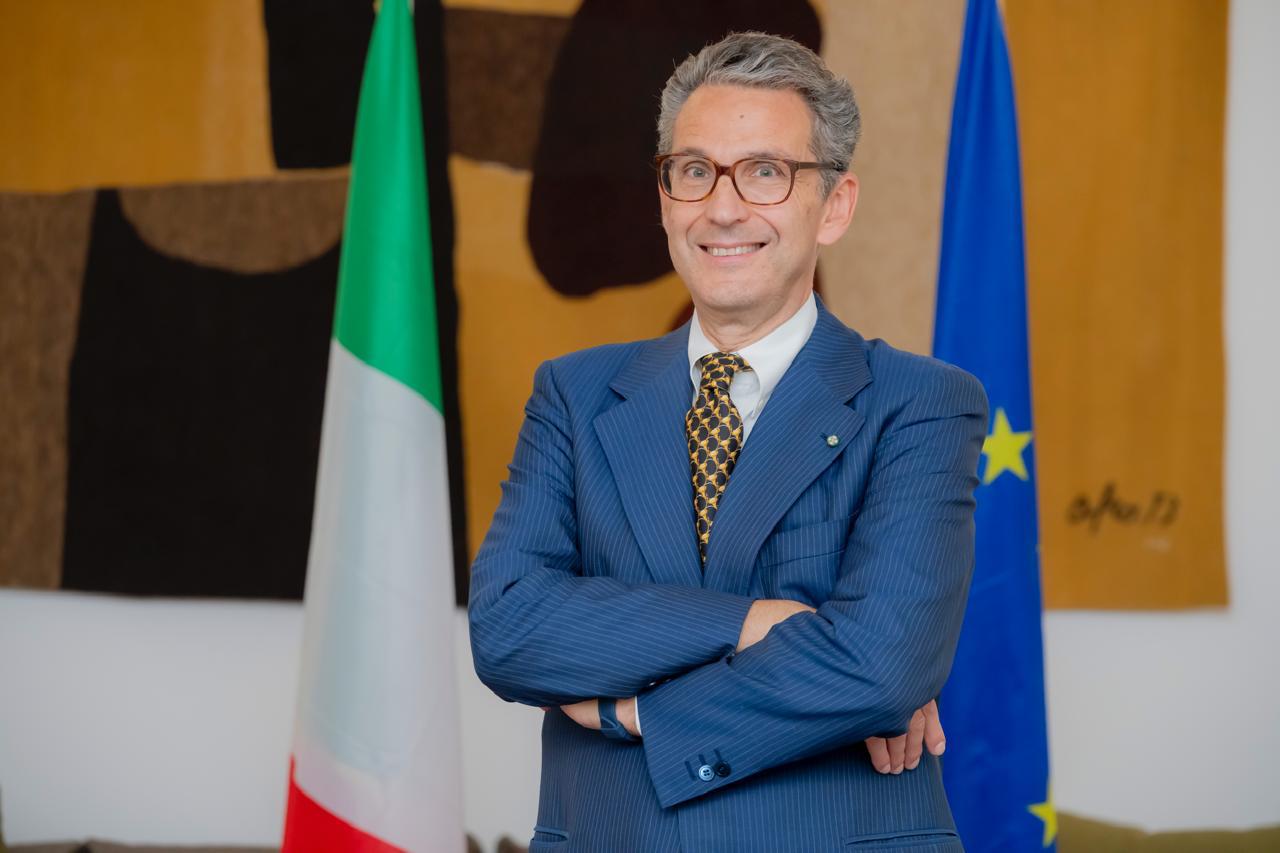
 H.E. Carlo Baldocci, Ambassador of Italy to KSA
Italian cuisine officially enters the Intangible Cultural Heritage of Humanity of UNESCO
The celebration of the “Week of the Italian Cuisine in the World” ended in Riyadh on December 9 and was celebrated through several important initiatives and events, with the participation of many Saudi and diplomatic and international community friends.
This year's edition in Riyadh ended in a very special, positive, and significant way: in fact, starting December 10, the Italian cuisine officially enters the Intangible Cultural Heritage of Humanity.
It is the first cuisine in the world to be recognized in its entirety. The unanimous decision was made by UNESCO's Intergovernmental Committee, which just met in New Delhi, India. According to the decision, Italian cuisine is a "cultural and social blend of culinary traditions" "a way of caring for oneself and others, expressing love, and rediscovering one's cultural roots, offering communities an outlet to share their history and describe the world around them."
Italian cuisine identifies indeed a cultural and social fusion of eating habits, a creative use of raw materials, and artisanal forms of processing that have become both a socio-cultural model and a tradition. It is, after all, a tradition that has been influenced, for centuries - and still is nowadays - by different cultures that have enriched the practice by introducing new ingredients, new habits or even new linguistic expressions.
Italian cuisine is not just food or a simple (or sometime complex) recipe book adaptation, but also and specifically a set of social practices, habits, and gestures that lead to considering the preparation and consumption of a meal as a moment of sharing and encounter. It is the collective ritual of a people who conceive food as a cultural element of identity. The connection itself between food and culture, between cuisine and tradition, is increasingly evident and recognized. In Italy, cooking is a way of caring for family and for friends, both when done at home or out of the domestic space. It is a mosaic of many regional influences and local skills, an expression of tradition and knowledge that becomes a kaleidoscope of creativity and is passed down through generations. It is also a form of biodiversity protection, based on zero waste, the reuse of leftovers and seasonal production from various regions, also thanks to the so-called “kilometer zero approach”.
Italian cuisine is part of our history and a heritage for the 60 million Italians living in the country, for 80 million Italians and their descendants around the world and for the many foreigners who love and draw inspiration from the Italian way of life. Same foreigners will love adapting their taste and adjusting many of their traditional dishes, with some Italian twist, or the other way round.
In the Kingdom, we have been working very successfully with the Culinary Art Commission under the guidance of its CEO Mayada Badr to strengthen the capacity to cross-fertilize Saudi and Italian deep traditions and culinary heritage. Results are already very interesting and promising.
This is why I also consider the Italian cuisine officially entering the UNESCO Intangible Cultural Heritage of Humanity as a very important step forward in further bridging relations for Italy both in Saudi Arabia, and in the Region.


