




Red Sea Global Cultivates over 5,000 Red Mangrove Seedlings in Al Wajh Lagoon
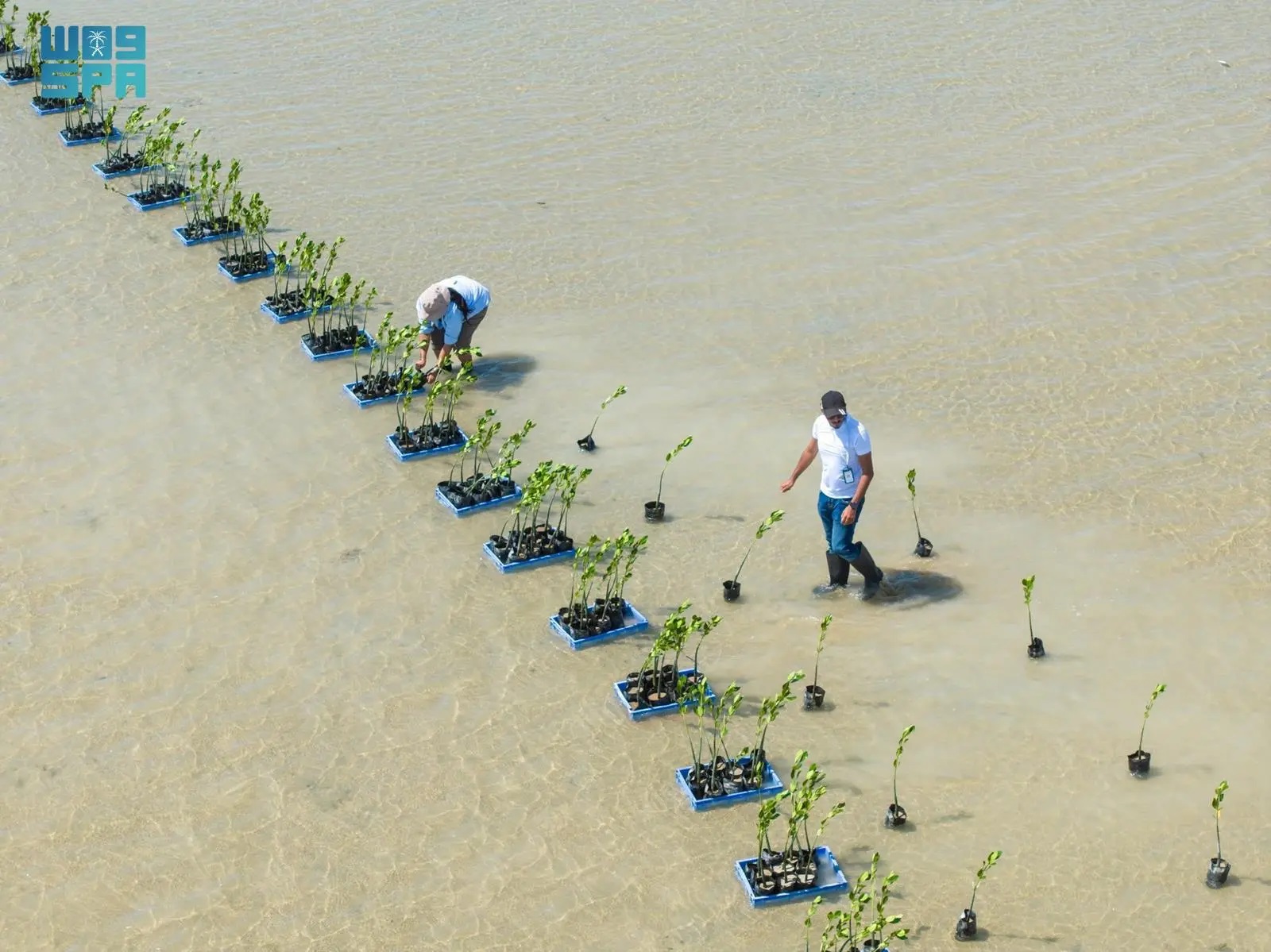
Red Sea Global (RSG) announced the completion of the planting of more than 5,000 seedlings of the rare red mangrove species (Rhizophora mucronata) in Al Wajh Lagoon, marking the largest restoration project of its kind for this species.
According to an RSG press release, this project carries strategic significance, as it was implemented at a site considered the natural habitat of the largest concentration of these trees at the extreme northern limit of their global distribution. Locally known as “Qandal,” red mangroves serve as a vital lung for the marine environment. They play a fundamental role in coastal protection, provide a fertile habitat for the reproduction of fish and crustaceans, and possess an exceptional capacity for carbon sequestration at rates exceeding those of terrestrial forests.
Commenting on this environmental achievement, Group Chief Environment and Sustainability Officer at RSG Raed Albasseet stated: “Red Sea Global’s success in restoring red mangroves at this scale is not merely a number added to its records, but a scientific accomplishment credited to both the Kingdom and the company. Given the precise environmental conditions required for this species to thrive, its restoration signifies the recovery of balance within sensitive ecosystems. Today, we are laying a cornerstone for a more sustainable environmental future that will deliver direct benefits to communities along the Red Sea and strengthen our natural heritage for generations to come."
The release also highlighted that red mangroves differ from their grey counterparts (Avicennia marina) in being more demanding and sensitive, flourishing only under highly specific conditions of water salinity, tidal movement, and temperature stability. Despite these complexities, Red Sea Global’s team achieved an exceptional seedling survival rate of 97%—a record made possible through the development of innovative in-house techniques, including advanced sediment stabilization methods and precise water-flow management.
Group Head of Environmental Sustainability at Red Sea Global Rashid AlHatilah emphasized that "Qandal trees represent a rare ecological treasure along our coastline. What we have accomplished in Al Wajh Lagoon stands as practical proof of our ability to transform environmental challenges into opportunities for growth and regeneration. This step marks only the beginning of an ambitious journey aimed at protecting these unique natural ecosystems and revitalizing wildlife across our destinations."
This milestone, said the release, forms a core component of Red Sea Global’s steadfast commitment to environmental protection. It is part of a broader program that has so far resulted in the planting of more than three million grey mangrove seedlings, toward a long-term target of six million seedlings—positioning the initiative among the largest environmental restoration programs in the region.
Moreover, The Red Sea destination welcomes visitors across nine luxury resorts, in addition to the Thuwal Private Retreat. Global audiences also anticipate the upcoming launch of the AMAALA destination, whose first phase at Triple Bay will feature six high-end resorts alongside distinctive facilities, including a Yacht Club, a Marine Life Institute, and a Marina Village, promising a renewed and exceptional tourism experience.


