




Saudi Arabia’s Creative Economy: When Stories Become Investment Assets
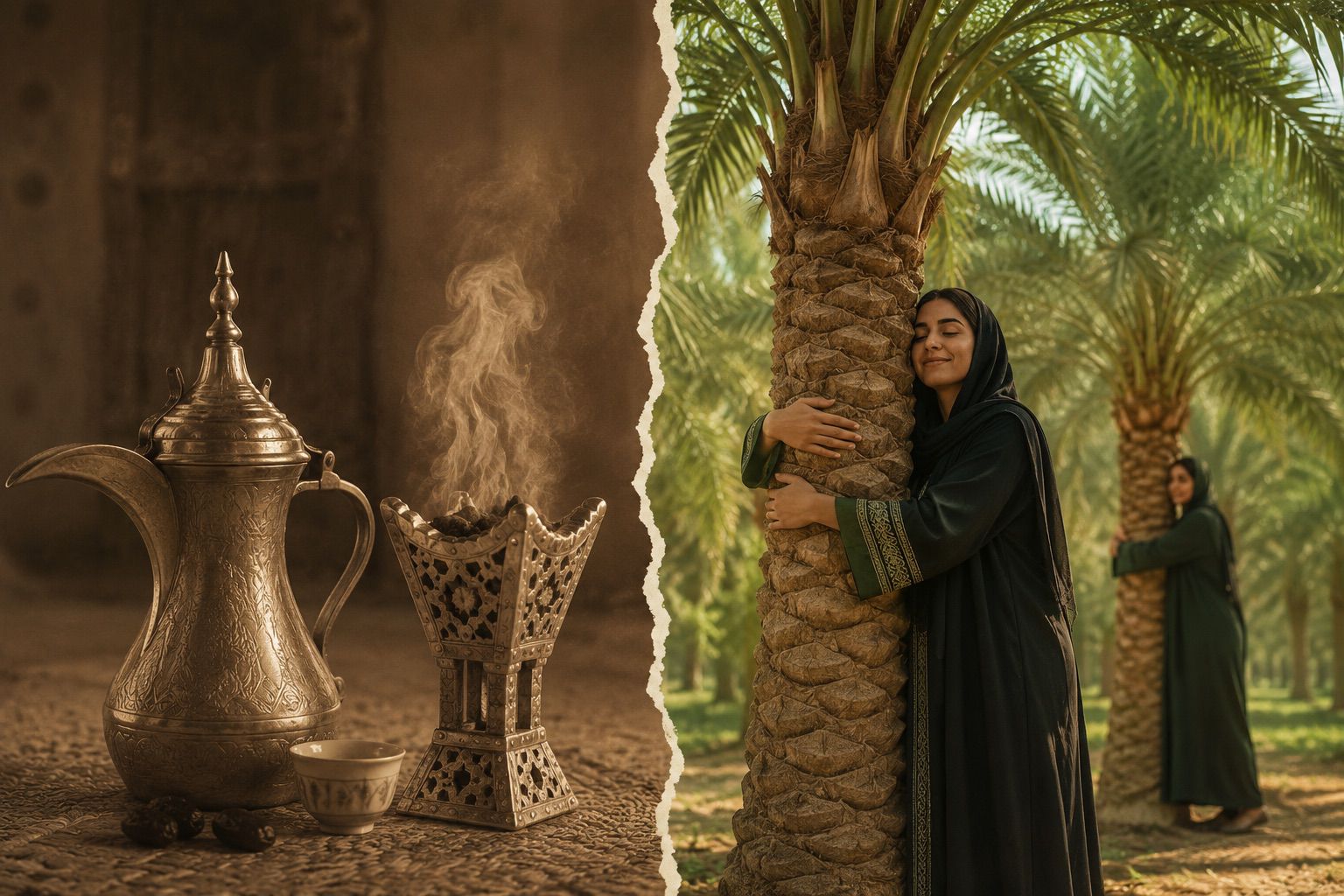
When Saudi artist Taghreed Al-Baqshi traveled to Syria nearly thirty years ago to study fine arts, the image of Saudi Arabia in her mind could be summed up by two symbols: a traditional coffee pot and an incense burner. Today, however, her paintings depict women embracing palm trees, reflecting the Kingdom’s cultural and social transformation, the empowerment of women, and a contemporary reinterpretation of local heritage.
Over the past few years, Saudi Arabia’s cultural landscape has evolved from a limited artistic scene into a growing economic sector, enabling artists, artisans, and content creators to present their cultural heritage in more innovative and sustainable ways alongside the ambitious development projects of Vision 2030.
This transformation comes at a time when UNESCO and the United Nations recognize the creative economy as a modern engine of growth, generating economic opportunities while strengthening cultural identity and improving quality of life.
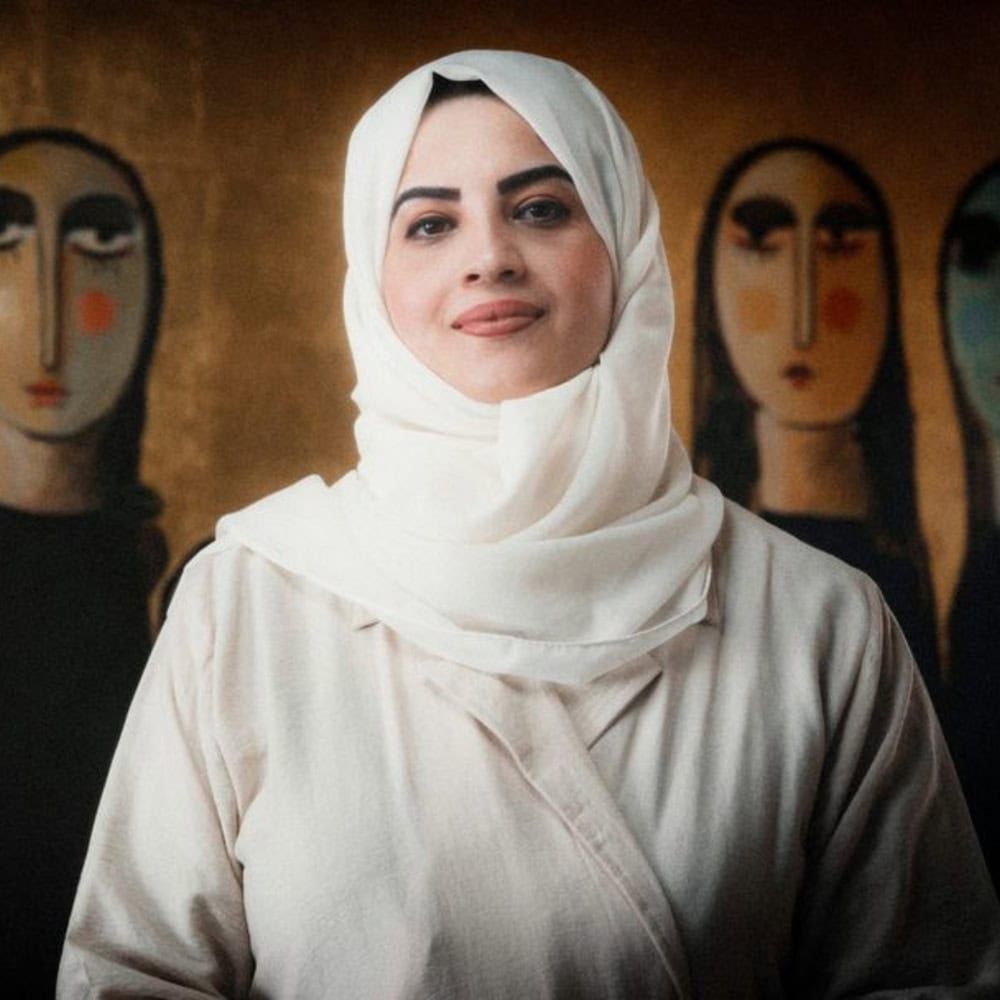
Al-Baqshi describes the changes within Saudi Arabia’s cultural sector, noting that artists now hold an official classification in the Saudi Occupational Guide, while greater attention is being given to intellectual property rights and artistic ownership. Traditional crafts are also being documented through academic and practical methods to ensure their preservation for future generations.
She adds that artists’ incomes have increased significantly in recent years. Female artisans who once charged around SAR 500 for training workshops can now earn nearly SAR 3,000 for similar programs.
Artists and craftsmen are also contributing to the visual identities of international hotels and resorts entering the Saudi market by creating works inspired by local heritage. At the same time, free government initiatives have provided educational and visual resources that help creators develop their skills and express their cultural identity.
Building Human Capital for a Cultural Economy

Al-Baqshi’s story reflects part of the cultural transformation that Saudi Arabia has pursued since establishing the Ministry of Culture in 2018 as part of Vision 2030’s goals of creating “a vibrant society, a thriving economy, and an ambitious nation.”
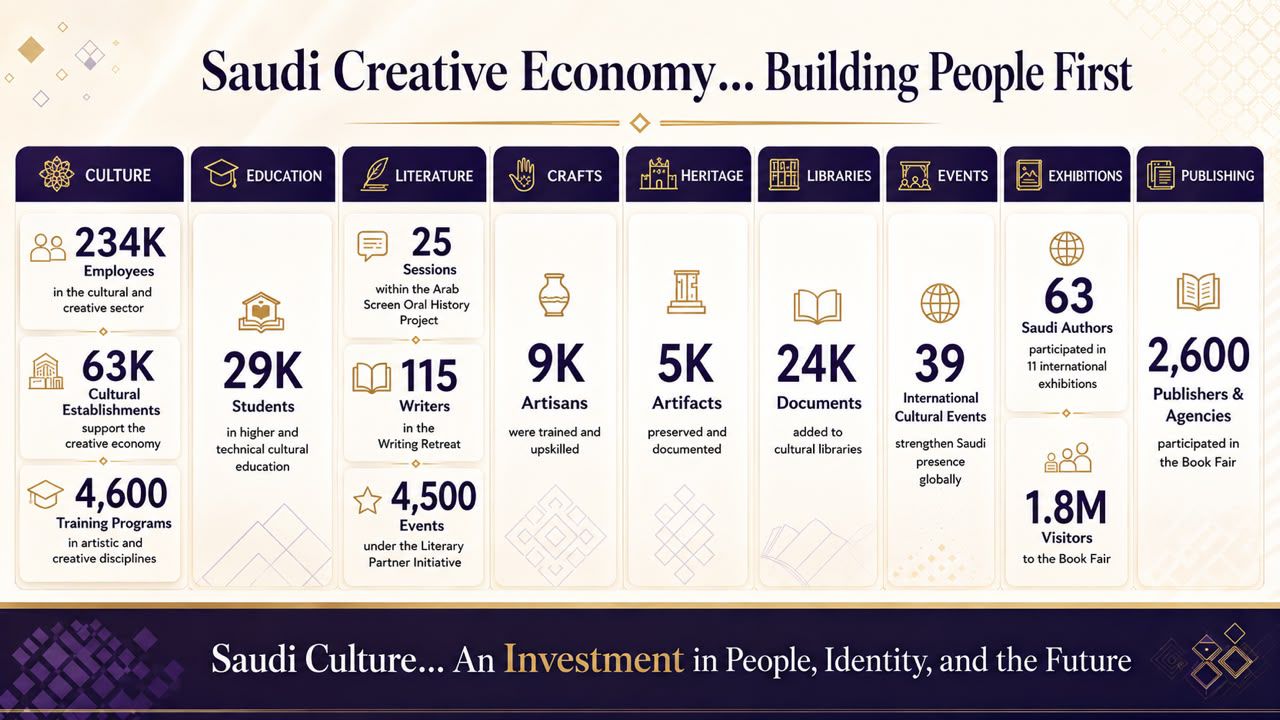
The Kingdom aims to increase the cultural sector’s contribution to 3% of GDP by 2030 equivalent to approximately $48 billion
while raising the value of cultural exports to $6.4 billion.
Since then, the Ministry of Culture has worked to transform arts, heritage, music, culinary traditions, and other creative industries from limited cultural activities into an integrated economic ecosystem through training programs, production support, investment incentives, and specialized educational initiatives.
Sector data indicates accelerating growth, with Saudi Arabia’s cultural economy attracting approximately $1.9 billion in financial inflows during 2024.
The ministry has also invested in building human capital through initiatives such as the Cultural Scholarship Program and the Academy of Arts and Culture, while integrating cultural disciplines into public education and supporting the establishment of specialized colleges.
How Saudi Drama Turned Heritage into Economic Value
To understand the broader impact of this cultural transformation, Riyadh Daily spoke with Saudi producer Qasim Al-Shafie, who has documented the lives of farmers and artisans in Al-Ahsa, eastern Saudi Arabia, a UNESCO World Heritage Site, in what he describes as “humanizing the creative economy.”
According to Al-Shafie, drama and documentary productions no longer simply document places; they transform farmers and artisans from workers practicing traditional professions into “story heroes” carrying both cultural and economic value. This shift has enhanced the presentation of local products, such as dates and handicrafts, giving them modern identities that increase their market value.
He also explains that visual productions have stimulated what he calls “visual memory tourism,” where audiences seek out locations they have formed emotional connections with through film and television, boosting cultural tourism and transforming farms and heritage sites into integrated visitor experiences.
Regarding developments in the audiovisual sector, Al-Shafie believes the Saudi market has moved from a “cost of execution” model to a “value of innovation” model. Since Vision 2030, production standards have undergone a fundamental transformation through advanced cinematic technologies, highly specialized professions, stronger regulatory frameworks, enhanced intellectual property protection, and expanded film financing programs.
A Path Aligned with UNESCO’s Vision of the Creative Economy
UNESCO defines culture as the set of spiritual, material, intellectual, and emotional characteristics that distinguish societies, including arts, literature, lifestyles, values, traditions, and beliefs. This perspective extends beyond viewing culture as entertainment and instead recognizes it as a key driver of economic and social development.
Experts believe Saudi Arabia has adopted a path that aligns with international creative economy principles by connecting culture with development, quality of life, and the empowerment of creative professionals.
During a seminar organized by the Saudi Economic Association, Dr. Abdulwahid Al-Humaid noted that Vision 2030 includes clear initiatives and performance indicators aimed at expanding the contribution of culture and the arts within the Quality of Life Program. These initiatives include establishing the Cultural Fund, facilitating private-sector investment in cultural industries, promoting Saudi culture internationally, and implementing programs designed to transform culture into a sustainable economic sector.
According to United Nations estimates, cultural and creative industries account for 3.1% of global GDP and 6.2% of worldwide employment, generating annual revenues exceeding $2 trillion and supporting nearly 50 million jobs around the world.
How Saudi Stories Became Exportable Products
Moroccan translator Khadija Ghanem, who lives in Saudi Arabia, believes that the Kingdom’s cultural momentum has not only created a new creative economy but has also encouraged producers and publishers to search for local stories that can be transformed into films, television series, and cultural products with international appeal.
She points to the works of Saudi novelist Osamah Al-Muslim, who sold the adaptation rights to several of his novels to MBC Group for television production. Some of these stories are set in the forests of southern Saudi Arabia and combine psychological horror with existential reflection, illustrating the growing demand for distinctly Saudi narratives with strong visual imagination.
Ghanem believes Saudi Arabia still possesses a vast collection of stories ready for global audiences—from AlUla and the archaeological site of Al-Faw to Bedouin traditions, folk arts, and local cuisine. These narratives share cultural connections with other Arab societies while carrying universal human themes that resonate with international audiences.
She also cites The Belt, the French-language novel by Saudi writer Ahmed Abodehman, as an early example of a Saudi story reaching Western readers by presenting a deeply human portrait of Saudi society and its social transformations, making the Kingdom feel familiar rather than distant.
She adds that Saudi authors no longer rely solely on book sales. Instead, they have become part of a broader economic ecosystem that includes translation rights, screen adaptations, and visual marketing, amid growing global interest in Arabic content and locally rooted storytelling.
Conclusion
Thirty years ago, Taghreed Al-Baqshi saw Saudi Arabia through the image of a traditional coffee pot and an incense burner. Today, artists, filmmakers, writers, and chefs are presenting a much broader picture—one of an economy that exports not only oil, but also stories, identity, and imagination.


