




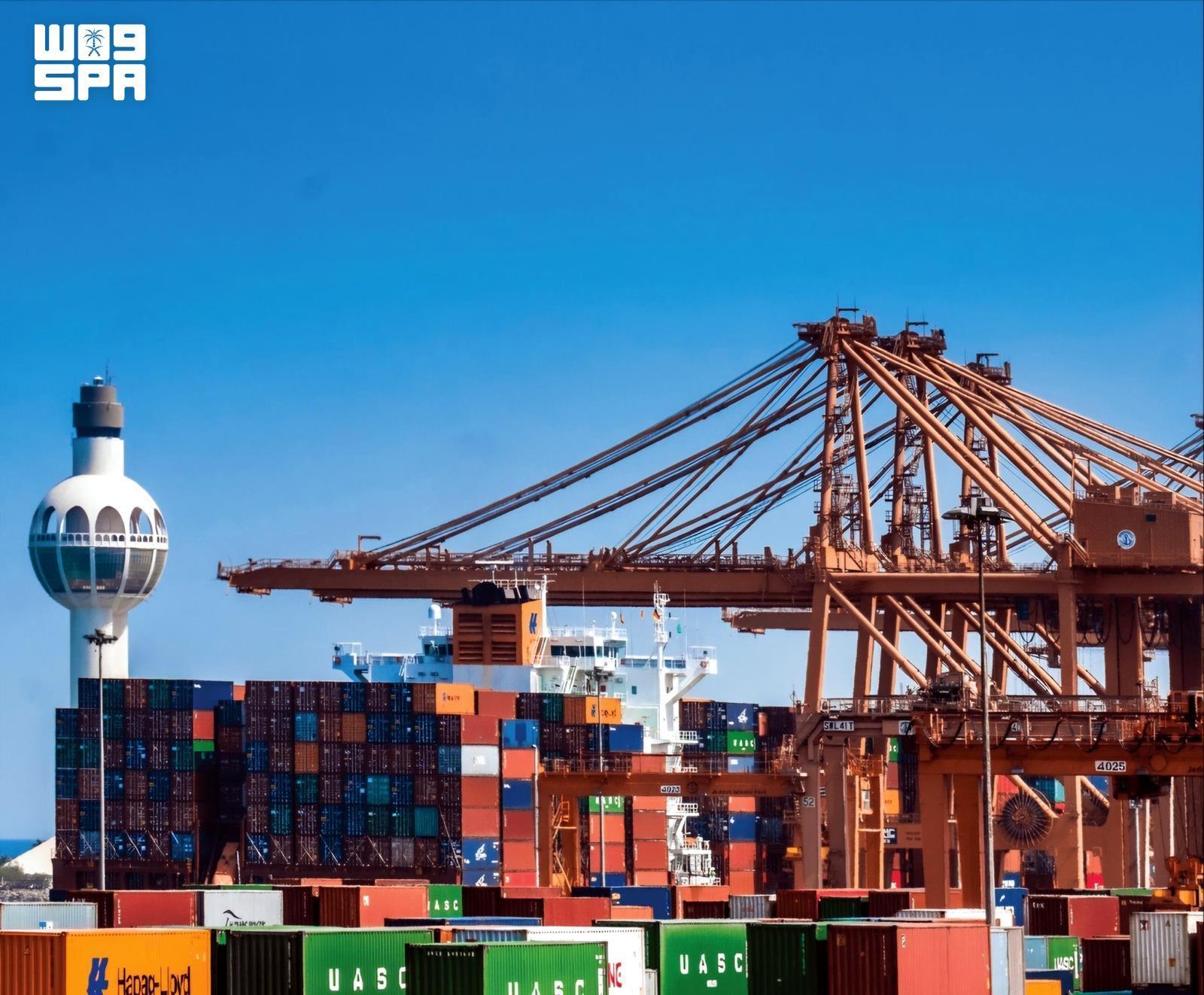
Jeddah Islamic Port: Key Hub for Gemini Cooperation's AE15, AE19 Services via Bab al-Mandab, Suez Canal
The Saudi Ports Authority (Mawani) announced that Jeddah Islamic Port has strengthened its position as a key hub for the AE15 and AE19 services of Gemini Cooperation, comprising Maersk and Hapag-Lloyd. This follows updates to the routes of the two services to transit the Bab al-Mandab Strait and the Suez Canal. The move enhances the Kingdom's direct maritime connectivity with major markets in Asia and Europe.
The update reflects Jeddah Islamic Port's pivotal role within global shipping networks. The AE19 service will include the port twice in its operating rotation, first on the voyage from Asia toward the Mediterranean and again on the return voyage southward. This provides broader connectivity options and greater flexibility for cargo movement to and from the Kingdom.
The selection of Jeddah Islamic Port as a key hub for the two services builds on its strategic location on the Red Sea, advanced operational capabilities, and infrastructure. These advantages enhance its appeal to global shipping lines and support its role as a major maritime gateway for the Kingdom of Saudi Arabia along one of the world's most important trade routes.
The AE15 service connects Jeddah Islamic Port with Qingdao and Ningbo in China, Gwangyang in Korea, and Tanjung Pelepas in Malaysia. The route also includes the Suez Canal, Port Said and Damietta in Egypt, Colombo in Sri Lanka, and Singapore.
The AE19 service connects Jeddah Islamic Port with Shanghai, Qingdao, and Ningbo in China, Busan in Korea, and Tanjung Pelepas in Malaysia. The route also includes the Suez Canal, Port Said in Egypt, Tangier in Morocco, and Singapore.
The update shortens the full operating rotation by approximately two weeks, from 16 weeks to 14 weeks, while maintaining regular weekly sailings. This will improve fleet efficiency and enhance the efficiency of services provided to importers and exporters.
The development underscores Jeddah Islamic Port's growing position as a key hub connecting the Kingdom with global markets. It also highlights its role in supporting supply chain continuity and enhancing the competitiveness of the ports and logistics services sector. This contributes to consolidating the Kingdom's position as a global logistics hub in line with the objectives of the National Transport and Logistics Strategy and Saudi Vision 2030.


