Indian expats launch a top-notch social and cultural forum in Riyadh
As part of a major outreach initiative, a cross-section of Indian expatriates has launched the all-inclusive “Indian Expatriates Society” (IES), which will serve as an apex social and cultural organization to unite changemakers, top-notch professionals, businessmen, and institutions to help needy individuals and weaker sections of society. The IES will also amplify leadership and catalyze collaboration among the Indian diaspora, whose number currently exceeds 2.7 million in Saudi Arabia.
“The IES will promote social connection as a priority and accelerate the scaling up of solutions for the weaker sections of society in India and Saudi Arabia, particularly in the impoverished states of north and east India,” said a press statement released by the IES, here today. The IES will consider how connections enhance the well-being of our communities and societies and help foster economic progress, social development, care, access to services, support for poor people, harmony, and innovation.
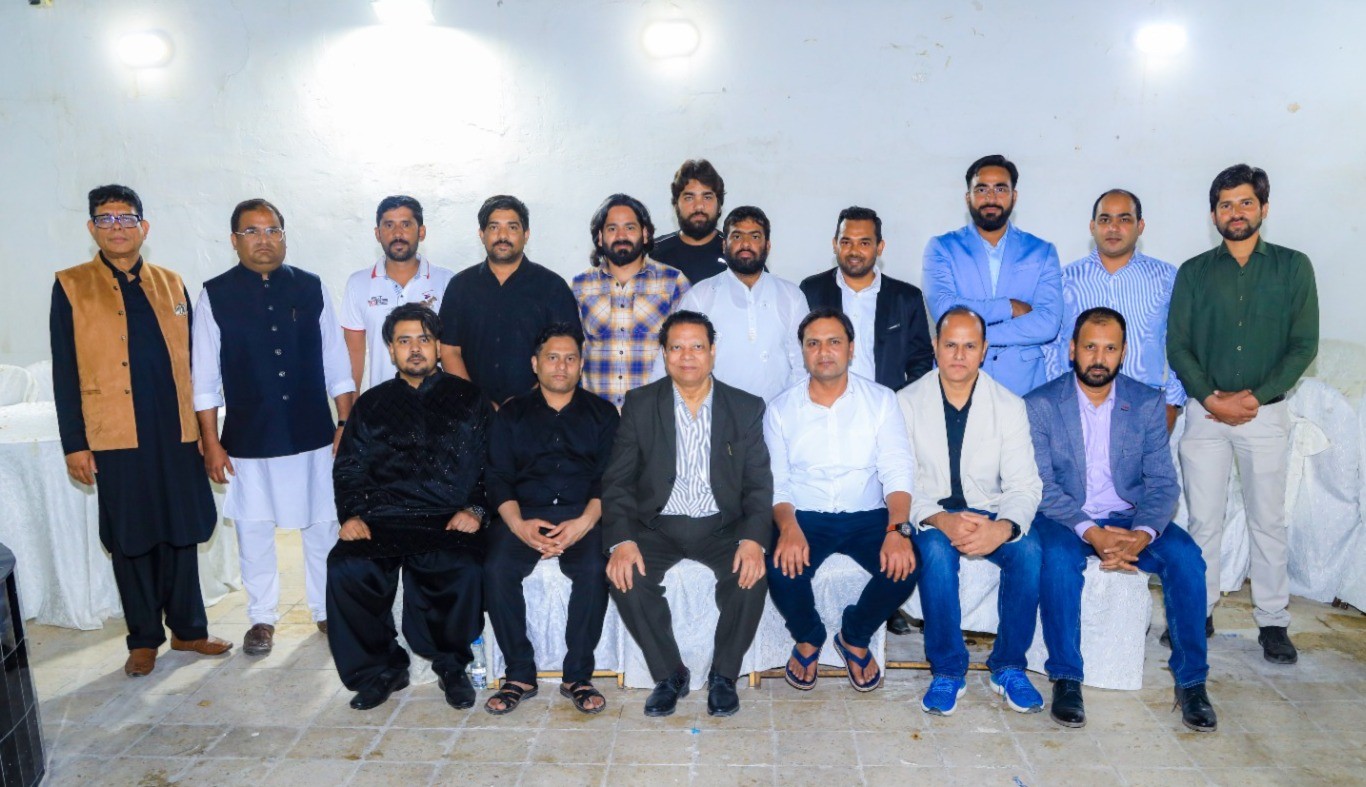
The IES is led by a group of top-of-the-line Indian professionals and businessmen. They include Ghazanfar Ali Khan (president), Rafique Ahmad and Tanvir Alam (vice presidents), Sohail Ahmed Ladley (General Secretary), Asrar Ahmad Siddiqui, Parwez Ahmad, Saquib Khan, and Zishan Ali Ladoo (joint secretaries), Perwez Alam, Shahnawaz Alam, and Jawed Akhar (Treasurers). A panel of eight executive members, including Manzar Khan, Kafil Khan Suri, Ahmad Farooqui, Ahmed Hussain, Mahtab Alam, Faiyaz Khan, Maqbool Alam, and Taufique Umar, has also been inducted to support the team.
To this end, it is important to note that most of these IES office bearers have been rendering social services for the last two to three decades as part of a social network. They have been instrumental in the recruitment and deployment of about 5000 Indian workers in Saudi Arabia. Many of them were part of a major campaign, which led to the release of about 850 workers from Saudi jails following the visit of Crown Prince Mohammed Bin Salman, Prime Minister of Saudi Arabia, to India way back in February 2019.
These IEF office bearers are also supporting a digital daily newspaper in English (www.indianewsstream.com) and another one in Hindi, which are currently published from New Delhi. It is also important to note that the group has largely helped to set up the British Arabic International School (BAIS) in Gopalganj, a district town in the Indian state of Bihar. Established in 2024 and managed by Darut Tauheed Educational and Charitable Trust, the BAIS is a center of learning with the primary aim of imparting a broad and balanced education in an Islamic environment.
The IES has a mandate to support individuals, civil societies, initiatives, and institutions. The society will also collaborate with government agencies to advance human rights, help poor segment of society, and restore justice. Its mandate, including its aims and objectives were officially endorsed by the office bearers at a side-event, which took place in Riyadh recently. This NGO will work closely with individuals and organizations, including India-based aid organizations, to set up schools, professional colleges, universities, and vocational training institutes in north-east India.
The IES will work to protect the life and property of Muslims and minorities in northeast India, in particular, and across India in general. The society will exert efforts to set up a top-notch coaching center or tie up with reputed coaching centers for IAS, IPS, judiciary, and state-level services for Muslim aspirants. This will be part of the capacity-building programs, which aim to train men, women, and organizations with extra skills that will help them continue their development.
Besides the health and well-being, the protection of religious places, burial grounds, and Muslim monuments are on the top of the agenda of the IES. The NGO will also leave no stone unturned to help workers of North and East India in distress in Saudi Arabia and the Gulf Cooperation Council (GCC) countries. Moreover, the society has had the mandate to organize cultural events, festivals, seminars, get-togethers, and business events in Saudi Arabia and India as and when required.
Referring to the launch of the IES, the press statement said: “We are extremely excited about this development. The purpose of the network will be to provide a platform for strengthening the collective influence and resources to help distressed people.” “The IES aims to connect and empower Indian expatriates living and working in the Kingdom,” said the statement, adding that the IES will serve as a platform for Indians to network and socialize through events, gatherings, and cultural celebrations.
The Indian Expatriates Society also aims to facilitate access to consular, labour, and community welfare services, while also promoting cultural and recreational activities. The society aims to strengthen social and cultural connections, promote entrepreneurship and employment opportunities, and provide guidance and support to individuals facing challenges while living abroad. It also seeks to act as a bridge between different community organizations and contribute to strengthening India–Saudi Arabia relations through constructive social, commercial, and cultural initiatives.
It is important to note in this context that India and Saudi Arabia have forged very close ties in different sectors. From its modest beginnings, the India–Saudi Arabia relationship has transformed into a comprehensive partnership. It now stands as a critical axis in Asia’s political and economic landscape, shaped by shared strategic imperatives and deep people-to-people ties. The trajectory has culminated in unprecedented institutional depth.
Moreover, India is Saudi Arabia’s second-largest trading partner, while Saudi Arabia ranks as India’s fifth-largest. In the fiscal year 2025, bilateral trade reached $41.88 billion, with Indian exports amounting to $11.76 billion and imports at $30.12 billion, according to the Indian Embassy in Riyadh. On the manpower front, the number of Indian expatriates living and working in the Kingdom has increased from 34000 in 1975 to over 2.7 million in 2026. Indian expatriates form the largest foreign community in Saudi Arabia, residing primarily in major cities like Riyadh, Jeddah, and Dammam.
They work across sectors ranging from construction and labor to healthcare, engineering, and IT. They are known for contributing significantly to the Kingdom’s development while maintaining strong cultural ties with India. A large number of companies with direct or indirect presence in the Kingdom are participating in several projects within the framework of the ambitious Saudi Vision 2030. The Vision 2030 framework, built around three pillars--a vibrant society, a thriving economy, and an ambitious nation--has seen the Kingdom open cinemas, lift female driving bans, launch tourist visas, and ramp up non-oil economic activity.