




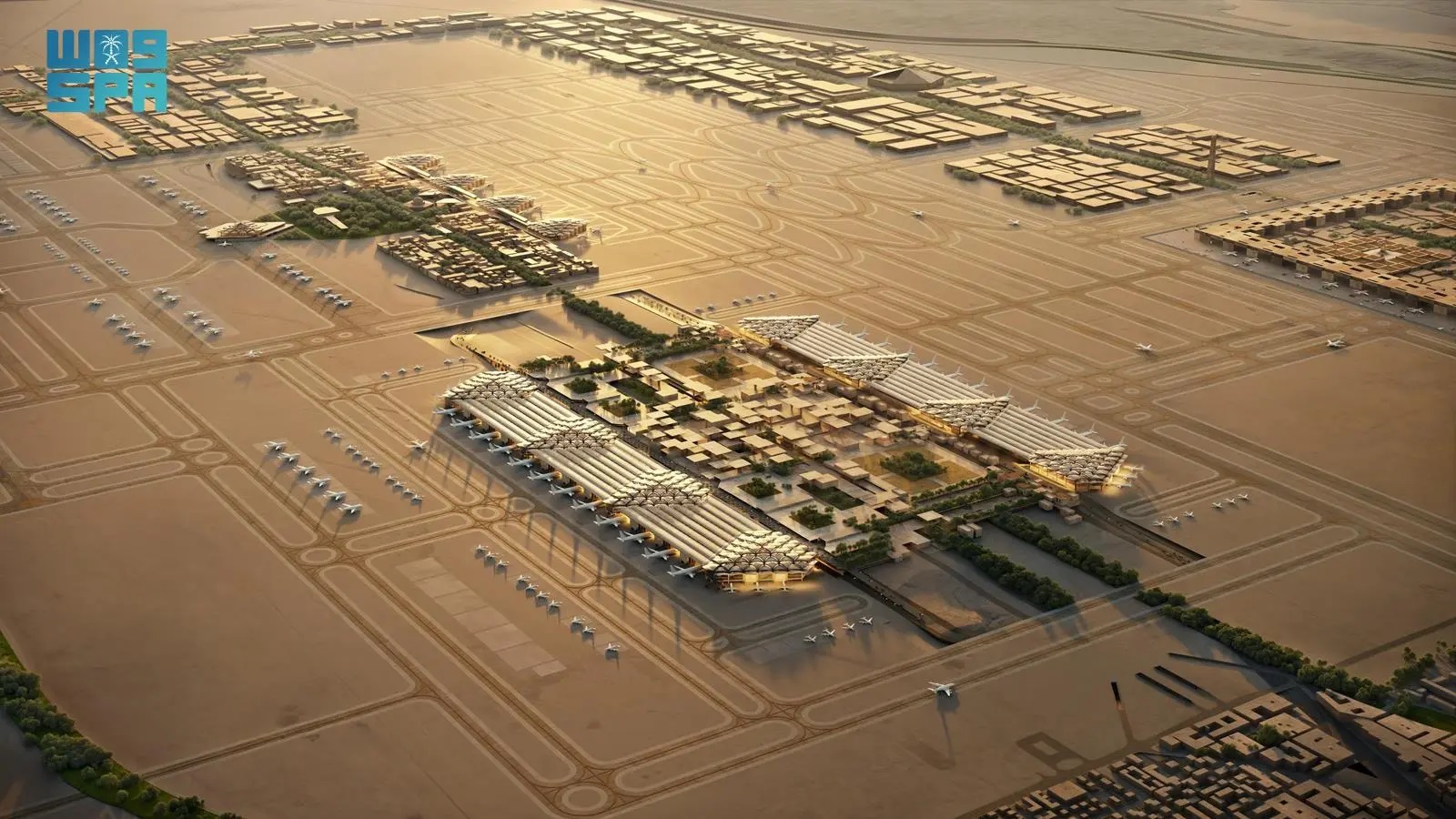
KSIA Commences Construction of Third Runway to Enhance Operational Efficiency
King Salman International Airport (KSIA), a PIF company, has commenced construction works on the third runway, marking a strategic step that reflects continued progress in airfield development and enhances the airport’s operational readiness to support long-term growth in air traffic demand.
The third runway forms a key component of the KSIA Master Plan and represents a major milestone in the airport’s expansion journey.
According to a press release issued by the KSIA, the project is being delivered in collaboration with FCC Construcción SA and Al-Mabani General Contractors Company and has been designed in alignment with Riyadh’s prevailing wind patterns to ensure safe and efficient aircraft operations under all operating conditions.
The current operational capacity stands at 65 aircraft movements per hour. With the implementation of operational enhancements and the introduction of the third runway, capacity is expected to increase to 85 aircraft movements per hour, contributing to improved operational efficiency and supporting long-term growth.
The third runway incorporates multiple access taxiways to ensure smooth aircraft flow and will span 4,200 meters in length.
Acting CEO of KSIA Marco Mejia said: “Launching construction of the third runway marks a pivotal step in delivering the KSIA Master Plan and reflects our commitment to developing world-class infrastructure capable of supporting future growth, enhancing operational efficiency, and expanding long-haul connectivity without constraints.”
King Salman International Airport is a strategic and transformative national project that reflects the Kingdom’s ambition to position Riyadh as a global capital and a leading aviation hub. The project was announced by His Royal Highness Prince Mohammed bin Salman bin Abdulaziz, Crown Prince, Prime Minister, Chairman of the Council of Economic and Development Affairs and Chairman of the Board of Directors of King Salman International Airport, underscoring its national significance and its role in advancing the objectives of Saudi Vision 2030.
Located on the existing site of King Khalid International Airport in Riyadh, the airport will incorporate the King Khalid terminals, in addition to three new terminals, residential and leisure assets, six runways, and logistics facilities. Spanning 57 square kilometers, it is designed to accommodate 100 million passengers annually and handle over two million tons of cargo by 2030.
This phase of construction contributes to strengthening King Salman International Airport’s international flight network across multiple global destinations, reinforcing Riyadh’s position as an internationally connected aviation gateway and supporting national development objectives within the air transport sector.


