




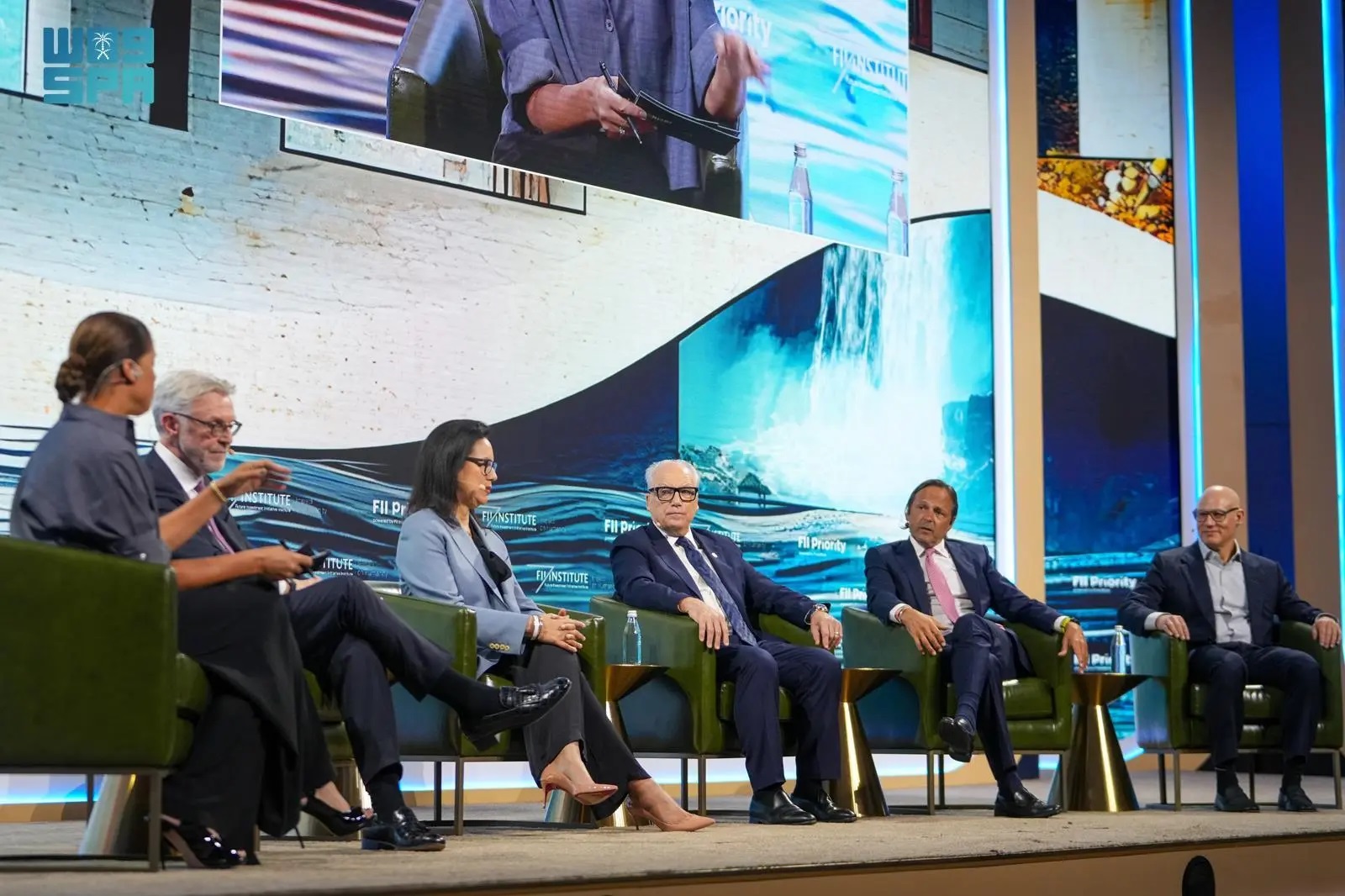
FII PRIORITY Miami Concludes with Focus on Investment Strategies and Critical Minerals
The Future Investment Initiative (FII) Institute concluded FII PRIORITY Miami 2026 with conversations about how the global economic outlook is being reshaped in real time by disruption, and how capital is adapting and reinventing itself accordingly.
Across the day’s plenary sessions, speakers provided insight into markets, investment strategy, and economic direction, addressing geopolitical instability, energy volatility, supply chain fragmentation, and the transformative impact of artificial intelligence.
The summit focused on green urban development, where speakers reframed cities as integrated, long-term investment platforms. New Murabba CEO Michael Dyke said: “We are not just creating a collection of assets; we are building a place where people genuinely want to live, work, and play, which fundamentally changes how you think about urban development.”
In ‘Redefining Asset Management Amid Constant Change’, the audience heard how the industry is being reshaped by technology, scale, and structural market shifts. State Street Investment Management President and CEO Yie-Hsin Hung said: “AI enables mass customization at scale at much lower cost, and ultimately those companies that can harness these technologies to build sustainable advantage and compound value over time are the ones that will endure.”
In a panel on the “World Economic Outlook,” 26North Founder Josh Harris warned: “In today’s environment, you have to move very slowly, stay focused on high-quality assets, and be ready with capital, because we are at the beginning of a period where volatility is rising significantly after years of stability.”
In discussions on aerospace, speakers highlighted the sector as a strategic growth engine tied to industrial policy and global supply chains. Bombardier President and CEO Éric Martel said: “Commercial aviation demand is projected to double over the next 20 years, reshaping supply chains, capital flows, and industrial priorities.”
A recurring theme across sessions was how investors are reassessing what it means to invest in a nation. Capital is increasingly flowing toward markets that demonstrate policy clarity and regulatory stability; execution capability at scale; and alignment between public and private sector priorities.
The race for critical minerals was framed as a key issue for the global economy, underpinning the energy transition, AI infrastructure, and industrial growth.
Speakers also provided real-time insight into how geopolitical disruption is reshaping global industries. World Travel and Tourism Council Chairman Manfredi Lefebvre d’Ovidio said: “Cruising depends a lot on the cost of fuel; it makes a big difference.”
A session titled “Which Compute Hubs Will Win the Next Wave of AI?” examined the global race to dominate AI infrastructure, highlighting how energy, data, and sovereign ambition are converging to determine the next centres of economic power.
In “Building a Worldwide Mythology, Not Just a Blockbuster”, Mythos Studios Founding Partner David Maisel revealed how long-term value creation is increasingly tied to the ability to build enduring intellectual property and cultural franchises that transcend markets and platforms.
The panels concluded with FIFA President Gianni Infantino talking about "the biggest show on earth," the FIFA World Cup. Explaining the economic, cultural, and human impact of the great game, he brought onto stage football legend Ronaldo Luís Nazário de Lima.


